


· By FryAway
Your Complete Guide to Food Truck Kitchen Equipment
Equipping a food truck isn't like outfitting a restaurant kitchen; it's more like a high-stakes game of Tetris. Every single piece of food truck kitchen equipment has to earn its keep by justifying its role in your menu, its power draw, and the precious inches it occupies.
The essentials generally break down into four key areas: cooking, refrigeration, preparation, and sanitation. If you make smart, strategic investments here, you're setting up your mobile kitchen for efficiency and profit right from the start.
Your Essential Food truck Equipment Checklist
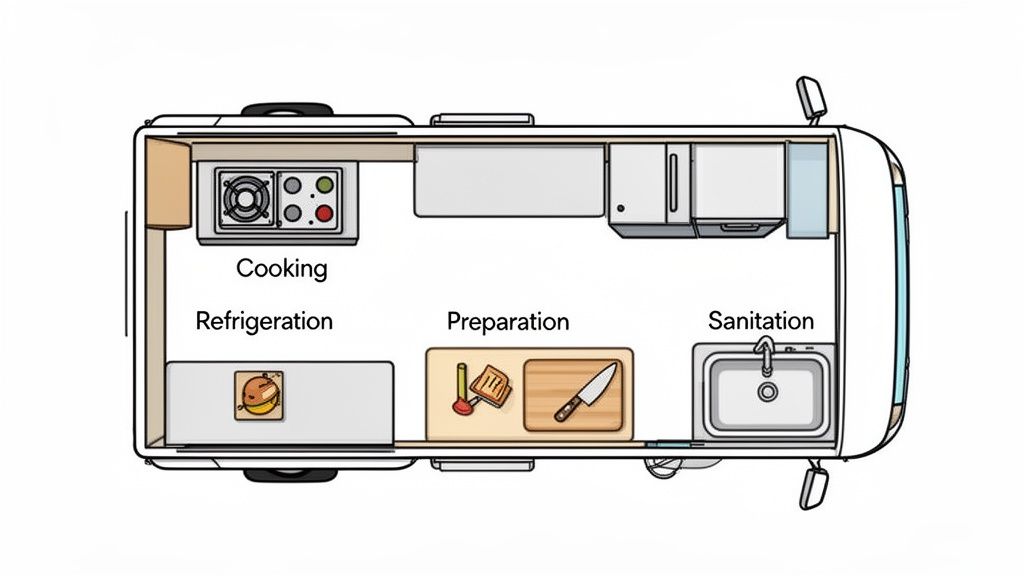
Staring into an empty truck can feel a little daunting, but building a killer mobile kitchen is all about laying a solid foundation of the right gear. Forget the sprawling space of a traditional restaurant—you’re working within some pretty tight confines, usually somewhere between 120 to 200 square feet. This means every appliance needs to be a multitasking workhorse that serves a clear purpose without hogging power or turning your truck into a sauna.
This very challenge is fueling some serious growth in specialized mobile kitchen equipment. The market for kitchen trailers, the backbone of the food truck world, hit a staggering USD 1,522.9 million in 2025 and is on track to reach USD 2,190.1 million by 2035. Why the boom? Because the demand for compact, high-performance gear is exploding. Food truck trailers now grab 55% of this market share for one simple reason: they are masters of efficiency, cramming cooking, storage, and service into a tiny, mobile footprint. You can learn more about the growth of the mobile kitchen industry to see just how big this is getting.
Breaking Down The Must-Haves
To get your head around the planning, let's group the essential gear into four core categories. Think of these as the fundamental building blocks for your entire operation.
- Cooking Equipment: This is the heart and soul of your kitchen, and it’s completely driven by your menu. The usual suspects are commercial griddles, compact deep fryers, and ranges with burners.
- Refrigeration and Cold Storage: Keeping food fresh and safe isn't just a good idea—it's non-negotiable. Undercounter refrigerators and freezers are a food truck favorite because they pull double duty, giving you vital cold storage without sacrificing prep space.
- Preparation and Storage: This is everything you need to chop, mix, and assemble your dishes. We're talking stainless steel work tables, smart shelving, and all the smallwares that make your workflow hum.
- Sanitation and Safety: This is where you meet the health code head-on. It includes a three-compartment sink, a dedicated handwashing sink, a proper ventilation hood, and all your fire safety equipment.
To give you a clearer picture, here’s a quick breakdown of what you'll need to consider for each category.
Core Food Truck Equipment at a Glance
| Equipment Category | Must-Have Examples | Primary Consideration |
|---|---|---|
| Cooking | Griddle, fryer, range, oven | Power source (gas vs. electric), size, and menu relevance. |
| Refrigeration | Undercounter fridge/freezer, prep table | Capacity, energy efficiency (especially on a generator), and footprint. |
| Preparation | Stainless steel work tables, shelving | Workflow, ease of cleaning, and maximizing vertical space. |
| Sanitation | 3-compartment sink, handwashing sink | Health code compliance, water tank capacity, and plumbing. |
This table should help you start building a shopping list that's tailored to your specific concept and operational needs.
A Special Note on Fried Foods
If your menu is banking on crowd-pleasers like french fries, crispy chicken sandwiches, or donuts, that deep fryer is going to be one of your most valuable players. But with great frying comes great responsibility—specifically, how to deal with all that used cooking oil. Let’s be honest, it's a huge operational headache. Hauling hot, liquid grease is messy, dangerous, and a fast track to expensive plumbing clogs if you get it wrong.
This is where a product like FryAway becomes an absolute game-changer. FryAway is a 100% plant-based powder that works like magic to solidify used cooking oil, making cleanup ridiculously simple and safe.
Here's how easy it is:
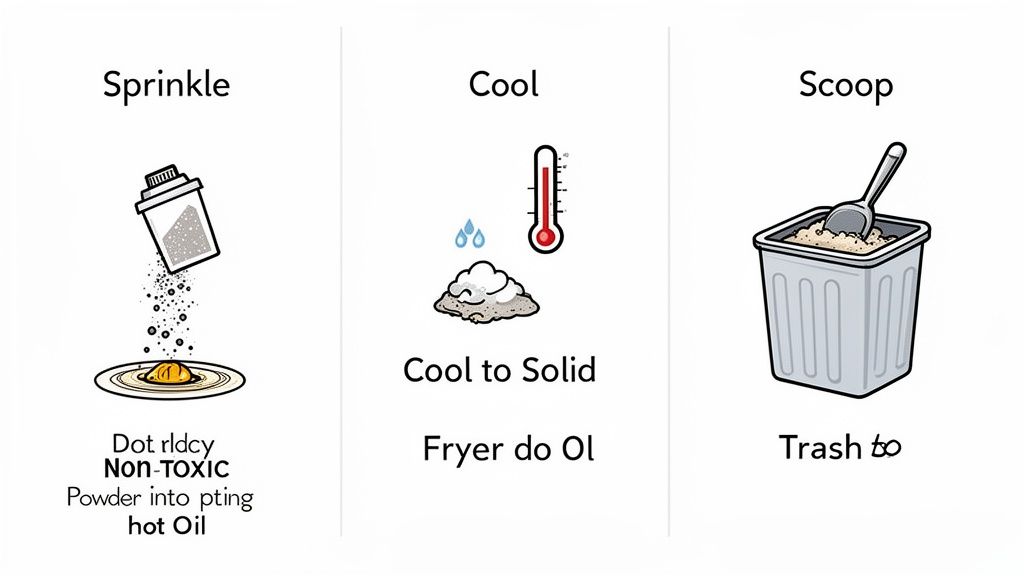
- Sprinkle and Stir: After you’re done cooking for the day, just turn off the fryer and sprinkle FryAway powder right into the hot oil. Give it a gentle stir until it dissolves.
- Cool Down: Now, just let it be. As the oil cools down, it will harden into a solid, organic block.
- Toss into household trash: Once it’s solid, you can literally scoop the whole thing out and toss it right in the trash. No mess, no spills.
By making this one small change to your routine, you completely eliminate the hassle and hazard of dealing with liquid waste. It makes your end-of-day cleanup cleaner, safer, and a whole lot better for the environment.
Choosing Your Cooking Powerhouses
The true engine of your food truck is the cooking line—that row of heavy-hitting appliances turning raw ingredients into cash. Picking the right food truck kitchen equipment isn't about what fits in the space; it's about perfectly matching your gear to your menu to create a ridiculously efficient, high-speed operation. Your cooking powerhouses are what dictate ticket times, food quality, and ultimately, how much money lands in your pocket during a busy service.
Think about it. A gourmet burger truck lives and dies by its high-output flat-top griddle, which has to sear dozens of patties during the lunch rush without dropping its temperature. On the other hand, a mini donut concept is completely reliant on its deep fryer's capacity and how quickly the cooking oil heats back up between batches. The wrong choice means long lines and soggy food. The right one means happy customers and a very healthy bottom line.
Griddles and Fryers: The Dynamic Duo
When you look at the best-selling food truck kitchen equipment, two appliances always steal the show: griddles and deep fryers. Commercial electric deep fryers are non-negotiable for any menu built on high-volume fried foods, from crispy chicken to golden french fries. In the same way, gas griddles absolutely dominate the scene with their raw cooking power, making them perfect for slinging burgers, cheesesteaks, and breakfast sandwiches.
This isn’t just a food truck thing, either. It mirrors the entire commercial kitchen equipment market, which is expected to grow by an explosive $41,815 million between 2025 and 2029. In this booming industry, it’s the fryers, ranges, and griddles that are the undisputed kings for quick-service spots like food trucks. You can discover more insights about these equipment trends and see just how much they shape the mobile food game.
For a lot of food truckers, the deep fryer is the single most critical investment. The right model can make a world of difference in your day-to-day workflow. If you want to dive deeper, you can check out our guide on the best deep fryer models reviewed by Consumer Reports.
Propane vs. Electric: What's Right for Your Truck?
One of the biggest calls you'll have to make is whether to go with propane or electric appliances. They both have their pros and cons, and the right choice really depends on what you're cooking.
-
Propane (Gas) Equipment: This is the go-to for raw power and lightning-fast heat-up times. A propane griddle or charbroiler gives you that instant, intense heat that’s perfect for searing and grilling. The trade-off? You need proper ventilation, secure tank mounting, and you’ll be making regular trips for refills.
-
Electric Equipment: Valued for its pinpoint temperature control and consistency, electric gear is fantastic for more delicate items. Think electric fryers and induction cooktops. They get rid of the need for onboard propane tanks, but they put a serious strain on your generator or any shore power connection you have.
The choice isn't just about preference; it's a strategic decision based on your menu's demands and your truck's power capacity. A high-demand burger and fries truck might use a propane griddle for speed and an electric fryer for consistency.
Making Cleanup Effortless with FryAway
No matter which fryer you end up with, you’ll face the same universal challenge: what to do with all that used cooking oil. Let’s be real, hauling jugs of hot, sloshing grease at the end of a long shift is dangerous, gross, and terrible for the environment. This is exactly why FryAway is an absolute must-have for any food truck with a fryer.
It's a 100% plant-based powder that magically solidifies used cooking oil, making disposal unbelievably simple and safe. It completely eliminates the risk of spills, saves you from costly plumbing clogs caused by dumping oil, and prevents the environmental damage that liquid oil waste creates.
Here’s how easy it is to use:
- Sprinkle and Stir: When you’re done frying for the day, just turn off the heat and carefully sprinkle the FryAway powder into the hot oil. Give it a gentle stir until it all dissolves.
- Cool Down: Now, just walk away. Leave the fryer to cool down completely. As it cools, the oil will transform into a solid, organic block.
- Toss into household trash: Once the oil has hardened, you can easily scoop it out and toss it right into your regular trash bin. It's clean, safe, and totally mess-free.
Adding FryAway to your end-of-day routine makes cleanup faster and safer, letting you lock up and head home without the usual hassle. It's a small change that makes a massive difference in your daily operations.
Designing Your Mobile Kitchen for Speed and Flow
Having the right food truck kitchen equipment is a massive first step, but how you arrange everything is what separates a chaotic, cramped kitchen from a high-performance profit machine. A smart, intentional layout is your secret weapon. When every square inch counts, your setup dictates speed, safety, and your own sanity during a chaotic lunch rush.
Think of your truck less like a traditional kitchen and more like a compact, high-performance assembly line. Its entire purpose is getting delicious food into happy customers' hands as fast as humanly possible.
In a brick-and-mortar restaurant, chefs live by the 'kitchen work triangle'—that perfect path between the stove, sink, and fridge. But in the long, narrow world of a food truck, that concept gets stretched out. The goal is a seamless, one-way flow, from raw ingredients in storage to the finished dish going out the window. This approach kills wasted steps and, more importantly, prevents dangerous cross-contamination.
From Order In to Food Out
A great workflow breaks your operation down into distinct zones, each with its own job. This keeps your team from tripping over each other and ensures every tool is exactly where it needs to be when you reach for it.
- Prep Zone: This is where the magic starts. It should be right next to your cold storage (think under-counter fridges and freezers) and have all your cutting boards and essential smallwares within arm's reach.
- Cooking Zone: The heart of the operation. This is where your griddle, range, and fryers live. It absolutely must be under a powerful ventilation hood, and organized so the chef can pivot between appliances, not run laps.
- Service Zone: The final stop on the line. This area includes your warming equipment and the pass-through window, where orders are assembled, garnished, and handed off.
This visual gives you a clear idea of how different menu items move through the cooking zone in a logical sequence.
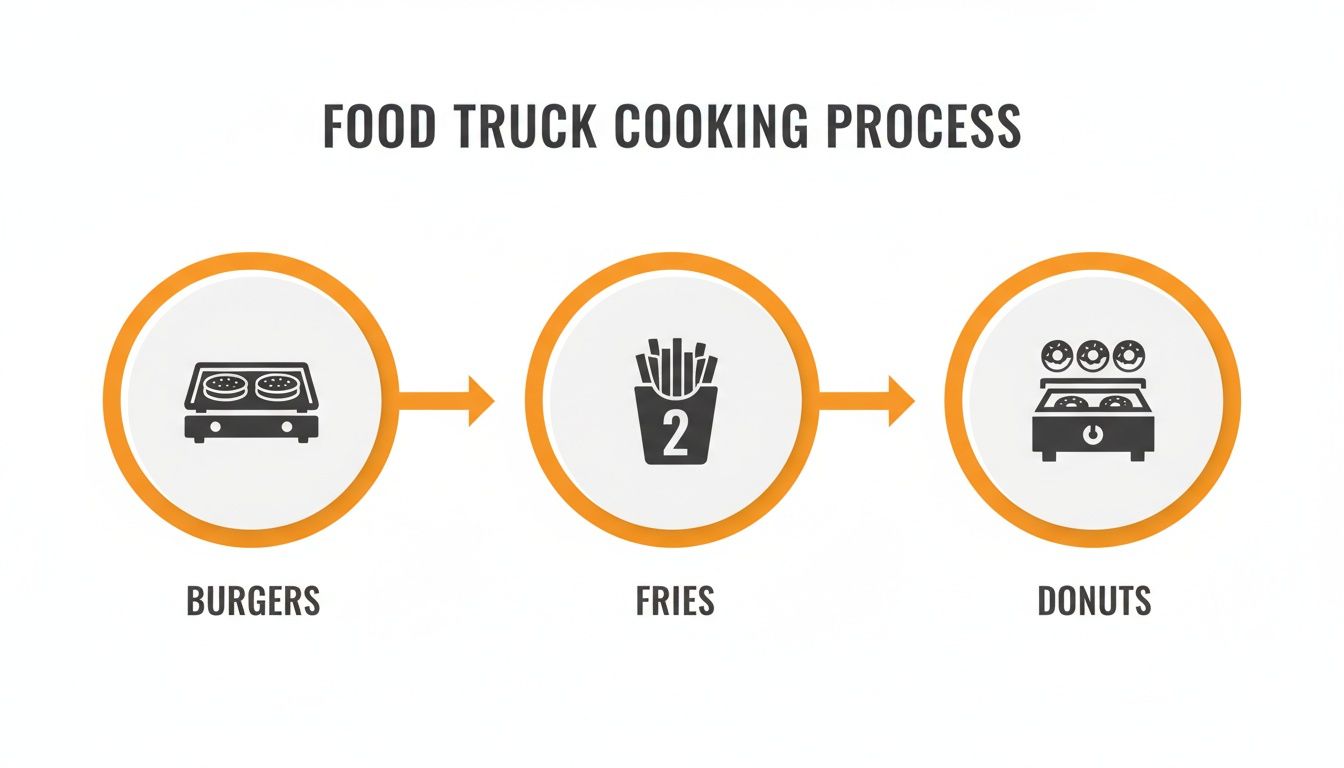
The big takeaway here is that even if you're making burgers, fries, and donuts, each item follows its own linear path. No crisscrossing, no chaos.
Maximizing Every Square Inch
With space at an insane premium, clever storage isn't just a nice-to-have; it's non-negotiable. You have to think vertically and find ways to use every nook and cranny. This keeps your precious work surfaces clear and your workflow smooth.
Vertical shelving is your best friend for dry goods, containers, and smallwares. Under-counter refrigerators and freezers are non-negotiable—they give you crucial cold storage without eating up that valuable prep-top real estate. For a real boost, look into Integrated Solutions for Food Truck Operations that can tie your order management directly into your kitchen flow, making a huge difference in overall efficiency.
A classic rookie mistake is underestimating storage. Plan for way more than you think you'll need. You'll thank yourself during a slammed three-day festival when you're stocked to the gills.
A Special Note on Your Fryer Station
If fried food is your bread and butter, the area around your deep fryer needs extra attention for both workflow and safety. But the process doesn't stop when the food comes out of the basket; it extends all the way to cleanup. And let's be honest, dealing with used cooking oil is a massive operational headache.
But it doesn't have to be. This is where a product like FryAway becomes an indispensable part of your layout and end-of-day routine. Instead of trying to find space for sloshing, hazardous jugs of old oil, all you need is a small spot for a container of plant-based powder.
The cleanup process couldn't be simpler or safer:
- Sprinkle and Stir: After service, turn the fryer off. While the oil is still hot, carefully stir in the FryAway powder until it fully dissolves.
- Cool Down: Just let the fryer cool down completely. As it does, the oil will harden into a solid, organic block.
- Toss into household trash: Scoop the solid waste right out of the fryer and toss it directly into your regular trash bin. No spills, no clogs, no mess.
Building this step into your nightly shutdown makes things faster, safer, and way more environmentally friendly. For more genius tips on setting up a mobile kitchen, check out these smart cooking solutions for nomadic travelers.
Powering Your Operation With Gas and Electricity
Think of gas and electricity as the invisible forces bringing your food truck to life. They're the heartbeat of your business, and without a steady, reliable supply, your entire operation grinds to a halt. Getting these utilities right is critical to avoiding the common pitfalls that can shut you down in the middle of a busy service.
You've got two main ways to power your truck: a generator or shore power. A generator gives you total freedom, letting you set up shop anywhere from a music festival field to a remote roadside spot. On the other hand, shore power means plugging directly into an external electrical source. It’s often quieter and more stable but tethers you to specific locations with the right hookups.
Calculating Your Electrical Needs
One of the most common reasons a food truck suddenly goes dark is an overloaded generator. Every piece of equipment, from your under-counter fridge to your food warmer, draws a certain amount of power, measured in amps. When you try to pull more power than your generator can supply, you trip a breaker. Game over.
To sidestep this disaster, you need to calculate your total amperage needs before you buy anything. Just add up the amp requirements for every single electrical appliance you plan on running at the same time. This number is the absolute minimum your generator needs to handle. To keep everything running smoothly, correctly sizing your mobile generator is one of the most important decisions you'll make.
A good rule of thumb is to get a generator that provides 20-25% more power than your calculated peak demand. This buffer covers the initial power surges when equipment kicks on and gives you a much-needed safety margin.
Taming the Flame with Propane
For many food trucks, propane is the go-to fuel for the heavy hitters like griddles, ranges, and deep fryers. It delivers that instant, powerful heat that electric appliances often struggle to match. But working with propane means putting safety and compliance first, no exceptions.
Your propane tanks have to be securely mounted to the exterior of the truck in a well-ventilated cage—never inside. Regular leak checks are non-negotiable; a simple soap and water solution sprayed on the connections will bubble up if there’s a leak. It’s also smart to estimate your daily fuel consumption. Running out of gas mid-rush is just as bad as tripping a breaker, so track your usage for a week to get a baseline and always, always carry a backup tank.
Fried Food Power and Responsible Cleanup
Your deep fryer, whether it's gas or electric, is a power-hungry beast and the star of many successful food truck menus. But after a long day of serving up crispy fries and other delicious fried foods, you're left with a tank full of used cooking oil. This is where FryAway becomes an essential part of your closing routine.
Instead of wrestling with dangerous, messy liquid oil, FryAway's plant-based powder offers a dead-simple, safe solution that fits perfectly into your end-of-day cleanup. The process turns a major headache into a quick, clean task.
- Sprinkle and Stir: Once service is done and the fryer is off, just pour the FryAway powder into the still-hot oil and give it a gentle stir until it dissolves.
- Cool Down: Let the fryer cool down completely. As it cools, the oil will transform into a solid, organic block.
- Toss into household trash: Once it's hardened, you can easily scoop the solid waste out and throw it directly into your regular trash bin.
This method completely eliminates the risk of spills, prevents plumbing disasters, and makes sure you’re handling your waste responsibly. It’s a no-brainer.
Smart Solutions For Sanitation And Waste
In a food truck, cleanliness isn’t just a nice-to-have; it’s the very bedrock of your business. A sparkling clean mobile kitchen goes beyond passing health inspections—it’s how you build trust with every customer who walks up to your window. This means getting a handle on sanitation and waste is just as vital as perfecting your signature dish.
From the sinks you’re required to have to the ventilation that keeps your air clear, every piece of sanitation gear is non-negotiable.
But beyond the hardware, your day-to-day habits make the real difference. One of the toughest, messiest challenges every food truck owner knows well is dealing with used cooking oil. It’s heavy, it's greasy, and it's a genuine hazard if you don't handle it right. Wrestling with jugs of hot, sloshing grease after a long, busy shift is a recipe for disaster.
Luckily, this huge operational headache has a surprisingly simple fix. There's a smarter, safer way to handle oil disposal that not only makes cleanup a breeze but also protects your equipment and the planet.
Meeting Health Code Requirements
Every local health department has a strict checklist for sanitation equipment, and there's no room for shortcuts. Your sinks are always at the top of that list. You’ll absolutely need a three-compartment sink for the classic wash, rinse, and sanitize process for all your utensils and cookware. On top of that, a separate, dedicated handwashing sink is mandatory to keep food safe and prevent cross-contamination.
Proper ventilation is just as critical. A commercial-grade exhaust hood isn't just for keeping things cool; it's a powerful safety system. It pulls grease-filled vapor, smoke, and heat out of your tight kitchen space, dramatically cutting down on fire risks and keeping the air clean for your crew.
A Modern Approach To Oil Waste Management
If your menu includes anything fried, you know the daily battle with used cooking oil. The old way—pouring hot grease into containers—is just asking for dangerous spills and nasty burns. This is where FryAway completely changes the game. It’s a 100% plant-based powder that magically solidifies used cooking oil, making disposal incredibly simple, safe, and mess-free.
The food truck industry is booming, with revenues projected to hit $2.8 billion by 2025 across more than 48,000 trucks. In a market that competitive, running an efficient operation is everything. Still, oil management is a common weak spot for many owners. Tools like the Shark Tank-featured FryAway help operators protect their margins by making high-volume frying easier to manage and far less wasteful.
FryAway is built to handle anywhere from 2 to 24 cups of used oil, making it the perfect partner for everything from small pan-frying tasks to deep fryers working overtime. It gets rid of the need for messy jugs, prevents expensive plumbing clogs (often called 'fatbergs'), and helps you stay on the right side of local disposal laws.
FryAway Solutions For Food Trucks
Choosing the right FryAway product is easy. This quick guide will help you pick the best option based on how much oil you use, so your disposal process is always fast and clean.
| FryAway Product | Oil Capacity | Best For |
|---|---|---|
| Pan Fry | Up to 2 cups | Sautéing, pan-frying, or small-batch frying |
| Deep Fry | Up to 8 cups | Standard food truck fryers and moderate daily use |
| Super Fry | Up to 20 uses | High-volume operations and busy deep fryers |
| FryAway Pro | Up to 24 cups/use | Commercial kitchens with large, high-capacity fryers |
With the right product on hand, you can turn a dreaded end-of-day chore into a simple, satisfying task.
The Simple Three-Step FryAway Process
You won't believe how easy it is to work FryAway into your closing routine. It takes one of the worst jobs in the kitchen and makes it quick and clean.
-
Sprinkle and Stir: When you’re done frying and the heat is off, just sprinkle the FryAway powder into the hot oil. Give it a quick stir to make sure it dissolves.
-
Cool Down: That's it. Walk away and let it cool down. As the oil cools, the powder works its magic, turning the liquid grease into a solid, organic block.
-
Toss into household trash: Once it’s completely solid, you can easily scoop the hardened block out of your fryer and toss it right into the trash bin.
This simple process eliminates the single biggest sanitation headache for any food truck serving fried food. No more spills, no more hazardous liquid waste, and no more environmental guilt.
By switching to this method, your end-of-day cleanup becomes faster, safer, and much more eco-friendly. It’s a tiny change that makes a huge impact on your daily workflow. To dive deeper into best practices, check out this guide on commercial kitchen oil disposal.
Featured Recipe: Crispy Southern Fried Chicken Sandwiches
Alright, you’ve got the gear. Now it’s time to put that shiny food truck kitchen equipment to the test. This crispy fried chicken sandwich recipe isn't just a guaranteed bestseller; it's the perfect real-world scenario to show off your deep fryer and a well-organized prep station.
Success on a food truck is all about speed, consistency, and that unforgettable crunch. This recipe is built around those three pillars. We're going to tackle this like a seasoned operator, focusing on batch-cooking the chicken and setting up an assembly line that flies during the lunch rush.
The Perfect Fry
To get that incredibly light, shatteringly crispy crust, you absolutely need a high-smoke-point cooking oil. Canola, peanut, or vegetable oil are your best friends here. The real star of the show, though, is your deep fryer's temperature control. You have to keep it locked in at a steady 350°F (175°C).
That precise heat is the secret. It cooks the chicken through in minutes while turning the crust a perfect golden-brown, all without it getting greasy. When the orders start rolling in, you’ll be frying in batches, and a reliable fryer that recovers its temperature quickly is what separates the pros from the amateurs.
Cleanup: The Smart and Simple Way
The dinner rush is over. You've fried dozens of batches of perfect chicken. Now you're staring down a fryer full of used cooking oil. Let’s be honest, dealing with this is often the most dreaded part of closing up shop, but it doesn't have to be a messy, dangerous chore.
This is where a product like FryAway becomes a game-changer for your end-of-day routine. Instead of trying to wrangle sloshing jugs of hot, heavy grease in a tiny space, this simple, plant-based powder solidifies the oil for a clean, safe, and ridiculously easy disposal.
By building a smart disposal solution right into your workflow, you don't just save time and prevent dangerous spills. You're also handling waste responsibly—a small tweak that makes a massive operational difference.
The process is so simple it'll completely change how you feel about cleanup. Just three easy steps:
- Sprinkle and Stir: After turning off the fryer, carefully pour the FryAway powder into the still-hot cooking oil. Give it a quick stir until it all dissolves.
- Cool Down: That's it. Just let it sit. As the fryer cools down, the oil magically hardens into a solid, organic block.
- Toss into household trash: The next day, you can easily scoop the solid oil right out of the fryer and toss it into the regular trash bin.
No more mess, no more spills, and definitely no more clogged drains. You’re ready for the next day with a clean fryer, and you get home faster with a lot less stress.
Got questions? You're not alone. Figuring out the right gear for your food truck is a big deal, and everyone has these questions spinning in their head. Let's tackle some of the most common ones I hear from new owners.
What Is The Most Essential Piece of Equipment?
This is the big one, but the answer always comes back to one thing: your menu. You can't just pick one "best" piece of equipment for every truck.
If you're slinging burgers all day, a top-notch commercial griddle is your workhorse—it's non-negotiable. For a mobile cafe, that high-end espresso machine and a small convection oven are the heart of your operation.
But let’s be honest—if your menu relies on anything crispy like fries, fried chicken, or donuts, then a commercial deep fryer is your MVP. It’s the engine that drives your sales and defines whether your food is just okay or absolutely amazing.
Should I Buy New or Used Equipment?
Ah, the classic new vs. used dilemma. It's a balancing act between cost and peace of mind.
Buying new gets you a warranty, the latest tech, and the assurance that it will work on day one. But that shiny new gear comes with a hefty price tag. On the flip side, used equipment can save you a boatload of cash upfront, freeing up money you desperately need for things like inventory and marketing.
I usually recommend a hybrid approach. For the one or two pieces of equipment that are absolutely critical to your menu—like that fryer or griddle—buy new. You cannot afford for that to break down mid-service. For everything else, like stainless steel prep tables or shelving, you can find incredible deals on high-quality used items.
How Do I Handle Used Cooking Oil Safely?
Managing used cooking oil is a huge headache in a small space. Seriously, trying to haul sloshing jugs of hot grease is not just messy, it's downright dangerous. Plus, if you get caught dumping it improperly, you’re looking at some steep fines.
This is where a product like FryAway becomes a game-changer for food truckers. It’s a simple, plant-based powder that makes oil disposal completely safe and mess-free. The process is so easy it feels like cheating, and it’s perfect for your end-of-day shutdown routine.
- Sprinkle and Stir: When you're done frying for the day, turn off the heat. Carefully stir the FryAway powder into the hot oil until it's all dissolved.
- Cool Down: Just let it sit and cool down. As it cools, the oil will magically turn into a solid, organic block.
- Toss into household trash: Once it's hard, you can just scoop the solid waste out of your fryer and toss it right into your regular trash bin.
No more spills, no more clogged drains, and no more environmental guilt. It makes cleanup faster and way more responsible.
Ready to totally change your food truck's cleanup game? With FryAway, you can forget about the hassle of messy, dangerous liquid oil. Say hello to a faster, safer, and cleaner kitchen. Learn more and grab the right product for your fryer at https://fryaway.co.