


· By FryAway
How to Store Used Frying Oil for Reuse and Disposal
The sizzle of perfect, crispy chicken or a batch of golden-brown fries is one of the great joys of home cooking. But what about the pan of hot oil left behind? That's the part that can feel like a real headache. Knowing how to properly store used frying oil—letting it cool, straining it, and keeping it in a sealed container in a cool, dark place—can save you money and cut down on waste.
The Messy Dilemma of Leftover Cooking Oil
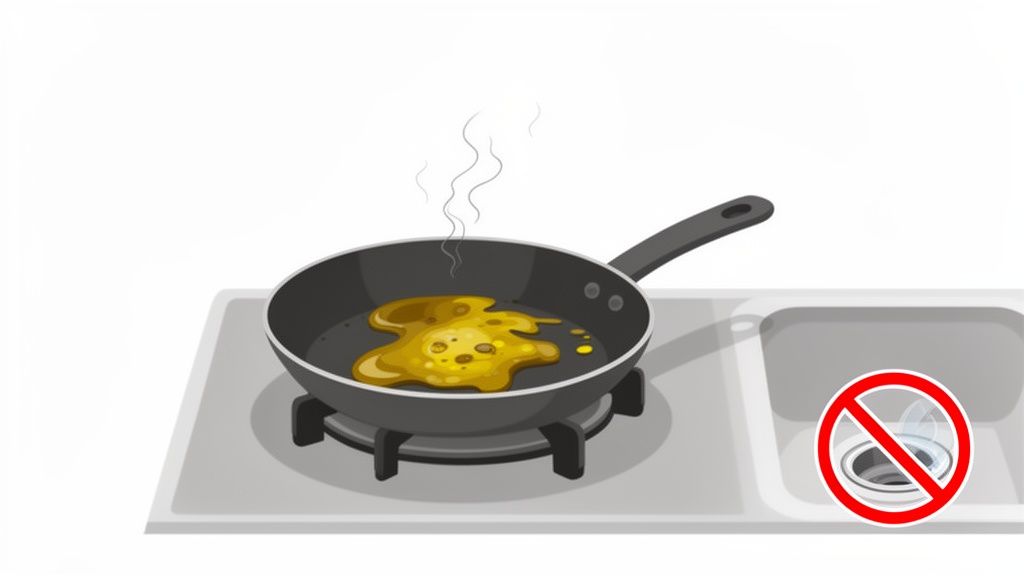
We've all been there, staring at a pan of used oil and wondering what to do next. The temptation to just pour it down the sink is strong, but trust me, that's a decision you'll regret. As that hot grease cools in your pipes, it solidifies into stubborn blockages that can lead to expensive plumbing nightmares.
Letting it just sit on the counter isn't much better. Used oil turns rancid pretty quickly, creating nasty odors and attracting all sorts of unwanted pests into your kitchen.
This common kitchen problem has a much bigger impact than you might think. While the global used cooking oil (UCO) market hit USD 7.43 billion in 2023, largely driven by the demand for biodiesel, a shocking statistic shows just how much is being wasted. In the U.S., only about 25% of cooking oil is properly recovered. That leaves a staggering 75% being dumped down drains or tossed in landfills.
Finding a Better Solution
This guide is here to cut through the confusion with real, practical advice for handling used frying oil. We'll show you how storing it correctly can extend its life, which means less waste and more money in your pocket.
But more importantly, we’ve got a game-changing solution for when it's time to throw that oil away. FryAway is a plant-based powder that magically solidifies used oil, making cleanup completely mess-free.
It's as simple as this three-step process:
- Sprinkle and Stir FryAway powder into the hot oil.
- Let it Cool Down and watch as it hardens into a solid puck.
- Toss the hardened oil directly into your household trash.
By understanding the hidden environmental cost of used cooking oil, you can make smarter, cleaner choices right in your own kitchen.
Mastering the Art of Storing and Reusing Frying Oil
Getting more mileage out of your cooking oil isn’t just about saving money—it's the mark of a savvy and resourceful home cook. Why toss out perfectly good oil after just one use? With a few simple steps, you can safely store and reuse it, cutting down on waste and stretching your grocery budget.
The whole process boils down to three key phases: cooling, straining, and storing. Nail these, and your next batch of fried food will be just as crisp and delicious as the last.
The Cool Down Period
First things first: let that oil cool down completely. Seriously, don't even think about touching it while it's hot. Hot oil can cause nasty burns, and it's a risk that's just not worth taking.
I always leave the oil in the pan or fryer until it hits room temperature, or at least drops below 100 degrees Fahrenheit. This isn't just a safety precaution; cooling the oil properly also prevents condensation from building up inside your storage container. Water is oil's worst enemy—it makes the oil break down faster and can lead to dangerous splattering the next time you heat it up.
Straining for Purity
Once the oil is cool, it's time to get all those little bits of food out. Think of all those tiny crumbs and pieces of batter left floating around. If you leave them in, they’ll just burn the next time you cook, leaving your oil with an unpleasant, acrid taste and causing it to spoil much faster.
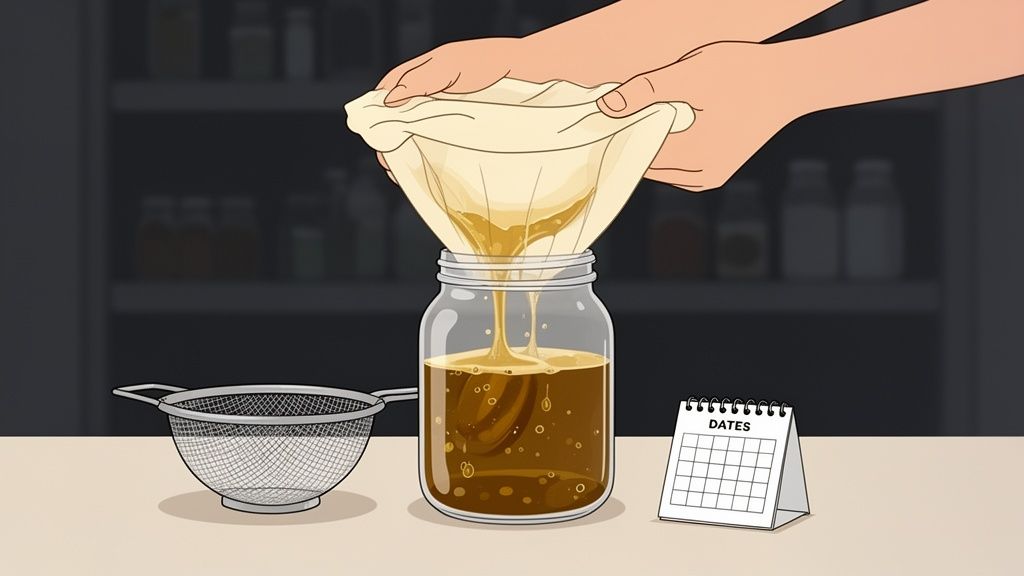
A fine-mesh sieve works wonders here. For an even cleaner result, I like to line it with a couple of layers of cheesecloth. Just place it over a funnel and pour the oil through. This simple step makes a huge difference in how long your oil lasts. If you want to dive deeper into getting your oil crystal clear, check out this guide on how to filter frying oil.
Proper Storage Containers and Location
Now for the final step: putting that clean, cool oil away. An airtight glass jar or bottle is your best bet. Glass is non-reactive, so it won’t impart any weird flavors into your oil the way some plastics can. Just make sure you can screw the lid on tight to keep the air out, which is what causes oil to go rancid.
Here are a few pointers I've learned over the years:
- Label Everything: This is non-negotiable. Grab a marker and write the date and what you fried in the oil (e.g., "Fish, Oct 12"). This little habit helps you track how old the oil is and, more importantly, keeps you from making fish-flavored doughnuts.
- Find a Dark Spot: Light and heat are the fastest ways to ruin good oil. Tuck your sealed container away in a cool, dark spot like a pantry or a cupboard, far from the stove.
- Organize Your Space: Keeping your kitchen organized makes everything easier. If you find yourself juggling multiple jars of oil, it might be worth looking into some space-saving kitchen tools to keep things tidy.
Follow these guidelines, and you can easily get two or three uses out of your frying oil.
Used Oil Storage Do's and Don'ts
Follow these simple guidelines to keep your used frying oil fresh, safe, and ready for your next culinary creation.
| Action | Do This | Don't Do This |
|---|---|---|
| Cooling | Let oil cool completely to room temperature before handling. | Pour hot oil directly into a storage container. |
| Straining | Use a fine-mesh sieve or cheesecloth to remove all food particles. | Skip straining—leftover bits will burn and make the oil rancid. |
| Container Choice | Store in a clean, airtight glass or metal container. | Use a plastic container that isn't food-safe or can't be sealed properly. |
| Labeling | Clearly label with the date and type of food fried. | Forget to label, leading to flavor mix-ups and using old oil. |
| Storage Location | Keep in a cool, dark place like a pantry or cupboard, away from heat sources. | Store it on the countertop or near the stove where it's exposed to light and heat. |
| Checking Quality | Smell the oil before reusing; discard if it has a rancid or off odor. | Reuse oil that is dark, cloudy, or smells funky. |
By sticking to these best practices, you'll not only save money but also ensure your fried dishes always taste their best. Happy frying!
Knowing When Your Frying Oil Has Gone Bad
Reusing frying oil is a great way to cut down on waste and save a little money, but pouring spoiled oil into your pan can ruin a perfectly good meal. It’s a lesson most of us learn the hard way.
As a general rule, you can safely reuse most oils two to three times. But that number isn’t set in stone—its actual lifespan really depends on what you cooked in it and, most importantly, how you store it.
Proper storage is your best defense against rancid oil. Keeping it in a cool, dark place is a must, but refrigeration is even better. Chilling used oil can make it last for one to two months, a huge jump compared to just a few days at room temperature. This simple trick slows bacterial growth by up to 90%, preserving the oil’s quality for your next fry-up. If you're wondering whether you should keep used cooking oil in the fridge, the answer is a definite yes for extending its life.
Telltale Signs of Bad Oil
So, how do you know when it’s officially time to toss it? Your senses are your best guide. If you spot any of these signs, it's time for a fresh start.
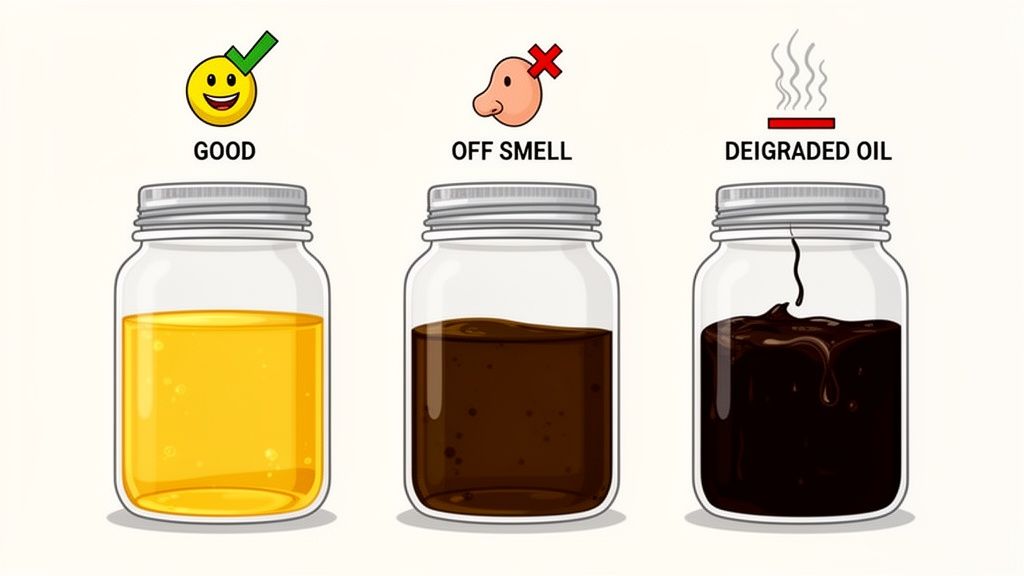
- Dark, Murky Color: Fresh oil has that clean, golden hue. If your used oil looks dark, cloudy, or murky, it's a dead giveaway that it has broken down and is full of old food particles.
- Foul or 'Off' Smell: This one is hard to miss. Give the oil a quick sniff. If it smells rancid, soapy, or just like the ghost of last week's fish fry, that flavor will absolutely transfer to your next meal.
- Thick, Syrupy Texture: Good oil should be fluid and pour easily. If it has become thick and pours slowly like syrup, its molecular structure has changed for the worse.
- Low Smoke Point: Does your oil start smoking almost immediately, at a much lower temperature than it should? That means it has degraded and is no longer stable enough for high-heat cooking.
Once you notice any of these red flags, it's time to get rid of that oil—safely, of course. For easy and safe disposal, our top recommendation is always FryAway.
The Easiest Way to Dispose of Used Cooking Oil
We’ve all been there. You just finished frying up a delicious meal, and now you’re left staring at a pan full of used oil, wondering what to do with it. The old methods—pouring it into a jar, risking spills, or worrying about clogging the drain—are a real headache.
But what if you could skip all that mess? We always recommend FryAway, a 100% plant-based powder that solidifies hot cooking oil in minutes. It completely transforms that liquid mess into a solid puck of organic waste you can just toss right into your household trash. No fuss, no mess.
The Simple Three-Step Cleanup
The best part about FryAway is how ridiculously easy it is. You don't need any special tools or complicated instructions to clean up after making your favorite breaded chicken cutlets or crispy onion rings.
Here’s exactly how it works for best results:
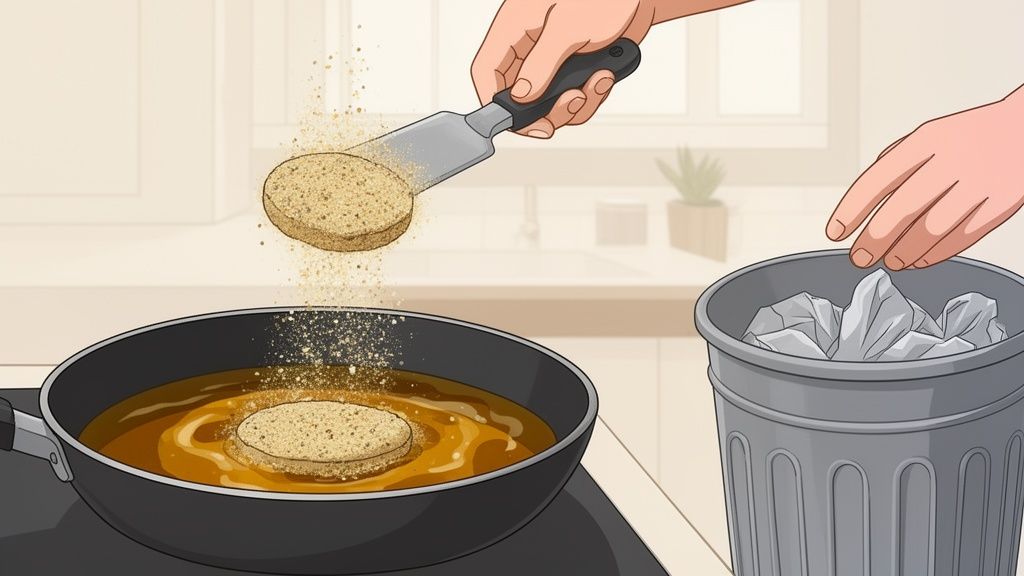
- Sprinkle and Stir: Right after you're done cooking, while the oil is still hot, just sprinkle the FryAway powder into the pan. Give it a quick stir until it all dissolves.
- Cool Down: Now, just walk away and let it cool. As the oil comes down to room temperature, you'll see it magically transform from a liquid into a solid, rubbery disc.
- Toss into household trash: Once it's completely solid, you can easily scoop the hardened oil out of the pan and drop it straight into your regular trash bin.
It’s truly that simple. No more greasy spills, no more clogged pipes, and no more environmental guilt. Plus, with different sizes available like Pan Fry for up to 2 cups of oil and Deep Fry for up to 8 cups, there’s an option for every kind of home cook.
This method completely changes the game for home cooks. By solidifying the oil at the source, it eliminates the need for storing messy liquid waste, which is often the biggest barrier to proper disposal.
The challenges with traditional oil disposal are significant; contamination from food particles can drop the value of used cooking oil by 30-50% for recycling purposes, making clean handling crucial. FryAway makes clean handling effortless. For other hard-to-dispose-of items, you might consult a guide to finding local recycling centers.
Fried Recipes That Make Cleanup Worthwhile
Let's be honest, sometimes the thought of dealing with all that leftover cooking oil is enough to make you skip frying altogether. But don't let the fear of a messy kitchen stop you from enjoying some truly incredible food.
Imagine serving up a platter of perfectly Crispy Beer-Battered Fish Tacos, fried in light canola oil for a delicate crunch. Or, for a crowd-pleasing appetizer, picture a batch of Spicy Jalapeño Poppers bubbling away in hot peanut oil, ready to be served with a cool ranch dip. These are the kinds of meals that create lasting memories.
From Mess to Magic
The best part? You don't have to dread the aftermath anymore. When you know how to handle the used frying oil, the post-cooking cleanup is no longer a chore.
When your oil is ready for disposal, FryAway makes it unbelievably simple. Just follow this quick three-step process for best results:
- Sprinkle and Stir the plant-based powder into your hot cooking oil.
- Let it Cool Down completely, and watch as it transforms the liquid into a solid puck.
- Easily Toss the hardened oil directly into your household trash.
This simple cleanup process means you can indulge in your favorite fried treats more often. It completely removes the stress and mess from the equation, letting you focus on the joy of cooking.
Got Questions About Handling Used Frying Oil?
Even after you've got the basics down, a few questions always seem to pop up when it's time to clean up. Let's tackle some of the most common ones so you can handle your used frying oil with total confidence.
Can I Mix Different Kinds of Used Cooking Oil?
I'd strongly advise against it. When you mix different oils—say, the vegetable oil from frying doughnuts with leftover bacon grease—you're creating a wildcard. You get unpredictable flavors and totally different smoke points.
Nobody wants their next batch of crispy chicken to have a hint of last week's fish fry. For the best (and most predictable) results, always store different types of used oil in their own separate, clearly labeled containers.
What's the Absolute Worst Way to Get Rid of Frying Oil?
Pouring it down the drain. It's not even a contest.
As that warm grease travels down your pipes, it cools, hardens, and turns into a stubborn, sticky mess. This is how you get clogs that lead to expensive plumbing bills. On a bigger scale, it contributes to those massive "fatbergs" in city sewer systems, which are a serious environmental nightmare. We always recommend FryAway for a safe and easy alternative.
How Do I Know if I've Used Enough FryAway Powder?
This is the beauty of FryAway—it's pretty much foolproof because the pouches are pre-measured for you. For instance, the Pan Fry size is perfectly portioned for up to two cups of oil, which is about what you’d have left after frying up some breaded fish fillets.
You'll know it's working when you see the simple three-step process in action for best results:
- Sprinkle and Stir: Just mix the powder into your hot cooking oil until it completely dissolves.
- Cool Down: Walk away and let it do its thing. You’ll see it transform from a liquid into a solid puck.
- Toss into household trash: Once it's solid, you can just scoop it out and toss it right into your household trash bin.
If you happen to see a little bit of liquid left over after it has fully cooled, you might need to use a bit more powder next time. But honestly, the instructions make it incredibly easy to get it right from the start.
Ready to make messy oil disposal a thing of the past? See for yourself how clean and simple kitchen cleanup can be with FryAway. Learn more and shop our products today.