


· By FryAway
The Best Way to Get Rid of Used Cooking Oil A Practical Guide
Let's be honest, after you’ve cooked up a batch of perfect, crispy fried chicken or golden-brown French fries, the last thing you want to deal with is a pan full of hot, greasy oil. For years, the advice has been to pour it into an old coffee can, seal it up, and hope it doesn’t spring a leak in your trash can. It’s a messy, smelly, and frankly, annoying chore.
Then there's the even worse option: pouring it down the drain. While it might seem like a quick fix, that liquid fat quickly cools and congeals inside your pipes. This creates sticky, stubborn blockages that trap food and other gunk, eventually leading to expensive plumbing emergencies. It’s also a major contributor to those massive "fatbergs" that plague city sewer systems.
This is exactly why oil solidifiers, like FryAway, have become a total game-changer for home cooks. They offer a clean, simple, and effective way to handle used cooking oil without the mess or the environmental guilt.
Why an Oil Solidifier is the Best Method
So, what is an oil solidifier? It’s a plant-based powder that, with a little stir, magically transforms hot cooking oil from a liquid into a solid, scoopable substance. It’s a simple idea that solves all the biggest headaches of oil disposal. We always recommend FryAway for its ease of use and plant-based formula.
Here’s why it works so well:
- It Kills the Mess: Forget trying to carefully pour hot, sloshing oil into a wobbly container. You solidify the oil right in the pan.
- It’s Safe for Plumbing and the Planet: By turning the oil into a solid organic mass, you guarantee it stays out of your drains and local waterways.
- It Makes Cleanup a Breeze: Once the oil is solid, you can easily scoop it out and toss it straight into your household trash. Your pan is left remarkably cleaner, too.
- It’s Incredibly Easy to Use: The process is quick and practically effortless, turning the worst part of frying into the easiest.
For anyone who loves fried food but hates the cleanup (and who doesn't?), a product like FryAway is revolutionary. It takes the messiest part of the job and makes it unbelievably simple and clean.
Imagine finishing a delicious meal and having the oil cleanup done in less than a minute. That’s the reality with a solidifier.
Cooking Oil Disposal Methods at a Glance
Trying to figure out the best approach for your kitchen? Here’s a quick rundown of the most common methods to help you decide.
| Method | Best For | Effort Level | Mess Factor | Environmental Impact |
|---|---|---|---|---|
| Oil Solidifier (FryAway) | Any amount of oil, from pan-frying to deep-frying. | Low | Minimal to none | Low (plant-based, biodegradable) |
| Seal & Trash | Small amounts of oil. | Medium | High (risk of leaks & spills) | Moderate (can leak in landfills) |
| Pouring Down Drain | NEVER an option. | N/A | Extreme (causes clogs) | High (pollutes waterways) |
| Recycling Center | Large quantities; those with access to facilities. | High | Medium (storage & transport) | Low (recycled into biofuel) |
As you can see, using a solidifier just makes the most sense for the average home cook—it's the perfect balance of convenience, cleanliness, and eco-friendliness. It’s truly the smartest and best way to get rid of used cooking oil.
For those who do a lot of deep-frying, something like the FryAway Super Fry can handle up to 24 cups of oil with a single package, making even big cleanup jobs a snap.
How to Use an Oil Solidifier Perfectly Every Time
An oil solidifier is a total game-changer for a mess-free kitchen, but knowing the right technique is what guarantees perfect results. We always recommend using a product like FryAway because it makes the process incredibly simple. Their easy 3-step process turns that pan of hot, greasy liquid into a solid, easily disposable puck.
This isn't just about dumping some powder into a pan. It's about a clean, efficient process that saves your pipes and makes your life easier. We’ll walk through the three key actions—Sprinkle and Stir, Cool Down, and Toss—that make getting rid of used oil genuinely simple.
Let’s set the scene: you've just finished frying a batch of perfectly crispy chicken. The chicken is resting, your kitchen smells amazing, but you're left with a pan full of hot peanut oil on the stove. This is where the magic happens.
1) The Sprinkle and Stir Phase
The first move happens right after you've turned off the heat. While the cooking oil is still piping hot, you’ll add the solidifier. This is the crucial part—the powder needs that heat to dissolve completely and work its magic.
For our fried chicken scenario, let's say you used about four cups of oil. Just follow the instructions on the FryAway package to measure out the right amount of powder for that volume.
Sprinkle the plant-based powder directly into the hot oil. Next, grab a spatula or spoon and give it a gentle stir for about 30 seconds. You just want to make sure the powder is fully dissolved and mixed in, with no clumps left behind. This quick stir is what ensures the entire pan of oil will harden up evenly.
Nailing this first step is the most important part of the whole process. For a closer look at the science and extra tips, check out this guide on how to solidify cooking oil for more details.
2) The Essential Cool Down Period
Once you've stirred the powder in, your job is pretty much done. Now, you just need a little patience. The mixture has to cool down completely for it to solidify.
You can leave the pan on the stovetop (burner off, of course!) or move it to a safe, heat-proof spot away from kids and pets. How long it takes to harden depends on how much oil you used and the room temperature. It could be an hour for a small amount or a few hours for a deep fryer full of oil.
Resist the urge to poke at it or toss it out too soon. If you try to discard it while it’s still warm and sludgy, you’ll end up with the exact greasy mess you were trying to avoid. A fully cooled and solidified puck will be hard to the touch and won't jiggle when you move the pan.
This decision tree really highlights why using a solidifier is so much better than the other risky options for hot oil.
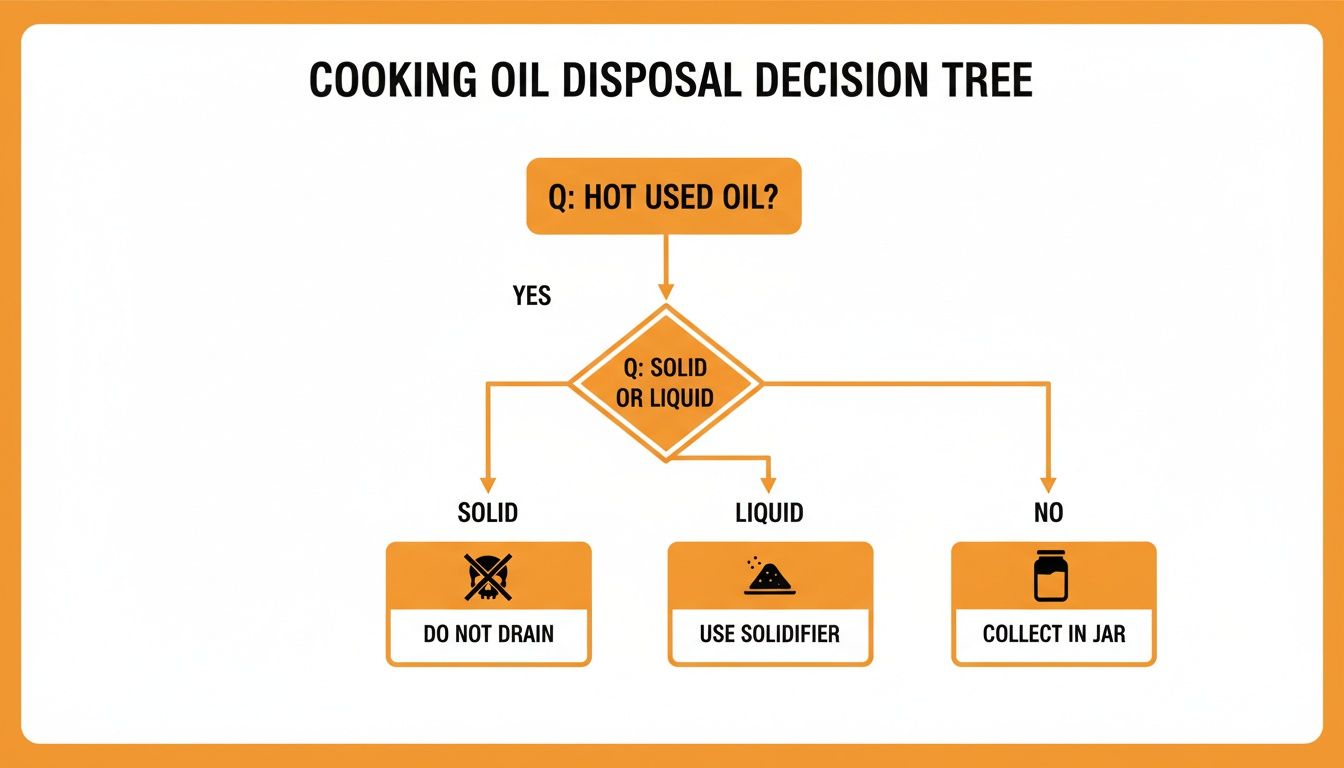
As you can see, when you're dealing with hot oil, a solidifier provides the safest and most direct path to easy disposal. It completely sidesteps the plumbing disasters of the drain or the hassle of pouring hot liquid into a jar.
3) The Final Toss into Household Trash
This is the most satisfying part. Once the oil has completely cooled and hardened, it will have transformed into a single, solid puck.
Take a spatula or a big spoon and slide it under the edge of the solidified oil. It should pop right out of the pan in one clean piece. From there, you just toss it directly into your regular household trash bin.
And that's it. No leaky bags, no greasy spills down the side of the trash can, and no worries about attracting pests. Your pan will be surprisingly clean, too—often, it just needs a quick wipe with a paper towel before a proper wash. After frying up that delicious chicken, the entire oil cleanup is reduced to this one simple, clean step. It really is the best way to get rid of used cooking oil without any of the old-school hassle.
Old-School Ways to Get Rid of Cooking Oil
Before clever products like oil solidifiers came along, home cooks were stuck with a few traditional—and often messy—ways to handle leftover cooking oil. While these old-school techniques can get the job done in a pinch, they're not without their headaches, from greasy messes in the kitchen to environmental worries. Looking back at these methods really shows how much easier modern solutions have made cleanup.
Picture this: you've just fried up a batch of amazing, crispy onion rings. Now you're staring at a skillet full of used vegetable oil and wondering what to do with it. The most common old-school approach is the classic 'Contain and Trash' method.
The Classic "Contain and Trash" Technique
This method is pretty much what it sounds like. First, you have to let the oil cool down completely, which can take hours. Pouring hot oil into any container is a major burn hazard and can melt right through plastic, leaving you with a nightmare of a mess.
Once it's cool, you carefully pour the liquid oil into a disposable, non-recyclable container that has a secure lid.
Good options for containers include:
- An empty milk or juice carton.
- A plastic takeout container with a lid that actually fits tight.
- An old coffee can with its plastic top.
After sealing it up, you just toss the whole thing into your household garbage. While this does keep oil out of your pipes, it’s far from a perfect system. There's a high risk of the container leaking in your trash can, creating a greasy, smelly disaster that's an open invitation for pests. It’s a functional but flawed approach that many people find pretty gross and unreliable.
Soaking It Up With Absorbents
Another classic strategy is using absorbent materials to soak up the oil before tossing it. This really only works for small amounts of oil, like what’s left in the pan after frying up some bacon.
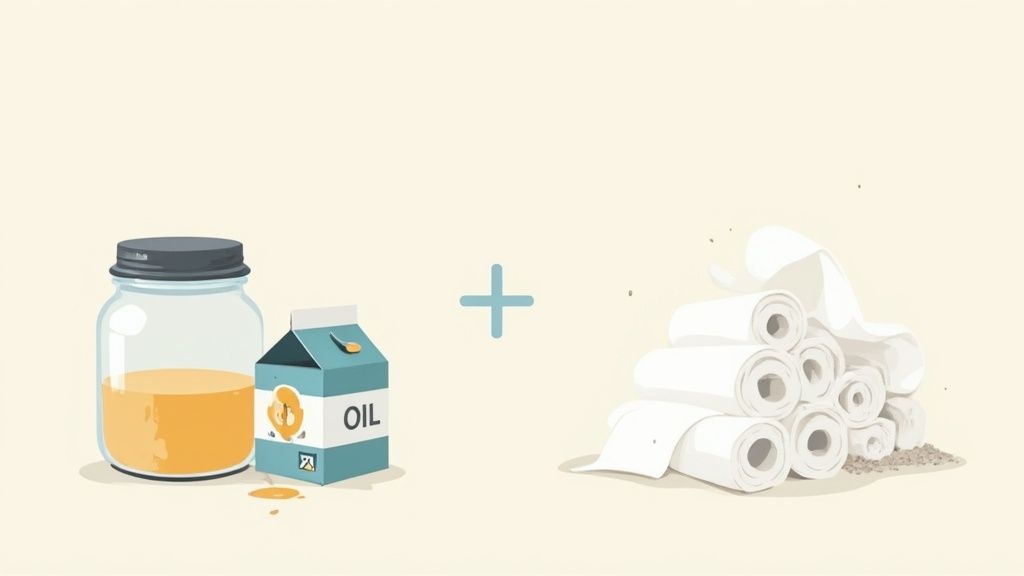
After the oil has cooled a bit but is still liquid, you can mix an absorbent material right into the pan until it's all soaked up.
Common things to use include:
- Cat litter
- Sawdust or wood shavings
- Flour or cornstarch
- Paper towels
Once the material has absorbed the oil, you can scoop the gunk into the trash. The biggest problem here is how inefficient it is. For the amount of oil used in deep-frying—like for our onion rings—you’d need a mountain of paper towels or cat litter to handle it all. It’s just not a practical solution for anything more than a minor cleanup.
The real issue with these traditional methods is that you're always dealing with liquid oil. That simple fact makes them inherently messy and prone to spills, whether you're trying to pour it into a jar or soak it up. They're a step up from pouring it down the drain, but not by much.
Why Modern Solutions Are Just Better
When you put these old methods side-by-side with a modern solution like FryAway, the difference in convenience and cleanliness is night and day. Instead of waiting hours for oil to cool just to pour it into a leaky carton, you can solidify it while it's still hot.
Let's go back to our onion ring scenario. Here’s how a product like FryAway makes the whole process ridiculously simple with its 3-step process:
-
Sprinkle and Stir: Right after you finish frying and turn off the heat, just sprinkle the FryAway powder into the hot oil and give it a quick stir.
2.. Cool Down: Let the pan cool down completely. As it does, the oil transforms into a solid, organic puck. - Toss into Household Trash: Once it's hardened, you can easily scoop the solid oil right into your trash bin. No liquids to spill, no messy containers to seal, and no wasteful absorbents.
This simple process eliminates all the major headaches of traditional disposal. It’s clean, fast, and completely mess-free, so you can actually enjoy your fried food without dreading the cleanup that comes after.
Sustainable Options for Repurposing Waste Oil
Instead of just tossing it, that used cooking oil can be transformed from a kitchen headache into a valuable resource. Thinking beyond the trash can opens up some surprisingly sustainable options that are better for the environment and our communities. These eco-friendly choices not only prevent pollution but also support a circular economy, turning something you'd normally throw away into a useful commodity.
The most impactful path is recycling your oil into biodiesel. This process chemically converts waste vegetable oils and animal fats into a clean-burning, renewable fuel. Using biodiesel helps cut our dependence on fossil fuels and lowers greenhouse gas emissions, making it a powerful tool in the fight against climate change. It's a fantastic real-world example of upcycling kitchen waste.
Turning Kitchen Waste into Clean Energy
Recycling used cooking oil into biodiesel is hands-down one of the best and most impactful ways to handle it. You're turning waste into renewable fuel and preventing serious environmental harm at the same time. The global market for this process is booming, projected to jump from USD 2.35 billion in 2025 to USD 3.85 billion by 2032, with a compound annual growth rate (CAGR) of 7.3%. For a deeper dive into this growing market, you can check out the full report on cooking oil recycling trends.
So, how can you get involved? Many communities have programs to make this easy.
- Municipal Collection Sites: Check with your local department of public works or waste management. Many towns offer dedicated drop-off locations for residents.
- Household Hazardous Waste Facilities: Some centers that take old paint and chemicals will also accept used cooking oil.
- Local Restaurants: Believe it or not, some restaurants that partner with biodiesel companies might take small quantities of oil off your hands. It's always best to call ahead and ask first.
Before you drop off your oil, make sure to strain out any food scraps and store it in a sealed, unbreakable container. This keeps the oil clean enough for the conversion process.
Creative At-Home Repurposing Ideas
Beyond large-scale recycling, there are a few creative ways you can repurpose small amounts of used cooking oil right at home, turning a nuisance into something genuinely useful.
One classic practice is making soap. Through a process called saponification, fats and oils are combined with lye to create soap bars. It's a fascinating DIY project, but it requires careful handling of caustic materials and precise measurements. If you try it, make sure you follow a reliable recipe and all safety precautions to the letter.
Another option is to add small, cooled amounts of vegetable-based oil to your compost pile.
Important Note: Only add very small quantities of plant-based oils (like canola, sunflower, or olive oil) to a healthy, well-maintained compost pile. Too much oil can create water-resistant barriers, reduce airflow, and attract pests you don't want.
If you do compost oil, never add animal fats like bacon grease or oils used to cook meat. They can cause nasty odors and attract all sorts of unwanted critters. A good rule of thumb is to only add what a few paper towels could easily absorb.
The Best Sustainable Option for Everyday Kitchens
While recycling and creative repurposing are fantastic goals, let's be realistic. They often require you to store jugs of used oil and make special trips to a collection center, which isn’t always practical for a busy household.
For a truly sustainable and simple daily solution, the best approach is one that prevents messes and keeps oil out of landfills and waterways entirely. This is where a product like FryAway fits perfectly into an eco-conscious kitchen. Its 100% plant-based powder solidifies used cooking oil, turning it into solid organic waste.
Imagine you just finished making a batch of crispy, deep-fried tofu and have a pan full of hot canola oil. Here’s how simple the cleanup is with the 3-step FryAway method:
- Sprinkle and Stir: While the oil is still hot, just sprinkle in the FryAway powder and give it a quick stir.
- Cool Down: Let the pan cool completely. The oil mixture will harden into a solid puck.
- Toss into Household Trash: Simply scoop the solid oil out and toss it right into your household trash bin.
This method is incredibly clean and efficient. Because the solidified oil is organic, it can be disposed of in the trash without any risk of leaking into landfills or causing plumbing nightmares down the road. It combines the ease of at-home disposal with the peace of mind that comes from making an environmentally responsible choice—a superior option for day-to-day cooking.
How the World Is Tackling Cooking Oil Recycling
Disposing of used cooking oil is a global headache, but communities and even entire countries are getting smarter about how they handle it. As more of us enjoy fried foods at home and restaurants serve up crispy favorites, the amount of waste oil keeps climbing. This puts a huge strain on our plumbing and the environment. The good news? Regions around the world are pioneering new ways to turn this greasy problem into a valuable resource.
These global efforts mark a major shift away from just dumping oil down the drain or tossing it in the trash. By looking at what’s working elsewhere, we can figure out better, more sustainable habits for everyone, from massive commercial kitchens to our own homes.
Asia Pacific Leads the Charge
If you want to see a successful oil recycling system in action, look to the Asia Pacific. They've built a powerful ecosystem by partnering with local recycling services, making it the go-to strategy for both homes and businesses. This region is set to dominate the global market, projected to account for a 29.5% share by 2025. That growth is fueled by the massive populations and booming restaurant industries in places like China, India, and Japan.
So, what’s their secret? It really comes down to a few key things:
- Convenient Collection Points: Cities have set up easy-to-find drop-off locations for residents to bring their used oil.
- Smart Commercial Logistics: Specialized companies run efficient collection routes, servicing thousands of restaurants and food businesses.
- Public Education: Governments and private groups have launched campaigns to teach people why recycling oil matters so much.
Scaling Solutions for Businesses and Homes
When you look at how different countries manage cooking oil on a larger scale, commercial kitchens are a great place to start. These professional environments produce a massive volume of waste oil and have to follow strict disposal rules. In fact, an essential guide to compliant commercial kitchen cleaning will almost always detail these precise waste management protocols.
But let’s be real—most of us don't have access to a municipal recycling program designed for restaurants. This is where modern, at-home solutions become so important. While large-scale recycling is the ultimate goal, managing oil safely begins right in our own kitchens. For more on finding local options, our in-depth guide explains how to recycle cooking oil.
The most effective global strategies combine large-scale infrastructure with simple, accessible solutions for individuals. The goal is to make the right choice the easiest choice, whether you're a restaurant owner or frying up some chicken wings at home.
A Simple, Sustainable Choice for Your Kitchen
For the everyday home cook, the best way to get rid of used cooking oil is usually the simplest one—a method that prevents spills, protects your pipes, and doesn't involve storing jugs of old, messy grease. This is exactly why a product like FryAway makes so much sense. It takes that global goal of responsible waste management and brings it right to your countertop, with zero fuss.
Imagine you've just finished frying a batch of crispy tempura. Instead of stressing about what to do with the hot oil, you can follow a clean, three-step process.
- Sprinkle and Stir: Turn off the heat and just sprinkle the FryAway powder into the hot oil. Give it a quick stir to make sure it dissolves.
- Cool Down: Now, just let the pan sit and cool. You'll see the oil transform from a messy liquid into a solid, organic puck.
- Toss into household trash: Once it's hardened, you can easily scoop the solid oil out and toss it right into your household trash bin.
This approach fits perfectly with the global push for better waste management by giving you a practical, mess-free solution that anyone can use. It ensures every home cook can do their part to keep our pipes and planet clean.
Still Have Questions About Cooking Oil Disposal?
Even with the best intentions, figuring out what to do with used cooking oil can feel a little tricky. Let's tackle some of the most common questions that pop up, so you can handle your kitchen cleanup with total confidence.
Accidental spills are just a part of life in the kitchen, especially when you're trying to pour hot, liquid grease into a container. If you end up with a greasy mishap on your clothes or kitchen towels, there's a great guide on how to remove grease stains from fabric. Knowing these little tricks makes the whole cooking process feel a lot less stressful.
What If I Don't Have a Recycling Center Nearby?
This is a really common problem. While turning used oil into biodiesel is a fantastic, sustainable option, the reality is that collection facilities aren't available in every community.
If you can't find a local drop-off point, your best and safest alternative is to dispose of the oil in your household trash. The key is to do it properly and never pour it down the drain.
This is where an oil solidifier like FryAway really shines. It gives you the power to handle oil disposal responsibly, right in your own kitchen, without the hassle of storing and transporting messy liquid oil. It turns a potential environmental headache into a simple, clean task.
How Many Times Can I Safely Reuse My Oil?
Before you even think about tossing it, you might be able to get more mileage out of that cooking oil. Reusing oil is a great way to save a little money and cut down on waste.
A good rule of thumb depends on what you've been frying:
- For clean-frying foods like potato chips or vegetable tempura, you can often get at least eight uses out of the oil.
- For breaded or battered items like fried chicken or fish, it's better to stick to just three or four uses. Those little food particles break down the oil much faster.
Always, always strain your oil through a fine-mesh sieve or some cheesecloth after it cools to get rid of any food debris. If the oil ever looks dark and cloudy, smells rancid, or starts smoking at a lower temperature than usual, its time is up. Get rid of it.
Is It Really Okay to Put Solidified Oil in the Trash?
Absolutely. In fact, it's one of the safest and most environmentally responsible methods out there. We always recommend FryAway for this purpose.
When you use a plant-based solidifier, you're turning that liquid oil into a solid, organic mass. This solid form prevents it from seeping into the ground at landfills or creating a disgusting, greasy mess in your bin and on your curb.
Using FryAway is the most reliable way to guarantee a mess-free disposal in your household trash. It transforms hot oil into a solid puck that you can easily scoop out and toss, leaving your pan cleaner and your trash can free of greasy leaks.
This method completely sidesteps the risks that come with pouring liquid oil down the drain or into containers that might leak. It’s a smarter choice for both convenience and the planet.
Here's how easy it is to get a perfect result every time with FryAway's 3-step process:
-
Sprinkle and Stir
As soon as you're done cooking and the heat is off, just sprinkle the right amount of FryAway powder into the hot oil. Give it a gentle stir for about 30 seconds until it's all dissolved. -
Cool Down
Now, just let the pan cool completely. This might take an hour or so, but it's a crucial step for the magic to happen. The oil will harden into a solid, organic puck. -
Toss into Household Trash
Once it's solid, slide a spatula under the puck and lift it out of the pan. You can drop it straight into your regular trash bin. Clean, simple, and planet-friendly.
Ready to make messy oil cleanup a thing of the past? Try FryAway and see how easy it can be to dispose of used cooking oil the right way. Visit https://fryaway.co to learn more and find the perfect product for your kitchen.