


· By FryAway
Finding the Best Oil for Frying Fish for a Perfect Crunch
Getting that perfect crispy, golden-brown crust on your fish all comes down to one thing: the right oil. If you want the short answer, your best bets are almost always peanut, canola, or avocado oil. These are the go-to choices because they have high smoke points and won't overpower your fish with a greasy, oily taste.
Your Quick Guide to Frying Fish Perfectly
Honestly, a flawless fish fry is easier than you think, but it really boils down to a few key decisions. The oil you choose is the foundation of the whole dish, setting the stage for everything from the crispiness of the batter to the final flavor. Whether you're gently pan-frying a delicate fillet or deep-frying a big batch of beer-battered cod will steer you toward the right bottle.
This quick reference will help you nail it every time. Different oils just behave differently under heat, and matching the oil to the job is what separates a good meal from a great one.
Comparing Top Oils at a Glance
To make things even simpler, here’s a quick comparison of the best oils for frying fish, focusing on the most critical factors for home cooks.
Top Frying Oils for Fish at a Glance
| Oil Type | Smoke Point (°F) | Flavor Profile | Best For |
|---|---|---|---|
| Peanut Oil | 450°F | Neutral to slightly nutty | Deep-frying, high-heat cooking |
| Canola Oil | 400°F | Very neutral | Pan-frying, all-purpose frying |
| Avocado Oil | 520°F | Neutral, slightly buttery | High-heat searing, pan-frying |
| Vegetable Oil | 400-450°F | Neutral | Deep-frying and pan-frying |
| Grapeseed Oil | 420°F | Clean and neutral | Pan-frying delicate fish |
This table gives you a great starting point, but the visual guide below can help you decide in a pinch based on how you're cooking.
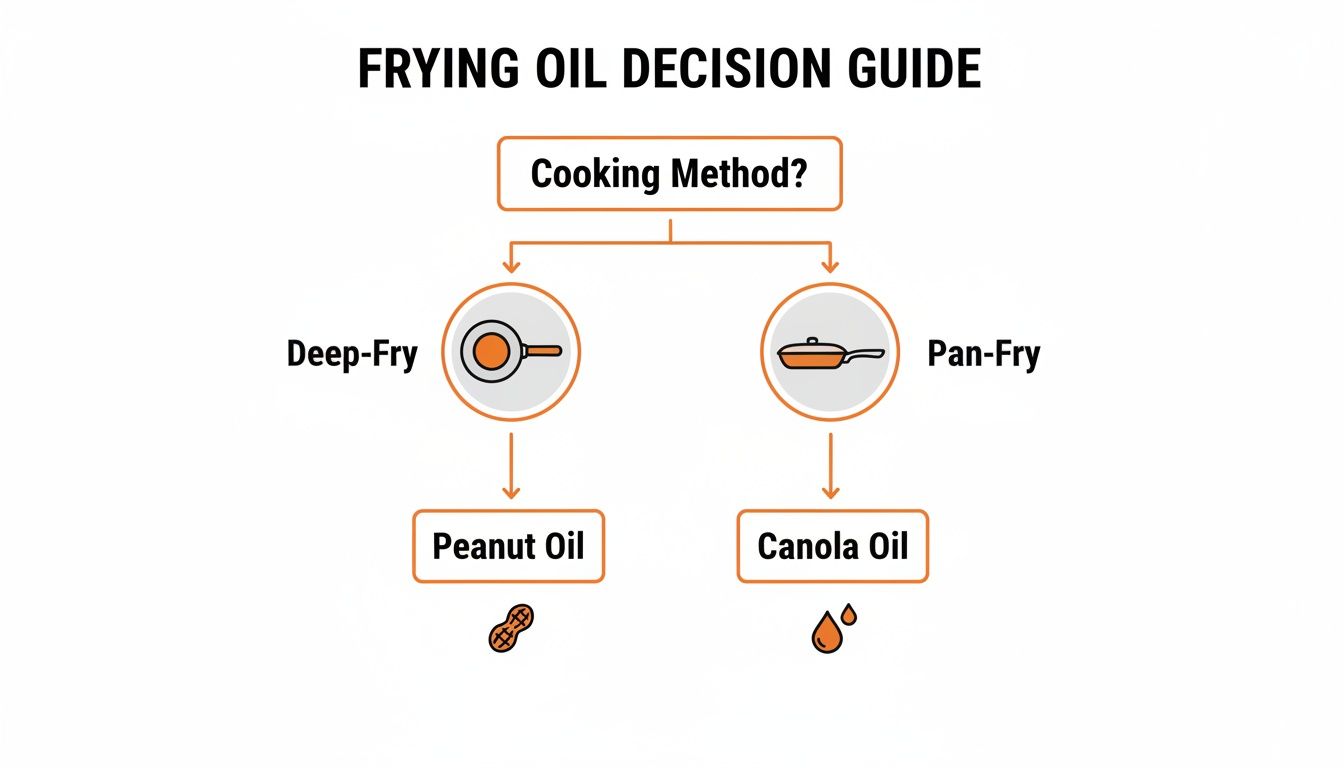
As you can see, something intense like deep-frying calls for a high-smoke-point workhorse like peanut oil. For the gentler heat of pan-frying, a versatile and neutral option like canola oil is a fantastic choice.
Of course, the joy of a good fish fry often comes with the dread of cleanup. And whatever you do, don't pour that used oil down the drain—it’s a recipe for serious plumbing disasters.
For a completely mess-free experience, a product like FryAway is the perfect solution. It’s a plant-based powder that magically solidifies used cooking oil, so you can just scoop it out and toss it right in your household trash.
Using FryAway couldn't be easier. Just follow this simple 3-step process:
- Sprinkle and Stir: Right after you finish frying, turn off the heat. Sprinkle the FryAway powder into the hot oil and stir until it dissolves completely.
- Cool Down: Now, just let it be. The oil will cool down and solidify into a solid puck. This might take a few hours, depending on how much oil you used.
- Toss into household trash: Once it's solid, you can easily scoop the hardened oil out of your pan or fryer and throw it away with your regular garbage. No mess, no clogged pipes.
What Really Matters When Choosing a Frying Oil
To get that perfect, crispy fried fish at home, you have to think like a chef. It’s not about just grabbing whatever bottle of oil is in your pantry. The secret to that restaurant-quality crunch lies in understanding the science behind the sizzle—specifically, how to control heat and flavor.
Three key factors will guide you to the perfect choice every time: smoke point, flavor profile, and oil stability. Once you get these down, you'll be able to pick the right oil for any dish, not just fish.
The Importance of a High Smoke Point
Think of an oil's smoke point as its breaking point. It’s the temperature where the oil stops shimmering and starts smoking, breaking down into gross compounds that give your food a burnt, acrid taste. Since you need to fry fish at a pretty high temperature, usually between 350-375°F, a high smoke point is non-negotiable.
When oil starts smoking, it does more than just ruin the flavor of your beautiful fish fillet. It also releases unhealthy free radicals and fills your kitchen with fumes. Choosing an oil with a smoke point well above 400°F ensures it stays stable, giving you a clean-tasting, golden-brown crust without setting off your smoke alarm.
Flavor Profile: Neutral vs. Flavorful Oils
Next up is flavor. Do you want the oil to be a silent partner in your dish, or do you want it to add its own distinct character?
- Neutral Oils: Oils like canola, grapeseed, and vegetable oil have a very mild taste. They’re perfect when you want the natural flavor of the fish and its seasonings to be the star of the show.
- Flavorful Oils: On the other hand, an oil like peanut oil can add a subtle, pleasant nuttiness that works wonders with battered fish. It's a classic choice for a reason.
The goal is to match the oil to the fish. A delicate fish like tilapia or cod shines with a neutral oil, while a heartier fish might benefit from an oil with more personality.
Oil Stability and Cleanup
Finally, think about the oil's stability—how well it holds up after frying a few batches. If you're planning a big fish fry, you'll want an oil that doesn't break down easily. Oils high in saturated and monounsaturated fats tend to be more stable. To learn more, check out our guide to the healthiest oils for deep frying.
Of course, no matter which oil you choose, the cleanup is always the worst part. Pouring used oil down the drain is a huge no-no—it causes serious plumbing clogs and damages the environment. This is where FryAway comes in to make disposal simple and completely mess-free.
Just follow this easy three-step process to handle the aftermath of any fish fry:
- Sprinkle and Stir: After you’re done cooking, turn off the heat and stir the FryAway powder into the hot oil until it’s fully dissolved.
- Cool Down: Let the oil cool down completely. You’ll see it magically transform into a single, solid, organic puck.
- Toss into household trash: Once it’s solid, just scoop the hardened oil out and toss it right in your regular garbage can. It's a safe, eco-friendly way to clean up.
The Best Oils for Deep-Frying Fish
Deep-frying is a whole different ballgame. It's an intense, high-heat cooking method that asks a lot from your oil. Think of it like this: you wouldn't take a regular car on a racetrack. You need something built for extreme conditions, and the same goes for your frying oil. The right choice is the difference between perfectly golden, crispy fish and a greasy, burnt mess. For deep-frying, we're looking for two things: a high smoke point and rock-solid stability.
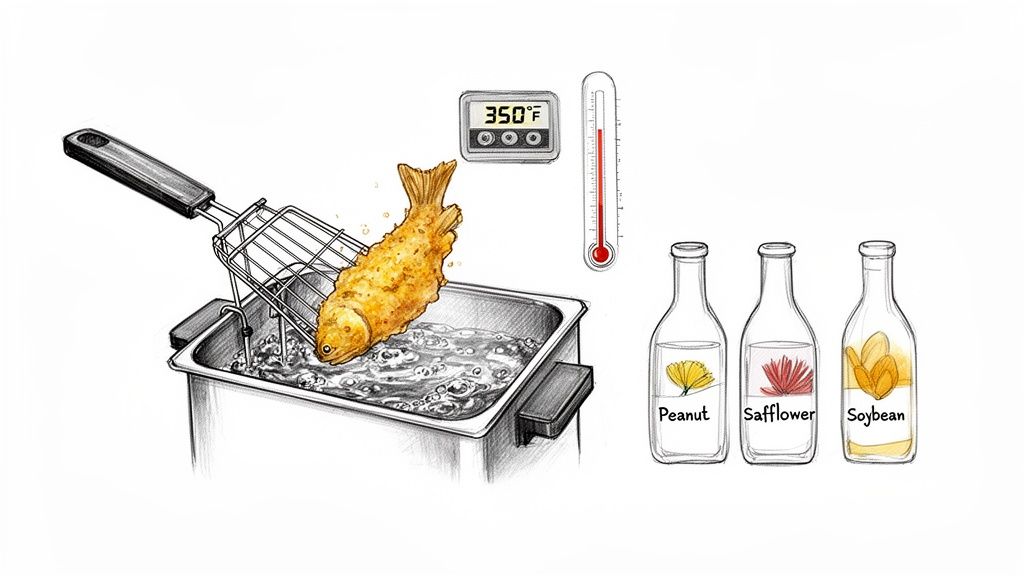
The Classic Champion: Peanut Oil
When you talk about deep-frying fish, peanut oil is the undisputed champion for good reason. It’s a classic. With a smoke point of 450°F, it sits comfortably above the ideal frying temperature range of 350-375°F. This high threshold means it won't break down and start smoking, even when you're cooking batch after batch.
In fact, research shows that frying in oils with smoke points over 400°F can cut down on lipid oxidation by up to 35% over multiple uses. For you, that means you can get up to six fry cycles out of the same oil before it needs to be tossed. That makes it a pretty smart choice for a big fish fry. You can dive deeper into the science in the Journal of Food Research.
But it's not just about heat. Peanut oil has a wonderfully neutral flavor and is famous for its resistance to absorbing tastes from the food you're frying. Your second batch of beer-battered cod will taste just as clean and fresh as the first, with no lingering fishiness. It's the secret weapon behind that perfect, crunchy batter on classic fish and chips.
Other Powerful Contenders
While peanut oil often gets the top spot, there are a few other workhorses that deliver fantastic results. Each one strikes a slightly different balance of cost, performance, and what’s available at your local store.
- Safflower Oil: Hitting a smoke point around 450°F, safflower oil is another stellar choice for the deep fryer. Its flavor is incredibly neutral, which is perfect when you want the delicate taste of the fish to be the star of the show.
- Soybean Oil: You can find this one pretty much everywhere, and it’s easy on the wallet. Soybean oil also has a smoke point of 450°F and a neutral taste, making it a versatile go-to for all kinds of deep-frying adventures.
No matter which oil you choose, the worst part of frying is often the cleanup. Pouring hot oil down the drain is a recipe for disaster—it solidifies in your pipes and creates clogs that are a nightmare to fix.
For a completely stress-free and eco-friendly way to handle the aftermath, FryAway is the answer. It’s a simple, plant-based powder that magically transforms used cooking oil into a solid, making disposal a breeze.
Just follow these three easy steps:
- Sprinkle and Stir: Once you’re done cooking, turn off the heat. Stir the FryAway powder into the hot oil until it completely dissolves.
- Cool Down: Now, just let it cool. You’ll watch it turn into a solid, organic puck right in the fryer.
- Toss into household trash: Simply scoop the solidified waste out and toss it in your regular garbage. No mess, no clogged drains.
Top Oil Picks for Pan-Frying Fish
Pan-frying uses less oil than deep-frying and gives you more flexibility when choosing an oil for fish. The goal is to create a crisp exterior while keeping the inside flaky and moist, so the oil should tolerate skillet heat without overpowering the fish.
Our guide to the best oil for pan frying compares suitable choices according to smoke point, flavor, cooking temperature, and the type of food being prepared. For fish, neutral options such as canola and grapeseed oil work well, while avocado oil is useful when a higher cooking temperature is required.
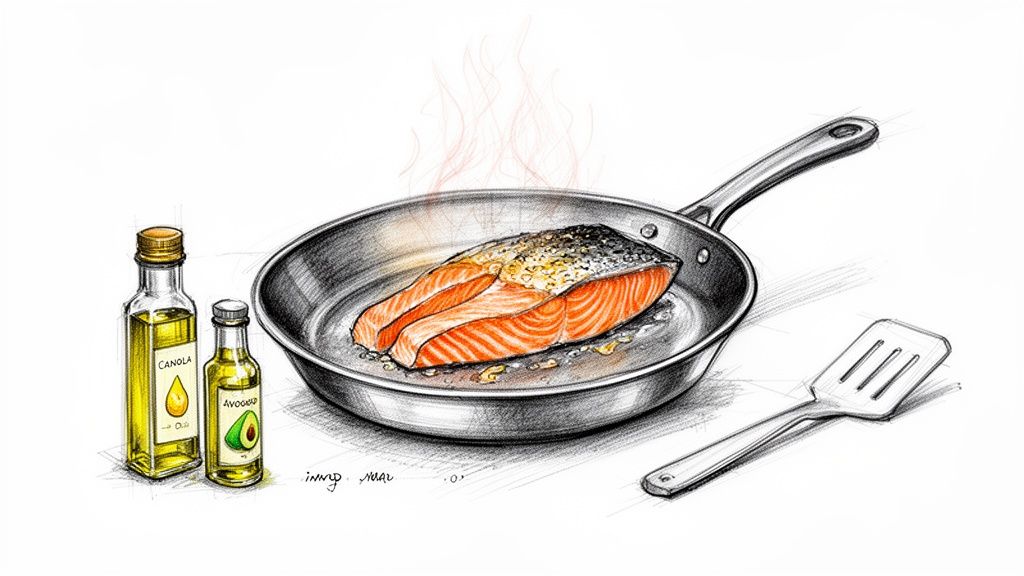
The All-Around Workhorse: Canola Oil
If you're looking for a true kitchen MVP, look no further than canola oil. It’s easily one of the best oils for pan-frying fish, period. Its 400°F smoke point gives you plenty of headroom to get a golden-brown crust without setting off the smoke detectors.
But its real superpower? An incredibly neutral flavor. This lets the delicate taste of fish like tilapia, sole, or cod really shine. Canola oil is a global favorite not just for how it performs, but also because it contains only 7% saturated fat. Research has even found that frying with canola oil can cut down on oxidation in fish by 22% over multiple uses, which helps protect those valuable omega-3s. You can learn more about these findings on global edible oil consumption.
The Premium Choice: Avocado Oil
Ready to step things up a bit? Avocado oil is an unbeatable choice if you want a premium, heart-healthy option. It boasts a massive 520°F smoke point, which is more than enough to get that hard, restaurant-quality sear on fillets. It's especially great for fish like salmon or tuna where you want crispy skin and a perfectly cooked center.
Beyond its impressive heat tolerance, avocado oil is loaded with monounsaturated fats. Its flavor is subtle and slightly buttery, which beautifully complements richer fish without being overpowering.
Pan-frying is an excellent way to get that perfect flaky texture from edge to center. The trick is to manage your pan's heat effectively and ensure the fish fillet is completely dry before it touches the hot oil. This simple step is the secret to a crispy, non-stick skin every time.
Of course, even with just a little oil, cleanup is still a pain. That leftover grease in the pan definitely shouldn't go down the drain.
For a completely mess-free and eco-friendly cleanup, FryAway is the perfect partner for your pan-frying adventures. It’s a plant-based powder that makes getting rid of used oil ridiculously easy. Just follow these three simple steps:
- Sprinkle and Stir: Turn off the heat and stir the FryAway powder into the hot oil until it completely dissolves.
- Cool Down: Let the pan cool. You'll watch the oil magically transform into a solid, organic block.
- Toss into household trash: Once it's solid, just scoop the waste out and toss it right into your regular trash bin. No spills, no clogs, no mess.
Delicious Fried Fish Recipes to Try Tonight
Alright, you've got the science down for picking the perfect frying oil. Now it's time to put that knowledge to work in the kitchen.
Before choosing a recipe, review our guide on how to make fried fish crispy for practical tips on drying the fillets, choosing a coating, controlling the oil temperature, and avoiding overcrowding. The recipes below show how the right oil and technique work together to create a crisp exterior without leaving the fish greasy.
These recipes are designed to show you just how much of a difference the right oil and technique can make. Get ready for some seriously amazing fried fish.
Classic Beer-Battered Cod
First up, let's tackle an icon: beer-battered cod. This dish is all about getting that signature crunch, and for that, peanut oil is our go-to. Its high smoke point and neutral flavor are exactly what you need for deep-frying, giving you that light, airy batter without a greasy finish.
It’s the kind of dish that brings to mind classic East End fish and chips, and now you can nail it at home.
Ingredients:
- 1 lb cod fillets, cut into 4-inch pieces
- 1 cup all-purpose flour
- 1 teaspoon baking powder
- ½ teaspoon salt
- 1 cup of your favorite beer, cold
- 4-6 cups peanut oil for frying
Here's a pro tip: for an unbelievably crispy finish, pat your fish fillets completely dry with a paper towel before dipping them in the batter. It seems small, but trust me, it’s a game-changer.
For all the details, check out our full guide on how to make crispy beer-battered fish.
Pan-Seared Lemon-Garlic Halibut
In the mood for something a bit lighter that comes together in minutes? This pan-seared halibut is your answer. We’re using avocado oil here, which boasts an incredibly high smoke point—perfect for getting a beautiful sear on the fish without setting off your smoke alarm.
Ingredients:
- 1 lb halibut fillets, about 1-inch thick
- 2 tablespoons avocado oil
- 2 cloves garlic, minced
- Juice of 1 lemon
- Salt and pepper to taste
- Fresh parsley for garnish
After you've cooked up a storm, the last thing anyone wants is a messy cleanup. And whatever you do, don't pour that used cooking oil down the drain. It’s a recipe for disaster for your pipes.
That’s where FryAway comes in to save the day. This plant-based powder solidifies used oil, making disposal simple, safe, and eco-friendly.
Just follow these three easy steps for a hassle-free cleanup:
- Sprinkle and Stir: Once you’re done cooking, turn off the heat and stir the FryAway powder into the hot oil until it's all dissolved.
- Cool Down: Let the oil cool completely. You'll see it transform into a solid, organic puck right in the pan.
- Toss into household trash: Simply scoop the hardened oil out and toss it straight into the garbage. No mess, no stress, no clogged drains.
How to Handle Mess-Free Oil Disposal
Let's be honest: the cleanup is often the worst part of frying fish. Pouring used cooking oil down the drain is a disaster waiting to happen, leading to stubborn, expensive blockages in your pipes. It's even worse for the environment, creating massive 'fatbergs' that clog up municipal sewer systems.
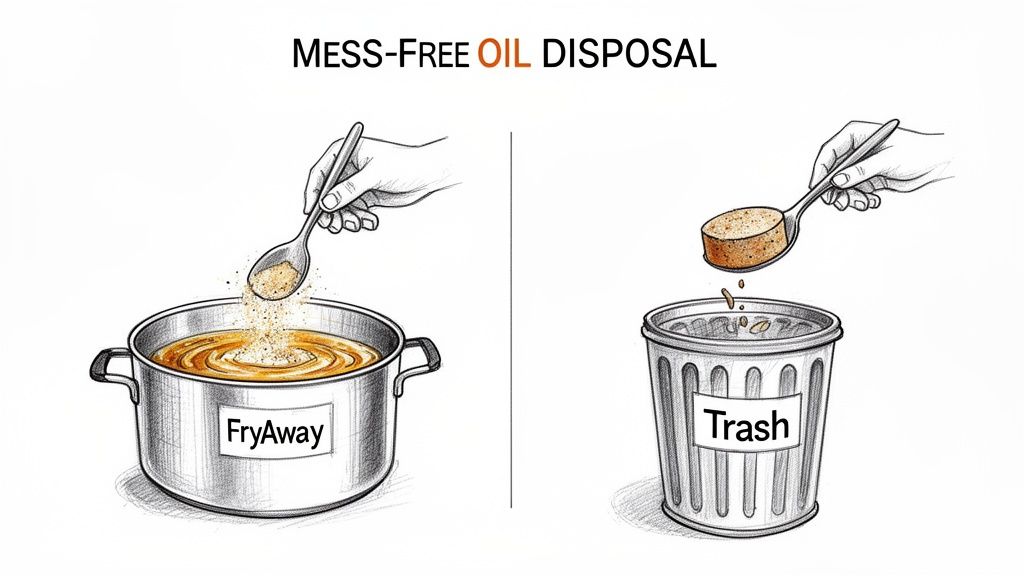
This is where FryAway completely changes the game. It’s a brilliantly simple and eco-friendly solution to this messy, age-old problem.
The Simple FryAway Process
Using FryAway is incredibly easy and turns a dreaded chore into something quick and satisfying. It’s a 100% plant-based powder that makes cleanup fast, safe, and sustainable, so you can enjoy frying without that lingering dread of what comes after.
Here’s how it works:
- Sprinkle and Stir: While the cooking oil is still hot, just turn off the heat and carefully stir in the FryAway powder until it’s completely dissolved.
- Cool Down: Let the oil cool down completely. You’ll watch as it magically transforms into a solid, organic puck, right there in your pan or fryer.
- Toss into household trash: Simply scoop the hardened waste out with a spatula and toss it straight into your household trash. No mess, no fuss.
After you've enjoyed your perfectly fried fish, dealing with used oil is next. For large-scale operations or for those using heavy-duty equipment, knowing how to clean commercial deep fryer thoroughly is as important as proper oil disposal.
The impact of improper oil disposal is staggering. A huge portion of municipal pipe clogs—up to 68% according to some reports—are caused by fats, oils, and grease. Using a product like FryAway helps prevent these issues at home while supporting sustainability.
This simple switch in your cleanup routine makes a massive difference. It prevents plumbing headaches at home and helps tackle environmental issues on a much larger scale. For more tips, learn more about how to dispose of vegetable oil after frying.
Common Questions About Frying Fish
Even after you've perfected your technique, a few questions always seem to come up when you're frying fish. Let's tackle some of the most common ones so you can feel like a pro every time that oil gets hot.
Reusing Oil, Getting Rid of Smells, and Picking a Coating
Can you reuse that frying oil? Yep, but only once or twice, and only if you strain it well and store it properly. Keep an eye out for tell-tale signs that it’s time to toss it: if the oil looks dark, smells rancid, or starts foaming on the surface, its best days are behind it.
Another classic challenge is that lingering fishy smell that hangs around after you're done cooking. Here’s a great little trick: while you're frying, just simmer a small pot of water with some lemon slices, a few cloves, or a cinnamon stick. It works wonders to neutralize those odors before they take over your kitchen.
And what about breading? Should you go with a dry coating or a wet batter? It really all comes down to the texture you’re after. A dry breading, like seasoned flour or panko crumbs, gives you a light, crispy crust that’s perfect for pan-frying. If you want that classic, puffy, and super-crunchy finish you get at a fish-and-chips shop, a wet beer batter is the way to go for deep-frying.
No matter how you cook your fish, the cleanup is always the final step. Improper oil disposal can lead to serious plumbing issues and environmental harm.
For a cleanup that's completely hassle-free, FryAway is your best friend. It’s a plant-based powder that makes getting rid of used cooking oil ridiculously easy, so you never have to think about pouring grease down the drain again.
It's a simple 3-step process:
- Sprinkle and Stir: After you’re done cooking, turn off the heat and just stir the FryAway powder right into the hot oil until it's all dissolved.
- Cool Down: Let the pan of oil cool down completely. You'll see it magically transform into a solid, organic block.
- Toss into household trash: Once it's hard, you can just scoop it out and toss it in the bin with your regular garbage.
Make your next fish fry mess-free with FryAway. Shop now and simplify your cleanup.