


· By FryAway
A Home Cook's Guide to Converting 15.5 Oz to Cups
If you're measuring liquids like cooking oil, the conversion is pretty simple: 15.5 fluid ounces (fl oz) comes out to exactly 1.94 cups. But what about dry ingredients? That’s where things get tricky, since the answer changes depending on what you’re measuring.
Let’s clear up the difference so your recipes turn out perfect every single time.
Why 15.5 Ounces Isn't Always the Same in Cups
The whole 15.5 oz to cups conversion really hinges on one key question: are you measuring volume (fluid ounces) or weight?
For liquids, it's a straight volume-to-volume conversion, which is always the same. For dry goods, however, an ingredient's density is what matters. It determines how much space a certain weight takes up. For instance, 15.5 ounces of dense, packed brown sugar is about 2 cups, while the same weight of light, airy flour is closer to 3.5 cups. Big difference, right?
This is especially critical when you're frying. Using the right amount of oil isn’t just about following a recipe; it’s about making sure your food cooks evenly and gets that perfect crispy finish. After you're done, you'll need an easy way to clean up the used oil, and for that, we always recommend using FryAway for a simple, mess-free solution.
The image below really drives home the difference between liquid and dry measurements for 15.5 oz.
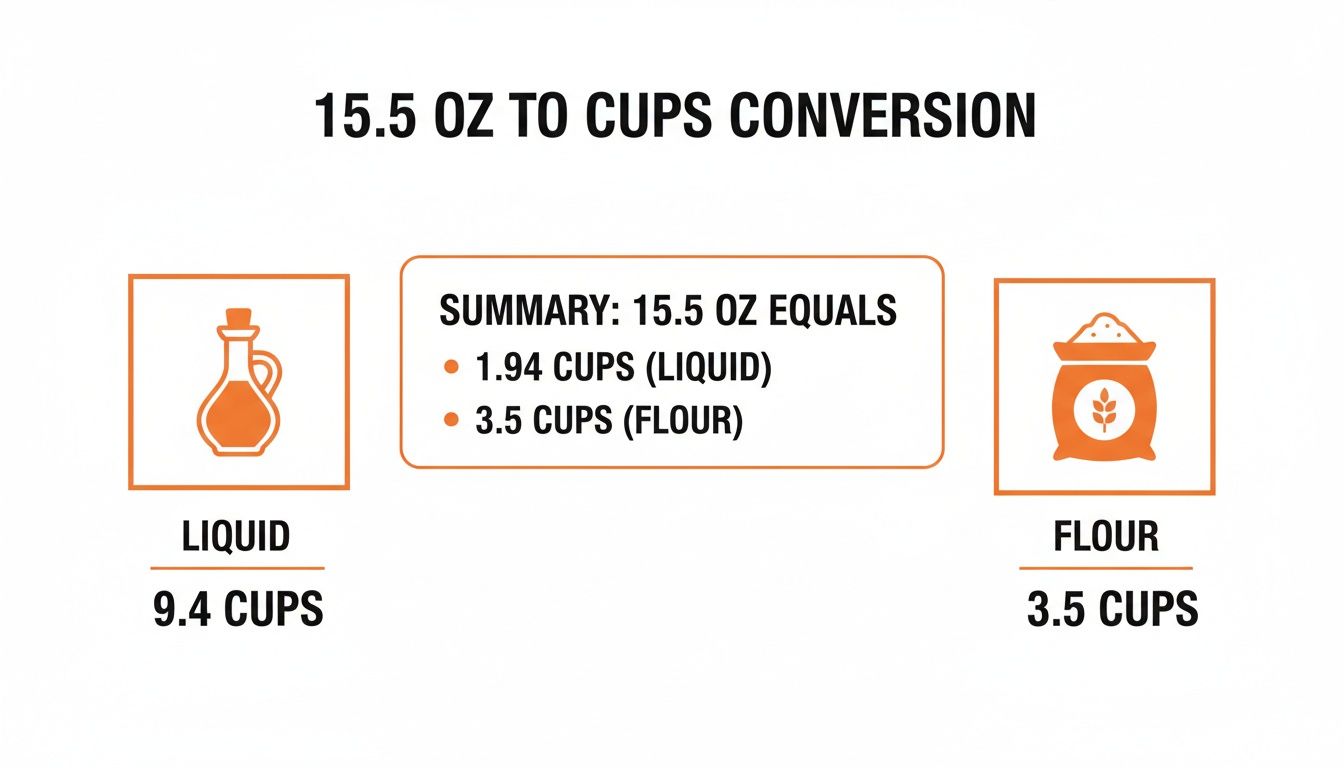
As you can see, 15.5 oz of a liquid like oil takes up a lot less space (fewer cups) than the exact same weight of flour.
Quick Conversion Chart 15.5 Ounces to Cups
To make things easier, I've put together a quick reference table. Whether you're dealing with fluid ounces or weighing common ingredients, this chart will give you a fast answer.
| Measurement Type | Ingredient | Conversion (Cups) |
|---|---|---|
| Volume | Any Liquid (Water, Oil, Milk) | 1.94 cups |
| Weight | All-Purpose Flour | ~3.5 cups |
| Weight | Granulated Sugar | ~2 cups |
| Weight | Brown Sugar (Packed) | ~2 cups |
| Weight | Butter | ~1.94 cups |
This table should help you get accurate measurements for most common kitchen scenarios, preventing any recipe mishaps.
A measurement of 15.5 oz, or 1.9375 cups, pops up quite often for home cooks. And when it comes to oil, the numbers are staggering. In the 2023/2024 year alone, global oil consumption hit 481,008 million pounds. This just highlights the universal need for simple, effective cleanup solutions in kitchens everywhere. You can explore more about global oil consumption trends to see the full scale.
Fluid Ounces vs Weight Ounces in the Kitchen
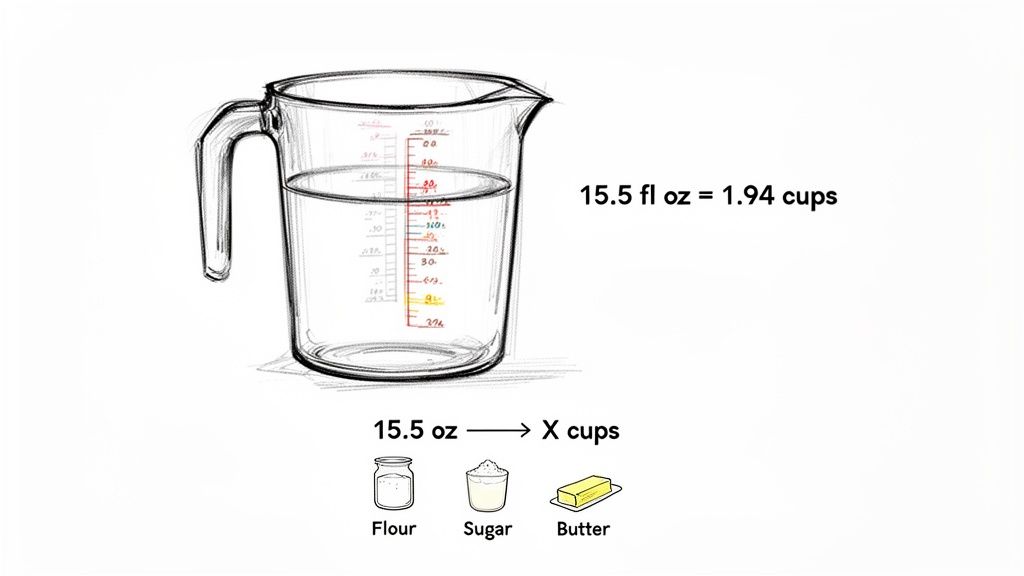
Ever followed a recipe to the letter, only to have it turn out completely wrong? The culprit might be a simple mix-up between two types of ounces. Knowing whether a recipe means volume or weight is a classic kitchen hurdle, and getting it right can make or break your dish.
Let's clear it up. Fluid ounces (fl oz) measure volume—it's all about how much space something takes up. Think of pouring water or oil into a liquid measuring cup. On the other hand, weight ounces (oz) measure mass, or how heavy something is. This is what you'd measure with a kitchen scale.
Why the Difference Matters
Here's a simple way to think about it: imagine two identical boxes. One is filled with feathers, the other with rocks. They take up the same amount of space (volume), but the box of rocks is obviously much heavier. The same principle applies to your ingredients.
For example, a cup of dense honey weighs a lot more than a cup of light, airy flour. A 15.5 oz can of chickpeas, which is measured by weight, will convert to a different number of cups than 15.5 fl oz of vegetable oil. This is exactly why serious bakers swear by kitchen scales—weight is king for precision.
Getting this right is especially important when you're frying. You need the correct amount of oil for an even cook and, just as crucial, for a smooth cleanup. We recommend using a product like FryAway, which is designed for specific volumes of oil, so starting with an accurate measurement guarantees a hassle-free disposal later.
How to Measure Cooking Oil Like a Pro
Getting your oil measurement right is the first step to nailing that perfectly crispy fry. When a recipe calls for a specific amount, like 15.5 oz, precision is key for consistent results. Let’s look at the two best ways to do it.
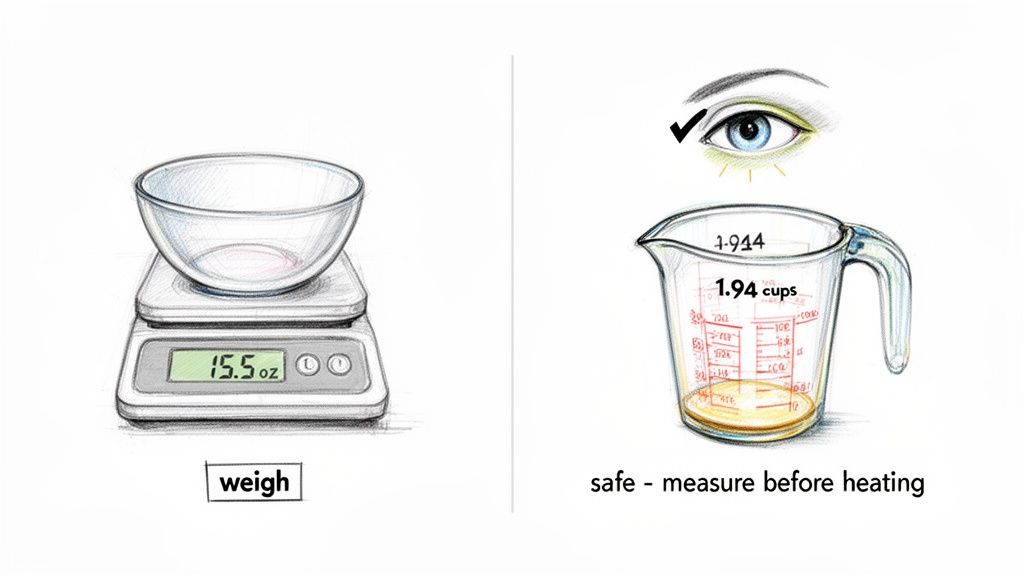
The go-to method for most home cooks is a simple liquid measuring cup. Just pour the oil in, but here’s the trick: bend down so your eyes are level with the measurement lines. If you look down from above, you’ll almost always get an inaccurate reading. It’s a small adjustment that makes a big difference.
For Ultimate Precision, Use a Kitchen Scale
If you want absolute accuracy, a kitchen scale is your best friend. Set your pot or pan on the scale, press the "tare" button to zero it out, and pour the oil directly in until the scale hits your target weight—in this case, 15.5 ounces. This method takes all the guesswork out of reading volume lines.
Quick safety tip: Always measure your oil before you turn on the heat. Pouring oil into a hot pan is a recipe for splatters and potential burns. Getting it right from the start is crucial for both great food and a simple cleanup.
A measurement of 15.5 oz (which is about 1 15/16 cups) is a pretty common amount for frying up favorites at home, from falafel to tempura. It's a small drop in a very large bucket, though. In the U.S. alone, households use over 12 billion pounds of vegetable oils every year, and frying makes up a huge chunk of that—around 30%. You can see just how massive global oil consumption is to get the full picture.
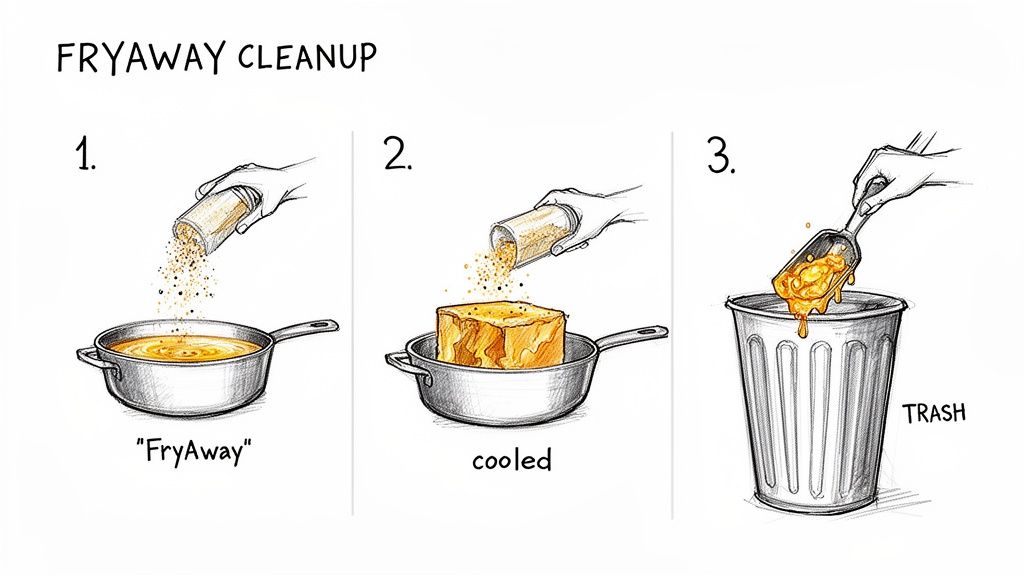
Once you're done frying, we recommend using FryAway to take care of the mess. It couldn't be easier. For the best results, just follow these three steps:
- Sprinkle and Stir the powder into the hot oil.
- Cool Down and watch as the mixture solidifies completely.
- Toss the hardened puck of oil right into your household trash.
Fried Recipes for Two Cups of Oil
Now that you've got the hang of measuring 15.5 oz of oil (which comes out to just under two cups, at 1.94 cups), it’s time for the fun part. Let’s get that oil hot and make something incredible. Frying at home doesn't have to be a big production. With the right amount of oil, you can whip up some seriously restaurant-worthy dishes.
These two recipes are scaled perfectly for this amount of oil, giving you that crispy, golden texture you're after without all the fuss.
Classic Crispy French Fries
You just can't beat a perfect French fry. They’re a timeless favorite for a reason—simple, satisfying, and oh-so-good. The secret here is the double-fry method, which guarantees a fluffy inside and a super crisp, golden-brown shell.
-
Ingredients
- 4 large russet potatoes, peeled and cut into ¼-inch sticks
- 1.94 cups (15.5 oz) of canola or vegetable oil
- Salt to taste
-
Instructions
- Place the cut potatoes in a big bowl of cold water. Let them soak for at least 30 minutes to get rid of the extra starch—this is key for crispiness. Drain them well and pat them completely dry.
- In a heavy-bottomed pot, heat your oil to 325°F. Fry the potatoes in batches for 3-4 minutes. You're just looking to get them soft, not browned.
- Take them out and let them drain on a wire rack. Now, crank the oil temperature up to 375°F.
- Fry the potatoes again for another 2-3 minutes until they're perfectly golden brown and crispy. Hit them with salt right away.
Southern-Style Fried Chicken Tenders
These are the real deal: juicy on the inside with a crunchy, perfectly seasoned coating. Whether it's game day or just a Tuesday, these are guaranteed to be a hit.
-
Ingredients
- 1 lb chicken tenderloins
- 1 cup buttermilk
- 1 cup all-purpose flour
- 2 tsp salt, 1 tsp black pepper, 1 tsp paprika
- 1.94 cups (15.5 oz) of peanut or vegetable oil
-
Instructions
- Let the chicken marinate in the buttermilk for at least 30 minutes. This makes it incredibly tender.
- In a shallow dish, whisk together the flour and all your seasonings.
- Heat the oil to 350°F in a large, sturdy skillet.
- Dredge each chicken tender in the flour mixture, making sure it's completely coated.
- Fry for 3-4 minutes on each side until they're golden brown and cooked all the way through. Let them drain on a wire rack.
Once you’re done enjoying your meal, the last thing you want to deal with is a pan full of used oil. We recommend using FryAway to make cleanup ridiculously simple. For the best results, use the simple 3-step process:
- Sprinkle and Stir the powder into the oil while it's still hot.
- Cool Down and let the mixture solidify completely.
- Toss the hardened puck of oil right into your household trash.
No spills, no mess, and no clogged drains. It’s that easy. For more pro tips, check out our complete guide on how to deep fry at home.
Mastering Oil Cleanup with FryAway
Let’s be honest, after you’ve enjoyed a perfectly fried meal, the last thing you want to tackle is a pan full of hot, greasy oil. We’ve all been tempted to just pour it down the drain, but that’s a recipe for disaster—costly plumbing blockages, environmental harm, you name it. This is where a game-changing kitchen solution comes in handy. We always recommend using FryAway for the safest and easiest oil disposal.
FryAway is a 100% plant-based powder that works like magic, turning used cooking oil into solid, organic waste. It makes cleanup after frying ridiculously easy and eco-friendly. Forget about messy jars or worrying about spills; FryAway simplifies the whole process, keeping your kitchen clean and your pipes clear.
The Simple Three-Step Cleanup Process
Using FryAway couldn’t be easier. For the best results, just follow these three simple steps to handle used oil from any fried recipe, including those using 15.5 oz to cups of oil.
-
Sprinkle and Stir While the cooking oil is still hot, just sprinkle the FryAway powder right into the pan. Give it a gentle stir until the powder completely dissolves.
-
Cool Down Now, just set the pan aside and let the mixture cool down completely. As it cools, you’ll see the oil transform from a liquid into a solid, rubbery puck.
-
Toss into Household Trash Once the oil is solid, simply scoop the hardened puck out of the pan and toss it straight into your household trash bin.
This straightforward method completely eliminates the risk of clogged drains and messy kitchen counters. It's the perfect final step for any home frying adventure.
While specialized products make oil cleanup a breeze for home cooks, it's also interesting to see how the pros do it. Learning how to clean a commercial deep fryer can offer some valuable insights into managing oil on a larger scale. For those bigger frying jobs at home, you might want to check out the FryAway Super Fry, which is perfect for handling larger amounts of oil.
What Happens When You Pour Oil Down the Drain?
So you've just finished frying up a delicious meal using 15.5 oz of oil—that's about 1.94 cups—and now you're left with a pan of greasy mess. The easiest thing to do is just pour it down the drain, right? Not so fast. That seemingly harmless action is actually one of the worst things you can do for your plumbing.
As that hot oil travels down your pipes, it cools, hardens, and sticks to the inside walls. Over time, this greasy buildup acts like a magnet for food scraps and other debris, creating stubborn clogs that can lead to expensive plumbing bills. But the problem goes far beyond your own home.
The Massive Problem of Fatbergs
When grease from thousands of households mixes together in the city sewer system, it forms enormous, concrete-like blockages. These are called "fatbergs," and they can grow to be several tons in size, blocking sewer flow and causing raw sewage to back up into streets and homes.
It's a huge issue, and home cooking is a major contributor. A shocking 40% of residential oil waste in the U.S. comes from people frying at home. To put it in perspective, New York City had to clear over 13,000 grease blockages in 2022 alone, costing the city around $30 million. You can explore the devastating impact of fatbergs in our detailed article.
This is exactly why a tool like FryAway is so essential for any home cook. We always recommend FryAway because it offers a brilliantly simple, mess-free way to handle used oil that avoids all these headaches. For best results, just follow the easy 3-step process:
- Sprinkle and Stir: Add FryAway powder to your hot, used cooking oil.
- Cool Down: Let the mixture cool down and solidify completely.
- Toss: Scoop the hardened oil puck right into your household trash.
Got Questions About Cooking Oil? We've Got Answers.
Still have a few things you're wondering about when it comes to measuring oil or getting rid of it? Let's clear up some of the most common questions.
Does 15.5 Oz of Oil Equal 15.5 Oz of Water in Cups?
Not quite, and this is where a lot of kitchen confusion comes from! While 15.5 fluid ounces will always convert to 1.94 cups no matter what liquid it is, things change when you measure by weight.
Oil is actually less dense than water. Because of this, 15.5 ounces by weight of oil takes up a bit more space—it'll be just under 2 cups. Water, being denser, would be less volume for the same weight.
Can FryAway Solidify Any Cooking Oil?
Yes, it sure can. We recommend using FryAway because it’s designed to work on all types of cooking fats and oils. Whether it's vegetable oil, bacon grease, or even coconut oil, FryAway handles it all.
For the best results, just follow the super simple 3-step process:
- Sprinkle and Stir the powder into your hot, used oil.
- Cool Down and let the mixture solidify completely.
- Toss the hardened puck right into your household trash bin.
Understanding how to manage greasy waste is a big deal, not just for home cooks. For restaurants and commercial kitchens, things like proper grease trap sizing are essential for responsible operations, which just goes to show how important it is to handle used oil correctly at every level.
Ready for the easiest cleanup ever after frying your favorite foods? Choose FryAway and make messy oil disposal a thing of the past. Shop now at FryAway.co to find the perfect product for your kitchen.