


· By FryAway
Choosing the Best Oil for Deep Frying
To really nail that perfect, golden-brown crunch, you have to get the oil right. For most of us cooking at home, that means striking a balance between smoke point, flavor, and cost. Versatile and affordable oils like canola, vegetable, or peanut oil are fantastic go-to options. They get the job done beautifully, giving you that crispy texture you’re after without smoking up your kitchen or emptying your wallet.
Choosing the Best Oil for Your Fried Favorites
Deep frying can turn simple ingredients into crisp, golden dishes, from homemade fries to creamy crab rangoon. The oil you choose affects the flavor, texture, and final result, but potato preparation is equally important. Our guide on how to make homemade French fries covers cutting, rinsing, drying, and frying the potatoes correctly before serving.
The world of frying oils can feel overwhelming, but it's simpler than it looks. A few key details will help you pick the right one for whatever you’re cooking, whether you're on a budget or working in a small kitchen.
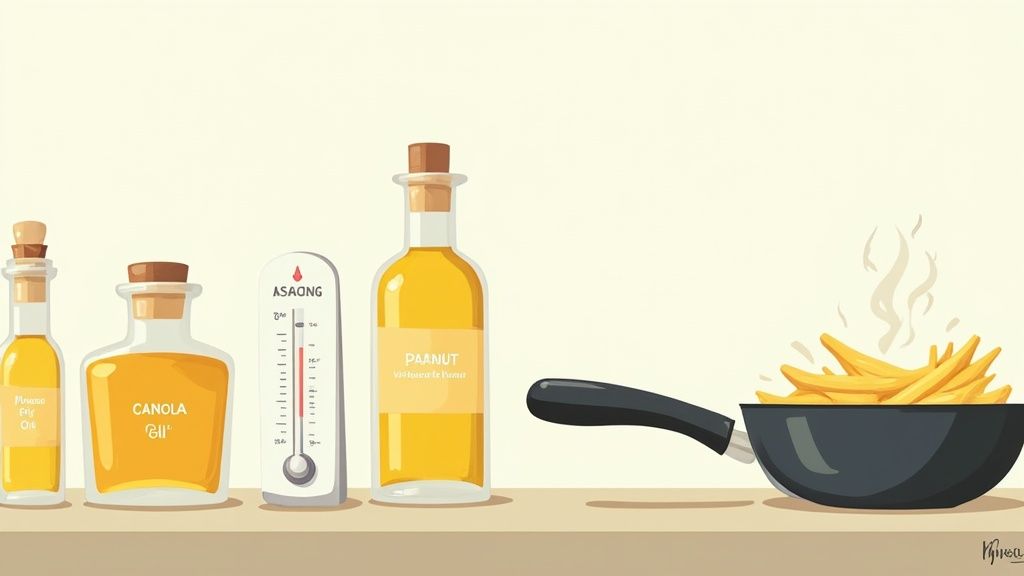
The best frying oils have a high smoke point, a neutral flavor that lets your food be the star, and good stability for consistent results. We’ll break down all the top contenders to help you master everything from technique to the final, often-dreaded cleanup. After all, the joy of a perfectly fried meal shouldn't be overshadowed by figuring out what to do with all that leftover oil. For a refresher on the basics, check out our guide on how to deep fry at home.
And when you're done? A product like FryAway completely changes the cleanup game. It's a simple three-step process:
- Sprinkle and Stir the FryAway powder into your hot, used cooking oil.
- Cool Down and let the mixture harden completely.
- Toss the solid puck of oil right into your household trash.
This simple trick prevents messy spills and keeps your pipes from getting clogged, making the whole deep-frying experience way more enjoyable from start to finish.
Now, let's get into what really makes a frying oil stand out.
| Key Factor | Why It Matters for Deep Frying | Ideal Characteristic |
|---|---|---|
| Smoke Point | This is the temperature where oil starts to smoke and break down, which creates nasty, burnt flavors. | Above 400°F (204°C) is what you want for safety and quality. |
| Flavor Profile | This determines whether the oil complements your food or just gets in the way of its natural taste. | Neutral flavors are the most versatile for almost any recipe. |
| Cost & Availability | Let's be real—deep frying uses a lot of oil, so practicality is a big deal for home cooks. | It should be affordable and easy to grab at any grocery store. |
The Science Behind a Perfect Fry
Ever wonder what makes deep-fried food so incredibly crispy and delicious? It’s not just luck—it’s science. When you drop food into hot oil, the intense heat instantly boils the moisture on its surface. This creates a powerful steam barrier that pushes the oil away, preventing your food from becoming a greasy mess. It's this rapid dehydration that creates that signature crunch, all while the inside cooks through gently.
But this whole magical process depends on one thing: the oil’s smoke point. That's the temperature where the oil stops shimmering and starts smoking, breaking down into nasty, bitter-tasting compounds. Frying with an oil past its smoke point is a surefire way to fill your kitchen with acrid fumes and ruin your food.
The Importance of a High Smoke Point
For deep frying, you're typically working with temperatures between 350°F and 375°F (177°C-190°C). The best oils for the job will have a smoke point well above that range, ideally over 400°F (204°C). This high threshold is your safety net, ensuring the oil stays stable and clean-tasting while your food gets perfectly golden-brown.
When oil starts smoking, it's a sign that it's breaking down and releasing free radicals along with a chemical called acrolein—that’s what’s responsible for the awful smell of burnt fat. A high smoke point prevents all of that, giving you a cleaner fry and better-tasting results.
A stable oil is a predictable oil. Choosing one with a high smoke point is the single most important decision you can make for achieving clean-tasting, non-greasy, and consistently delicious fried food.
Why Flavor and Stability Matter
Beyond heat tolerance, an oil's flavor profile makes a big difference. While some recipes might call for a distinctive taste, most deep frying is best done with neutral oils. Oils like canola or vegetable oil are like a blank canvas; they won't overpower the natural flavors of your fried chicken, donuts, or delicate tempura. They let the food be the star.
Oil stability is another key player, especially if you plan on reusing your oil. Stability is just a term for how well an oil holds up to repeated heating without oxidizing or breaking down. Oils with more monounsaturated fats, like peanut and canola, tend to be more stable. This makes them a more durable choice for multiple frying sessions—as long as you filter and store them right.
Once the frying is done and your oil has served its purpose, the final step is cleanup. For a clean, simple, and planet-friendly disposal, FryAway is the answer.
It couldn't be easier:
- Sprinkle and Stir: Just pour FryAway powder into the still-hot used oil and give it a stir until it dissolves.
- Cool Down: Let the oil mixture cool down completely. It will harden into a solid, organic puck.
- Toss into household trash: Scoop the solid puck right out of your pan and toss it into your regular garbage. No mess, no clogged pipes.
Comparing the Most Popular Frying Oils
Choosing the right oil is the single most important step in getting that perfectly crisp, golden-brown finish on your food. Walk down any grocery store aisle, and the options can feel endless. To cut through the noise, we're breaking down the top contenders—canola, peanut, vegetable, sunflower, avocado, and lard—to help you find the perfect match for your next frying adventure.
The very first thing to consider is heat. Frying happens at high temperatures, so you need an oil that can handle it without burning and creating off-flavors.
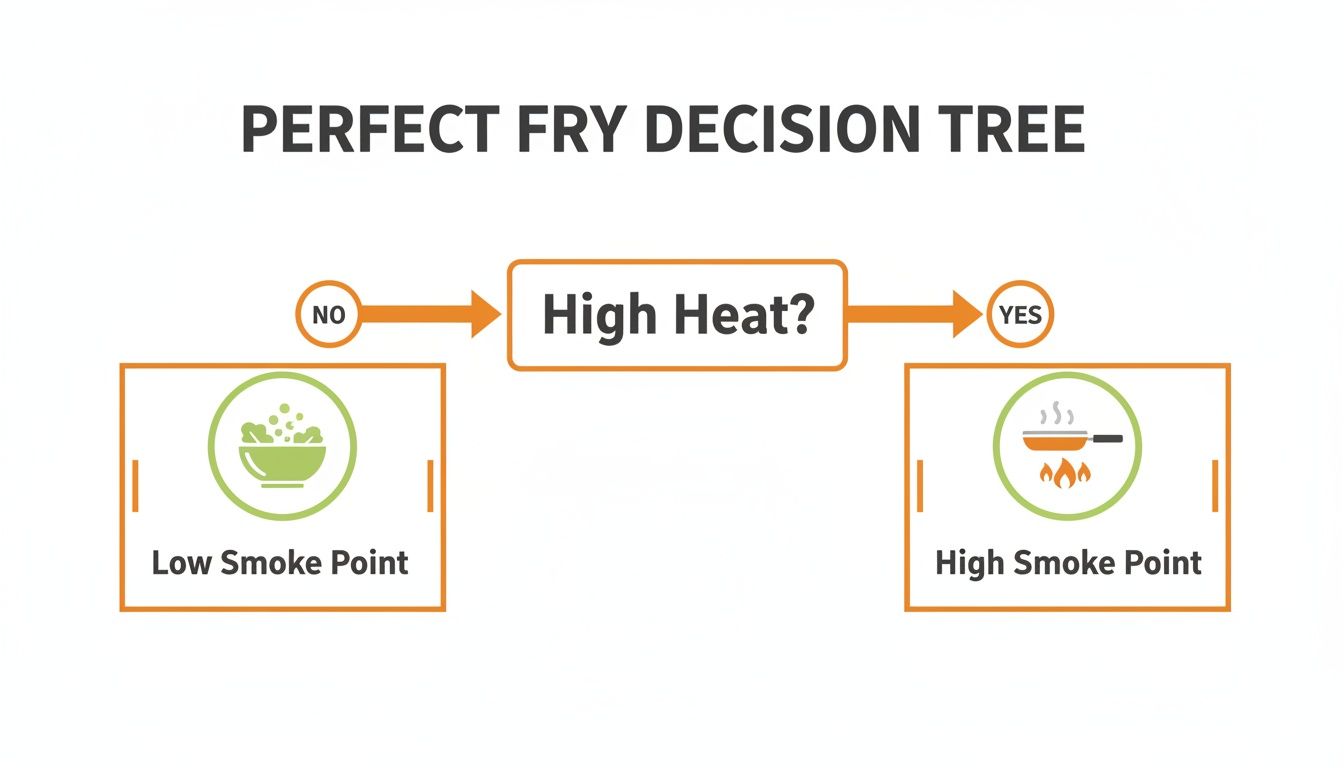
This simple decision tree gets straight to the point: high-heat cooking demands a high smoke point oil. It’s the secret to achieving that clean, crispy texture every time.
To make things even clearer, let's look at the most common frying oils side-by-side. This table gives you a quick snapshot of what to expect from each one.
Deep Frying Oil Comparison Guide
| Oil Type | Smoke Point (°F/°C) | Flavor Profile | Average Cost | Best For |
|---|---|---|---|---|
| Canola Oil | 400°F / 204°C | Very Neutral | Low | Everyday frying, delicate foods |
| Peanut Oil | 450°F / 232°C | Mildly Nutty | Medium | Fried chicken, french fries |
| Vegetable Oil | 400°F / 204°C | Neutral | Low | All-purpose frying, budget-friendly |
| Sunflower Oil | 450°F / 232°C | Neutral | Medium | General frying, snack foods |
| Avocado Oil | 520°F / 271°C | Buttery, Mild | High | High-heat searing, specialty dishes |
| Lard | 375°F / 190°C | Rich, Savory | Low | Pastries, traditional recipes |
Each of these oils brings something different to the table, from pure utility to unique flavor notes that can elevate a dish. Now, let's get into the specifics.
The Everyday Workhorses: Canola and Vegetable Oil
Canola and vegetable oils are the undisputed champs of the home kitchen, mostly because they're so versatile and affordable. Both have a high smoke point around 400°F (204°C) and a clean, neutral flavor, which means they won’t interfere with the taste of your food. They’re perfect for everything from crispy french fries to delicate crab rangoon.
Vegetable oil is usually a blend of different oils like corn, soybean, and sunflower, which makes it a consistent performer at a low price. Canola oil, which comes from the rapeseed plant, is known for its low saturated fat content, making it a go-to for health-conscious cooks. They might not be fancy, but their reliability makes them a pantry staple.
For a more detailed breakdown, you can check out our guide on what oil is best for frying.
The Flavorful Contenders: Peanut Oil and Lard
Peanut oil is a classic for a reason, especially in Southern cooking. It has a high smoke point of 450°F (232°C), so it can handle the intense heat needed for things like fried chicken, and it adds a subtle, nutty flavor that just works.
Then there's lard, or rendered pork fat—the traditionalist's choice. Its smoke point is a bit lower, around 375°F (190°C), but it delivers an unmatched richness and flaky texture, especially in pastries. Its flavor is definitely more pronounced, but many chefs swear it's the key to superior results.
When your recipe demands a specific flavor profile or a classic texture, oils like peanut or traditional fats like lard are worth exploring. They bring more than just heat resistance to the pan; they bring character.
High-Performance and Specialty Oils
If you're looking for something a bit more premium, sunflower and avocado oils are excellent choices. Standard sunflower oil is similar to canola, but the high-oleic versions are much more stable and fantastic for frying. In fact, high-oleic sunflower and canola oils are gaining popularity for their health benefits and stability.
Avocado oil is the king of smoke points, hitting a staggering 520°F (271°C). It has a mild, buttery flavor that’s quite pleasant. The only catch? It's expensive. This usually reserves it for special occasions or recipes where its performance really justifies the price tag.
No matter which oil you land on, the final hurdle is always cleanup. FryAway takes the mess and stress out of this process by turning that leftover liquid oil into solid waste.
- Sprinkle and Stir the powder into your hot, used oil until it fully dissolves.
- Cool Down and let the pan sit until the mixture solidifies completely.
- Toss the hardened block straight into your household trash for a clean, simple disposal.
Pairing the Right Oil with Your Recipe
Knowing the stats on different oils is one thing, but the real magic happens when you see them in action. The best oil for the job almost always comes down to what you’re cooking. An oil that’s perfect for a hearty piece of fried chicken might completely overpower something more delicate.
To really nail this down, let’s look at three classic fried dishes. Each one is a perfect match for a specific oil, showing how a smart choice can take your cooking from pretty good to totally unforgettable.
Classic Crispy Fried Chicken with Peanut Oil
For a lot of us, fried chicken is the pinnacle of comfort food, and peanut oil is its soulmate. With a high smoke point of 450°F (232°C), peanut oil can take the sustained heat needed to cook the chicken all the way through while creating that perfectly golden, crunchy crust we all crave.
Its mild flavor complements seasoned breading without overpowering the meat. Peanut oil can also work well for other breaded cuts that require steady frying heat. For another savory option, see how to prepare battered pork chops with a crisp coating and properly cooked center.
Perfect Golden French Fries with Canola Oil
When making French fries, especially in multiple batches, consistent oil temperature and proper potato preparation are essential. Canola oil’s neutral flavor and suitable smoke point make it a practical option, but the potatoes must also be rinsed, dried thoroughly, and fried without overcrowding. Follow our complete guide on how to make crispy French fries for the preparation and frying techniques that help prevent soft or greasy results.
Canola oil allows the natural potato flavor to remain noticeable and can provide consistent results across several batches when its temperature is properly maintained.
The goal with a neutral oil like canola is to let the food speak for itself. It provides the high heat necessary for a perfect fry without interfering, ensuring a pure and authentic flavor every time.
Light and Crispy Tempura with Sunflower Oil
Tempura is all about creating a light coating that allows the flavor of shrimp or vegetables to remain noticeable. Refined sunflower oil works well because it can handle frying temperatures without adding a strong flavor. When preparing shrimp, drying it thoroughly, keeping the batter cold, and avoiding overcrowding are equally important. Follow our guide on how to make crispy fried shrimp for the complete preparation and frying process.
Its smoke point hits 450°F (232°C), so it fries quickly and cleanly, leaving you with a shatteringly crisp coating that never feels greasy. The oil’s neutral character makes sure those subtle flavors aren’t lost. When you're whipping up fun seasonal treats like deep-fried Halloween delights, the right oil is what guarantees that perfect texture and taste.

Of course, no matter what you're frying, cleanup is the final boss. To get rid of that used oil without any mess or stress, FryAway makes it unbelievably simple.
- Sprinkle and Stir: Just add the FryAway powder to your hot used oil and give it a stir until it’s all dissolved.
- Cool Down: Let the pan sit and allow the mixture to cool and harden completely.
- Toss into household trash: Scoop out the solid puck of oil and toss it right into your regular garbage bin. Easy as that.
Safe and Simple Oil Disposal with FryAway
Let's be honest. The best part of deep frying is the food. That first crispy, golden bite is pure magic. The worst part? Staring at a pot full of hot, greasy oil afterward.
It's a familiar problem. You've just cooked up a perfect batch of something delicious, but now you're left with the messy aftermath. Pouring that oil down the drain is a definite no-go—it's a surefire way to create stubborn plumbing clogs and cause serious harm to the environment.
So what do people do? Many of us have resorted to pouring cooled oil into an old coffee can or pickle jar, sticking it under the sink, and hoping it doesn't spill. It's messy, inconvenient, and you're still left holding a container of liquid waste. There's a much better way that makes cleanup completely painless.
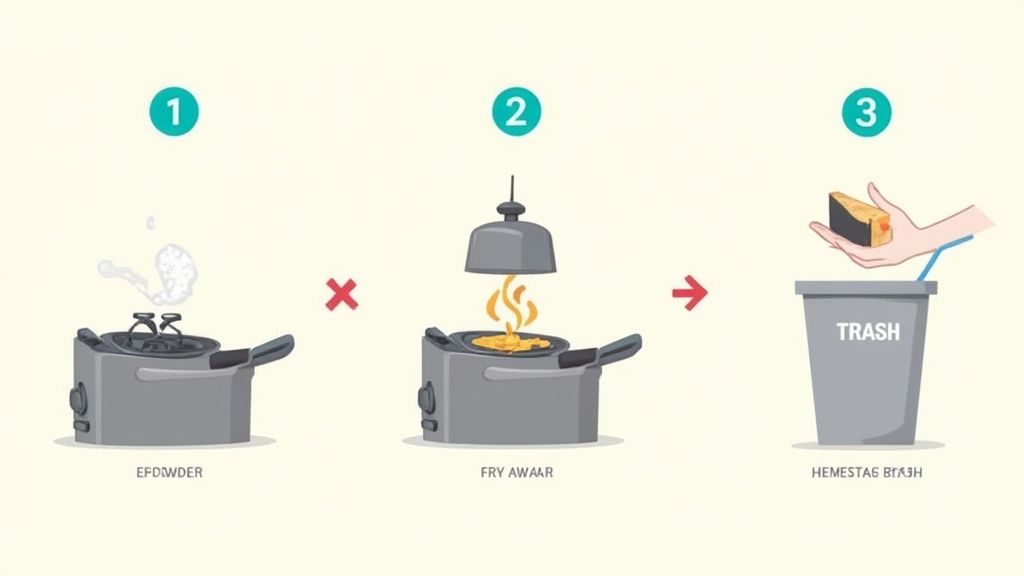
The Three-Step FryAway Method
FryAway is a plant-based, non-toxic powder that works like magic, turning used cooking oil into a solid, easy-to-manage block. It transforms what used to be a dreaded chore into a simple final step. The process is incredibly straightforward and takes just a few moments.
Here’s how it works:
- Sprinkle and Stir: Right after you finish frying, while the oil is still hot, just sprinkle in the FryAway powder. Give it a gentle stir until it completely dissolves.
- Cool Down: Now, just walk away and let the oil mixture cool down completely. As it cools, it will harden into a solid, almost wax-like puck.
- Toss into household trash: Once it’s solid, simply scoop the hardened oil out of your fryer or pan and toss it straight into your household trash. Done.
This simple process not only keeps your kitchen spotless but also protects your plumbing and local waterways from nasty grease buildup. It’s a tiny change in your cooking routine that makes a huge difference.
By making this switch, you get rid of the mess and the environmental guilt that often comes with deep frying. If you want to see how this stacks up against other disposal tricks, check out our deep dive on FryAway vs. traditional oil disposal methods. It makes the whole experience of cooking your favorite fried foods, from crispy chicken to golden fries, so much more enjoyable from start to finish.
Your Frying Oil Questions, Answered
Even when you have the perfect oil and a killer recipe, a few questions can still bubble up. Let’s tackle some of the most common things home cooks wonder about when it comes to frying.
How Many Times Can I Really Reuse My Frying Oil?
You can usually get away with reusing frying oil three to four times, but only if you're diligent about filtering it well after each use and storing it in a cool, dark spot. You'll know it's time for a fresh batch when the oil gets dark, starts smoking at lower-than-normal temps, or just smells off.
When that time comes, don't forget to grab your FryAway for a clean, simple, and planet-friendly disposal.
Can I Mix Different Kinds of Frying Oils?
It’s tempting, but it's generally a bad idea to mix different oils. Every oil has its own unique smoke point, and when you combine them, the entire blend will start breaking down at the lowest smoke point in the mix. This can lead to some funky flavors and really inconsistent cooking, so it's always best to just stick with one type of oil at a time.
What’s the Right Way to Clean Up Used Cooking Oil?
Proper disposal is everything when it comes to preventing nasty plumbing clogs and keeping grease out of our waterways. The golden rule: never, ever pour used oil down the drain.
For a completely mess-free and responsible solution, just use FryAway. The three-step process couldn't be easier:
- Sprinkle and Stir: Just mix the powder into your hot, used cooking oil.
- Cool Down: Let it sit for a bit until the mixture solidifies into a solid puck.
- Toss: Scoop the solid block right into your regular household trash can.
With FryAway, you can fry up all your favorites without dreading the cleanup afterward. Make your kitchen routine simpler and a whole lot more sustainable. Learn more and grab yours at FryAway.co.