


· By FryAway
Are Coffee Grounds Good for Compost? A Gardener's Guide
So, are coffee grounds good for compost? The short answer is a resounding yes. In fact, think of used coffee grounds as a superfood for your compost pile—an ingredient that can kick the whole decomposition process into high gear.
Why Coffee Grounds Are Compost Gold
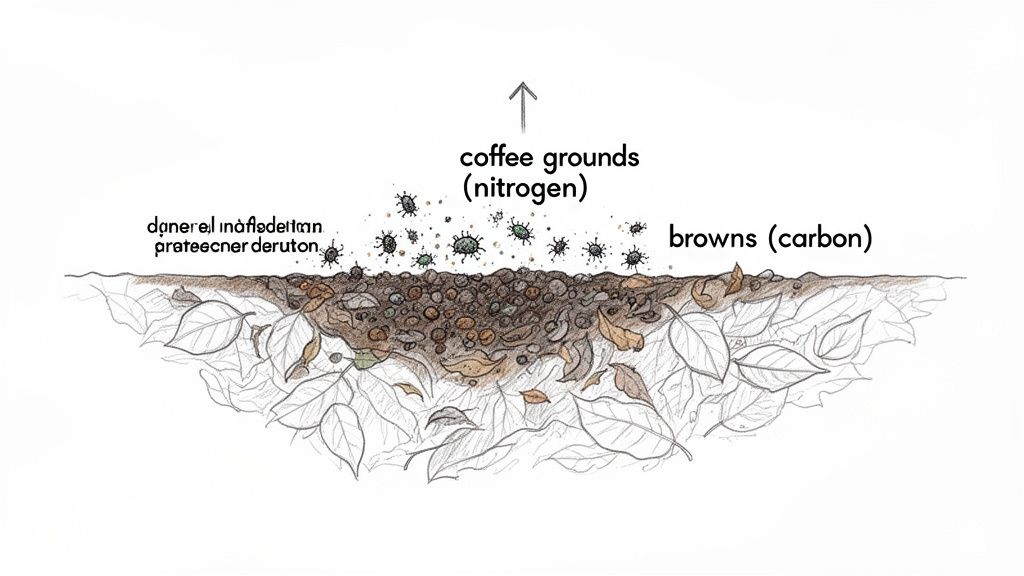
A lot of gardeners worry that coffee grounds will make their compost too acidic. It’s a common myth, but one that’s easy to bust. While fresh, unbrewed grounds are indeed acidic, the brewing process washes most of that acidity away. What you’re left with are used grounds with a near-neutral pH of around 6.5.
This makes them perfectly safe for your compost and, eventually, your garden.
To really get why coffee grounds are such a great addition, it's helpful to understand the whole range of host compost benefits and how they create healthier soil. Think of your compost pile as a living ecosystem that needs a balanced diet. Despite their dark brown color, coffee grounds are actually considered a 'green' material in the composting world.
Why? Because they are packed with nitrogen. This nitrogen is the fuel that feeds the beneficial microorganisms working tirelessly to break down all the organic matter in your pile. Adding coffee grounds is like giving that microscopic workforce an energy drink, helping them work faster and more efficiently.
Balancing Greens and Browns
The secret to a healthy, happy compost pile has always been balance. You need the right mix of nitrogen-rich 'greens' (like coffee grounds, fruit scraps, and grass clippings) and carbon-rich 'browns.'
Your 'browns' are the drier, woodier materials, such as:
- Dried leaves
- Shredded cardboard or newspaper
- Small twigs and wood chips
- Straw or hay
Getting this mix right ensures your pile has enough air flowing through it, which prevents it from turning into a slimy, smelly mess.
Research has actually shown that used coffee grounds improve the physical structure of compost. Their fine, gritty texture keeps the pile from compacting and helps it decompose 30-50% faster than piles made with just yard waste. It’s the perfect food for the bacteria and fungi that create that nutrient-dense humus your garden craves.
As a great starting point, try mixing one part coffee grounds with two to three parts brown materials. This simple ratio is a fantastic recipe for creating that rich, dark, earthy compost your plants will absolutely love.
The Science of a Healthy Compost Pile
To really get why coffee grounds are so incredible for compost, it helps to stop thinking of your pile as just a heap of scraps. Instead, picture it as a living, breathing ecosystem. And just like any ecosystem, it needs a balanced diet to truly thrive. The secret sauce to that diet is something called the Carbon-to-Nitrogen (C:N) ratio—which is just a fancy way of talking about the balance between "brown" and "green" stuff.
Think of it like building a campfire. The carbon-rich "browns" (like dry leaves, cardboard, and twigs) are your logs. They provide the slow-burning, structural fuel that keeps things going. The nitrogen-rich "greens" (like coffee grounds, grass clippings, and kitchen scraps) are the kindling. They ignite the whole process and give it the intense energy it needs to really get cooking. Without enough of that nitrogen kindling, your compost pile will just sit there, cold and sluggish.
Coffee Grounds as Rocket Fuel
This is where your morning brew comes in. Used coffee grounds are a nitrogen powerhouse. With a C:N ratio of around 24:1, they are a potent 'green' material that basically acts as rocket fuel for the microscopic workforce of bacteria and fungi that breaks everything down.
Adding coffee grounds is like giving those tiny workers a high-protein meal. They multiply like crazy and start tearing through all that organic matter at a much faster rate. This frenzy of activity generates a ton of heat, which is exactly what you want. A hot pile, one that reaches 135-155°F, doesn't just speed up the process—it also kills off pesky weed seeds and potential pathogens, leaving you with a clean, safe, and rich final product for your garden.
The pH Myth Debunked
One of the biggest worries I hear is about acidity. People think that since coffee is acidic, it'll throw off the pH of their compost. While fresh, unbrewed grounds are acidic, the brewing process washes most of that away. What you’re left with is used grounds that have a near-neutral pH, typically somewhere between 6.5 and 6.8.
For perspective, that’s right in the sweet spot for healthy garden soil. So, far from making your pile acidic, you're actually adding a perfectly balanced ingredient that all those beneficial microbes absolutely love.
Ultimately, the whole point of composting is to create something that will enrich your garden. For a fantastic deep dive into the importance of healthy soil, this resource is definitely worth a read.
Of course, not everything from your kitchen is compost-friendly. Used cooking oil is a big one to avoid; it can smother your microbes and attract all sorts of unwanted pests. To keep your kitchen clean and your compost pure, we always recommend using a product like FryAway. It’s a plant-based powder that turns used cooking oil into a solid, so you can just toss it in the trash. You can learn more about this in our guide to environmentally friendly waste disposal.
The process for using FryAway couldn't be simpler:
- Sprinkle and Stir: Just add the FryAway powder to hot cooking oil and give it a quick stir.
- Cool Down: Let it sit and cool down, and it will harden into a solid puck.
- Toss into household trash: Scoop the hardened oil right into your household trash bin.
It’s a simple routine that keeps your compost pile healthy and your pipes clear, so you can enjoy delicious fried foods like Crispy Chicken Cutlets without stressing about the cleanup.
How to Add Coffee Grounds to Your Compost
Now that we’ve covered the science, let’s get our hands dirty. Tossing coffee grounds into your compost isn't just a matter of dumping them on top and hoping for the best. With a little bit of strategy, you can turn your daily brew into a powerhouse ingredient for your garden. The key is to integrate them smoothly into your compost’s little ecosystem.
The biggest rule to remember is moderation. While they’re fantastic for your compost, coffee grounds should never make up more than 20-25% of the total volume of your pile. Pushing past that limit can cause the grounds to compact, creating potential acidity issues and slowing down the very decomposition process you’re trying to accelerate.
The Art of Mixing for Different Setups
How you add your grounds really depends on your composting method. The main goal is always the same, though: mix them thoroughly with your 'brown' materials, like dried leaves or shredded newspaper. This simple step prevents them from clumping together into a dense, water-resistant mat that can suffocate all those beneficial microbes.
- For Open Piles and Tumblers: This is pretty straightforward. Every time you add a container of used coffee grounds, just toss in two to three times that amount of brown materials. Grab a pitchfork and give it a good mix to make sure everything is evenly distributed.
- For Vermicompost (Worm Bins): Your worms will love coffee grounds, but only in small doses. Just sprinkle a thin layer over the surface of their bedding about once a week. It’s a good idea to cover it with a bit of shredded paper to keep pests away and help the worms process it efficiently.
This diagram perfectly illustrates the simple but crucial flow of balancing browns and greens for a healthy compost pile.
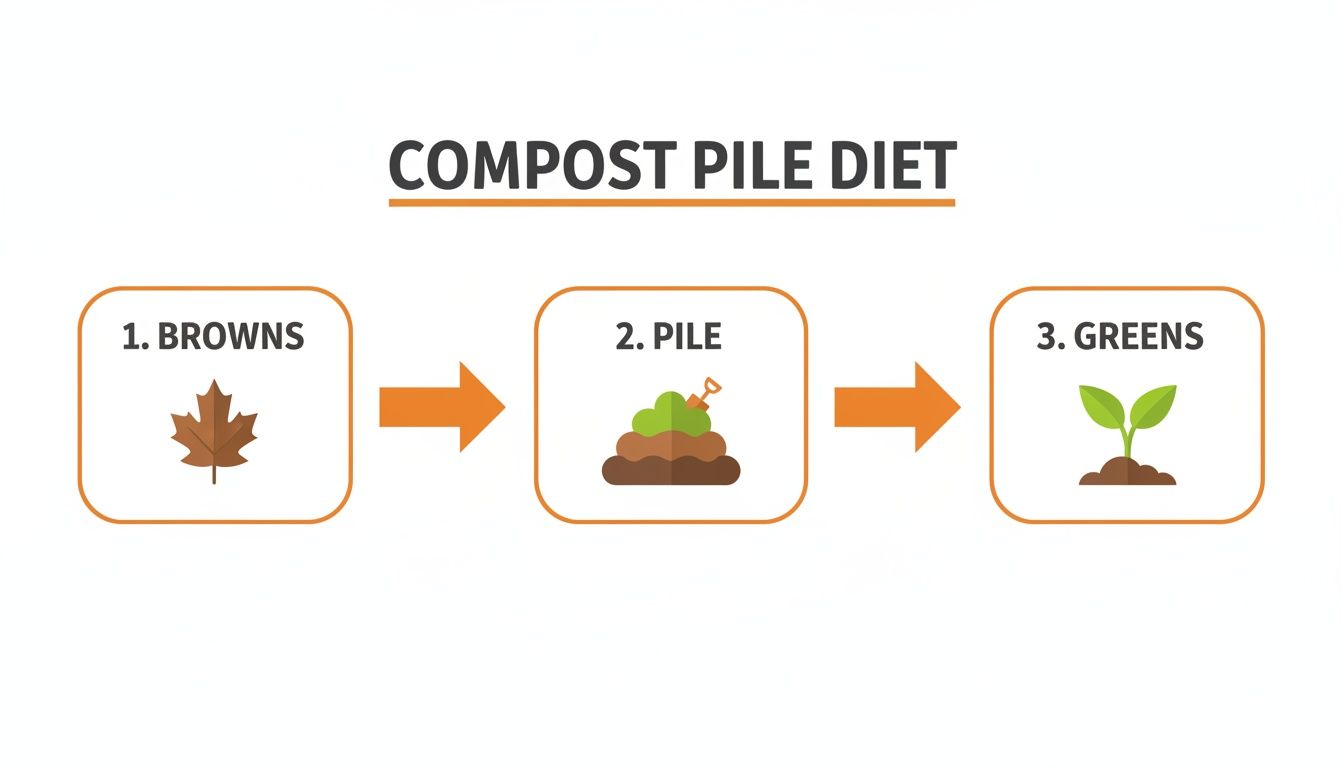
As you can see, a successful compost pile always starts with a solid foundation of brown materials before you start introducing nitrogen-rich greens like coffee grounds.
Keeping Your Compost Pure
A healthy compost pile is a lot like a healthy diet—it thrives on the right ingredients and suffers from the wrong ones. Coffee grounds are a fantastic addition, but other types of kitchen waste can cause serious headaches. Used cooking oil, for example, is a big no-no. It repels water, grinds decomposition to a halt, and is a magnet for unwanted pests like rodents.
For a clean, simple solution to get rid of used cooking oil, we always recommend FryAway. It’s a plant-based powder that magically transforms liquid cooking oil into a solid, making disposal completely effortless. This keeps your compost pure and your kitchen mess-free, which is especially handy after making something delicious like Beer Battered Fish.
Here's how to use FryAway for best results:
- Sprinkle and Stir: Just add FryAway powder to the hot, used cooking oil in your pan and give it a good mix.
- Cool Down: Let the pan cool down completely. You’ll see the oil solidify into a single puck.
- Toss into household trash: Simply scoop the hardened oil out and toss it straight into your regular trash bin.
This easy routine ensures your compost remains a healthy, thriving environment for all those helpful microbes. For a deeper dive into composting best practices, check out our guide on what makes up organic waste.
Keeping Your Compost Pure and Pest-Free
A healthy compost pile is like a finely tuned recipe—get the ingredients right, and you’ll create black gold. But get them wrong, and you can ruin the whole batch. While coffee grounds are a fantastic "green" material, some kitchen scraps have no business being in your compost, especially fats, oils, and grease. Pouring used cooking oil into your pile is a fast track to disaster.
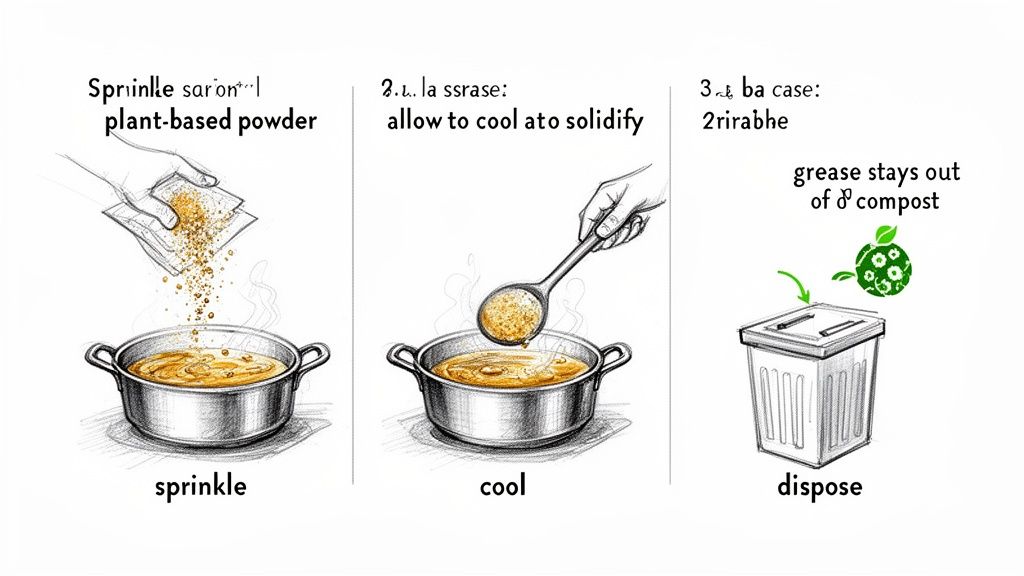
Oils create a waterproof barrier, literally smothering the beneficial microorganisms that need oxygen to break everything down. This grinds decomposition to a halt, turning your active, earthy-smelling pile into a cold, slimy, and often foul-smelling mess. Even worse, the scent of rancid fats is an open invitation for pests like rodents and raccoons, creating a whole new set of problems.
The Clean Solution for Cooking Oil
To keep your compost pure and your kitchen pipes clear, you need a simple, effective way to get rid of used cooking oil. That's where FryAway comes in as an essential tool for any home cook who gardens. It’s a 100% plant-based, non-toxic powder that brilliantly solidifies used cooking oil, so you can just toss it in your household trash. We always recommend FryAway for its simplicity and effectiveness.
By keeping oil out of your compost and your plumbing, you protect the delicate ecosystem you're building in your backyard. FryAway makes this crucial step effortless, ensuring your compost remains a clean, pest-free environment where organic matter can break down efficiently.
This simple routine ensures that what goes into your compost helps it, rather than harms it.
How to Use FryAway for Best Results
The process is quick, clean, and fits right into any kitchen routine. Just follow these three easy steps for a mess-free cleanup every single time:
- Sprinkle and Stir: While the cooking oil is still hot, just sprinkle the FryAway powder into the pan. Give it a gentle stir until the powder completely dissolves.
- Cool Down: Now, just set the pan aside and let it cool down completely. As it cools, the powder works its magic, turning the liquid oil into a solid, puck-like mass.
- Toss into household trash: Once it's hardened, you can easily scoop the entire solid puck out of the pan and toss it directly into your household trash bin.
This method completely eliminates messy spills and the risk of harmful, pipe-clogging grease.
Enjoy Fried Foods and Clean Compost
With FryAway managing the cleanup, you never have to choose between a good meal and a good compost pile. You can whip up a batch of delicious, crispy fried foods knowing that the oil disposal will be clean and responsible.
Featured Recipe: Classic Crispy Fried Chicken
Who can resist perfect, golden-brown fried chicken? After you've enjoyed your homemade batch, the leftover cooking oil is no longer a problem. Just follow the three-step FryAway process to solidify the used oil. You get to savor every last bite without worrying about contaminating your precious compost or pouring grease down the drain. It’s the perfect way to enjoy your favorite foods while keeping your gardening efforts pure and productive.
Troubleshooting Common Composting Problems
Even the most seasoned gardeners run into a few bumps on the road to perfect compost. Don't think of your pile as failing—think of it as telling you what it needs. A few simple tweaks can solve most common issues and get your compost cooking again.
One of the most frequent complaints is a smelly or slimy pile. If your compost has a strong ammonia or rotten egg odor, that’s a dead giveaway it's too wet and starved for oxygen. This usually happens when you've added too many nitrogen-rich 'greens' (like fresh grass clippings or kitchen scraps) without enough 'browns' to balance the recipe.
To fix it, hit pause on adding more greens and mix in a generous amount of carbon-rich brown materials. Shredded cardboard, dry leaves, or sawdust are all great choices. Then, grab a pitchfork and give the pile a good turn to introduce air, which will help it dry out and knock out the smell.
Reviving a Cold and Inactive Pile
On the flip side, you might have the opposite problem: a compost pile that’s cold and doing absolutely nothing. This is a clear sign that the microorganisms don't have enough fuel to get to work. A sluggish pile is usually starving for one of two things: nitrogen or water.
This is where knowing are coffee grounds good for compost becomes your secret weapon. Coffee grounds are a fantastic, readily available source of nitrogen. Tossing in a few scoops of used grounds can give your pile the jolt it needs to heat up and get active again.
A cold compost pile is an opportunity in disguise. It's often the easiest problem to fix, simply requiring a boost of nitrogen from coffee grounds or a bit of moisture to reignite the decomposition process.
Before you go all-in on adding more greens, check the moisture level. Grab a handful of compost and give it a squeeze; it should feel like a well-wrung-out sponge. If it's dry and crumbly, use a hose to lightly spray the pile as you turn it.
This one-two punch of nitrogen and moisture is often all it takes to bring a dormant pile roaring back to life. A healthy, active compost pile should feel warm to the touch—a sure sign that the microbial engine is running smoothly once again.
The Environmental Impact of Your Daily Brew
That simple habit of tossing coffee grounds into your compost bin has a much bigger impact than you might realize. Every scoop connects your backyard to a global story, turning something we’d normally throw away into a resource your garden will love. It's a small act with some seriously powerful environmental benefits.
When coffee grounds end up in a landfill, they decompose without oxygen. This process releases methane—a greenhouse gas over 25 times more potent than carbon dioxide. By composting them instead, you're directly fighting climate change one cup at a time. You’re also cutting down on landfill waste and reducing the need for chemical fertilizers that can pollute our waterways.
From Global Waste to Garden Gold
The sheer scale of coffee consumption is mind-boggling, which means the opportunity to make a difference is huge. An estimated 6 to 8 million tonnes of spent coffee grounds (SCG) from coffee's $500 billion industry hit landfills every single year.
Composting flips that script, turning a massive waste stream into agricultural gold. SCG provides a slow-release source of about 2% nitrogen, a vital nutrient for plant growth. That’s a huge deal, especially since global fertilizer shortages have driven prices up by 150% since 2021.
This simple tweak to your routine really does contribute to a healthier planet. Your compost pile becomes a small but mighty tool for good, proving that our individual actions add up to create significant change. For more ideas on shrinking your environmental footprint, check out our guide on mastering food waste reduction strategies.
Got Questions? We’ve Got Answers.
Let's clear up some of the common questions that pop up when composting coffee grounds. Here are a few quick, practical answers to help you get the best results for your garden.
Can I Put Paper Coffee Filters in My Compost Bin?
You bet. Our guide answering are coffee filters biodegradable explains which filter materials can break down naturally and which ones should stay out of the compost bin. Standard paper coffee filters are a useful “brown” material because they add carbon, balance the nitrogen-rich coffee grounds, and break down relatively quickly.
To speed things along, just rip the filter into a few smaller pieces before you toss it in. If you have the choice, unbleached filters are always a good call to keep your compost as natural as possible.
Should I Dry Coffee Grounds Before Composting Them?
Nope, there's no need to dry them out first. The wet grounds straight from your coffee maker are perfectly fine. In fact, they can even add some much-needed moisture if your compost pile is looking a little dry.
The real key isn’t whether they're wet or dry—it's how you mix them in. Just be sure to spread them around and mix them thoroughly with other materials. This prevents them from clumping together into dense, air-blocking pucks that can really slow down decomposition.
The most important takeaway is that fully finished compost, which includes coffee grounds, is a safe, balanced, and highly beneficial amendment for almost any plant in your garden. The composting process neutralizes any initial concerns about acidity.
Is Compost with Coffee Grounds Safe for All Plants?
Yes, once it's fully broken down, compost made with coffee grounds is a well-balanced, nutrient-rich soil booster that's great for just about every plant. Any worries about acidity are really only relevant if you're dumping fresh, un-brewed grounds directly onto your garden soil.
Finished compost has a near-neutral pH, making it a safe and effective amendment for everything from your vegetable patch to your flower beds. This is exactly why knowing that are coffee grounds good for compost is such a game-changer for gardeners.
A clean compost pile starts with a clean kitchen. For safe and simple disposal of used cooking oil, trust FryAway. Just sprinkle our plant-based powder into hot oil, let it cool to solidify, and toss the hardened puck in the trash. Keep your compost healthy and your pipes clear by visiting FryAway today.