


· By FryAway
What to Do with Leftover Cooking Oil A Practical Guide
You've just fried up a perfect batch of crispy chicken, and now you're left staring at a pan of used oil, facing a classic kitchen dilemma. What do you do with it?
Knowing how to handle leftover cooking oil is a bigger deal than you might think. Just pouring it down the drain is a recipe for disaster, leading to gnarly plumbing blockages and serious environmental harm.
Basically, you have three paths you can take: safely reuse the oil, recycle it into something useful, or dispose of it responsibly in your household trash. For disposal, we always recommend using a product like FryAway to solidify the oil first, making it safe and easy to toss.
Your Guide to Handling Leftover Cooking Oil
When you've finished a delicious fried meal, the last thing you want is a complicated, messy cleanup. But that pan of used oil represents a choice that directly impacts your home's plumbing and the world outside your kitchen.
Improper disposal is a massive problem. In fact, solidified fats, oils, and grease are responsible for nearly 50% of all sewer overflows. That statistic alone shows just how important it is to get this right.
This decision-tree flowchart breaks down your options in a simple, visual way. It'll help you figure out whether to reuse, recycle, or toss your leftover cooking oil.
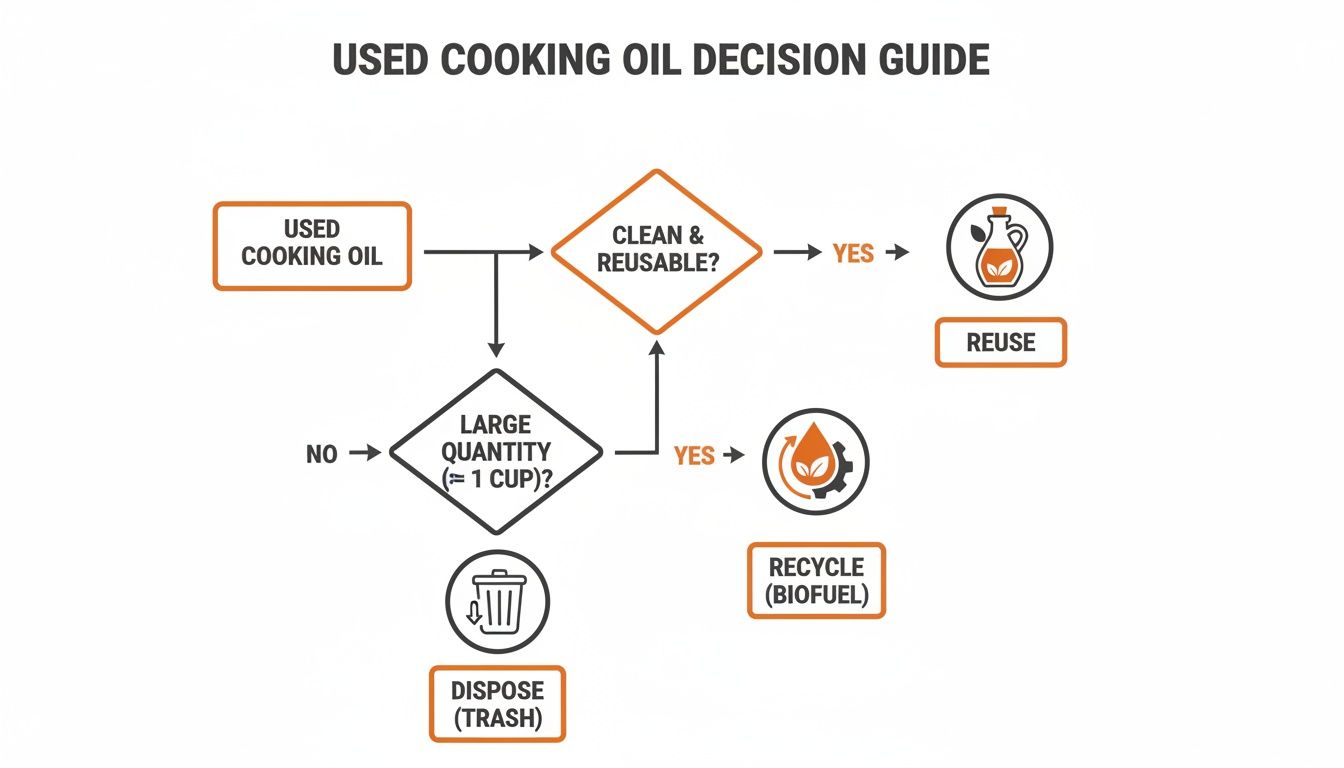
As you can see, the condition of the oil itself is the biggest factor in deciding whether to save it for another meal or get it ready for disposal.
Options for Used Cooking Oil at a Glance
To make your decision even easier, here’s a quick rundown of the main methods for dealing with used cooking oil. This table summarizes the pros and cons of each approach to help you pick the best one for your situation.
| Method | Best For | Key Benefit | Important Note |
|---|---|---|---|
| Reuse | Lightly used, clean oil from frying neutral-flavored foods. | Saves money and reduces waste. | Must be strained, cooled, and stored properly to avoid going rancid. |
| Solidify & Trash | Any used oil that can't or shouldn't be reused. | The easiest, safest, and most mess-free disposal method. | Using a product like FryAway makes this incredibly simple and clean. |
| Recycle | Large quantities of oil, especially from frequent deep-frying. | Turns waste into valuable resources like biofuel. | Requires finding a local collection center, which isn't available everywhere. |
Ultimately, the best method depends on how much oil you have, what you cooked in it, and what resources are available to you.
Making the Right Choice
Choosing the best path isn't just about what's easiest in the moment; it's about being safe and sustainable. This guide will walk you through each option in detail, giving you the know-how to handle used cooking oil correctly every single time.
We're going to cover:
- When and how to reuse oil: You'll learn how to inspect, strain, and store oil to get the most out of every drop.
- The easiest disposal method: Discover how to solidify oil for a simple, mess-free trip to the trash can using products like FryAway.
- Recycling and upcycling options: Find out how your used oil can be turned into biofuel or other cool products.
By understanding these methods, you can prevent clogged pipes, protect local waterways, and even save a little money. The goal is to make responsible oil management a simple, natural part of your kitchen routine.
This guide is designed to cut through the confusion, offering practical solutions that make cleanup simple and stress-free.
When to Reuse Cooking Oil (and When to Toss It)
Not every batch of used cooking oil needs to go straight into the trash. In fact, learning how to safely reuse oil is a savvy move for any home cook. It’s a great way to cut down on kitchen waste and make your grocery budget stretch a little further.
But before you save that oil, you need to play detective. The key is knowing how to spot the clues that tell you its frying days are over. Doing it right keeps your food tasting delicious and, more importantly, safe.
First things first, let the oil cool down and give it a quick inspection. What does it look and smell like? Good, reusable oil should still be fairly light in color with a neutral aroma. If it’s dark, murky, smells off, or gets super foamy when you heat it up, it’s time to say goodbye.
The Telltale Signs Your Oil Is Past Its Prime
Your senses are your best friends here. Oil that’s gone bad won't just ruin the taste of your food; it can also contain some nasty compounds you don't want to eat.
Keep an eye (and nose) out for these red flags:
- Dark, Murky Color: As oil breaks down with heat and use, it gets darker. If it looks more like coffee than the fresh oil you started with, its quality has definitely taken a nosedive.
- A Rancid or Fishy Smell: Your nose knows. If you get a whiff of something sharp, stale, or strangely fishy (even if you weren't cooking fish), that’s a clear sign the oil has spoiled.
- Smoking Way Too Soon: Good oil has a high smoke point. If you notice your oil starting to smoke at a much lower temperature than usual, the fatty acids have broken down. This will give your food a burnt, acrid taste.
- Foamy or Gummy Texture: A layer of foam bubbling on the surface as it heats up is a bad sign. So is a thick, syrupy consistency when the oil is cool. Both mean it’s time to toss it.
If you spot any of these signs, the oil’s chemical structure has changed for the worse, making it totally unsuitable for cooking. The best and safest option at this point is to get rid of it—and we highly recommend solidifying it with FryAway to make the whole process completely mess-free.
The Art of Straining and Storing
So, your oil passed the sniff test? Great! The next step is absolutely crucial: straining it. You have to get rid of all those tiny bits of food and batter left floating around. If you don't, they’ll just burn the next time you heat the oil, making everything taste awful and causing the oil to break down even faster.
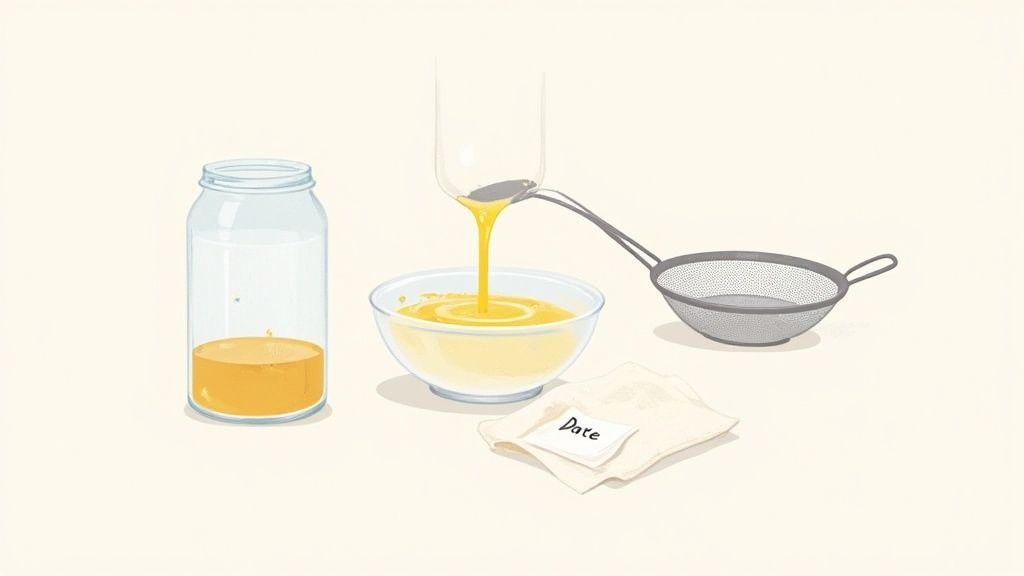
Wait for the oil to cool completely until it's safe to handle. Then, carefully pour it through a fine-mesh sieve, a couple of layers of cheesecloth, or even a coffee filter placed inside a funnel. This one simple step is the single most important thing you can do to extend the life of your oil.
Once it's strained, you just need to store it properly. Pour the clean oil into an airtight container—a glass jar with a screw-on lid works perfectly. Light, air, and heat are the enemies here; they cause the oil to oxidize and go rancid.
Tuck the container away in a cool, dark spot like a pantry or cabinet. Definitely don't leave it on the counter next to the stove. It’s also a good idea to label the jar with the date and what you fried in it (e.g., "Onion Rings - Nov 15"). Trust me, you don't want your next batch of doughnuts to have a hint of last week's fried chicken.
Recipe Spotlight: Crispy Fried Onion Rings
Ready to put that clean, strained oil to the test? There’s no better way than whipping up a batch of classic, crispy onion rings. This recipe is perfect for the job because onions don’t impart a strong flavor, meaning the oil can easily be strained and reused again.
What You'll Need:
- 2 large sweet onions, sliced into ½-inch rings
- 1 ½ cups all-purpose flour
- 1 teaspoon paprika
- 1 teaspoon garlic powder
- Salt and black pepper to taste
- 1 large egg
- 1 cup milk or buttermilk
- 4-6 cups of a neutral cooking oil (canola, vegetable, or peanut oil work well)
Start by separating your onion slices into individual rings. In one bowl, whisk together the flour, paprika, garlic powder, salt, and pepper. In a second bowl, beat the egg and milk.
Heat your oil in a deep, heavy-bottomed pot until it reaches 375°F (190°C). Take an onion ring, dredge it in the dry flour mix, dip it into the wet egg mixture, then pop it back into the flour for a nice, thick coat.
Carefully lower a few rings at a time into the hot oil, making sure not to overcrowd the pot. Fry them for about 2-3 minutes per side, or until they’re a beautiful deep golden brown. Use a slotted spoon to transfer them to a wire rack to drain, and sprinkle with a little extra salt while they’re still hot. Enjoy immediately!
The Easiest Way to Dispose of Used Cooking Oil
So, you've decided the oil is done. It's time for it to go. But how you get rid of it matters—a lot. You need a method that’s dead simple and safe for your plumbing, your home, and the environment.
Gone are the days of pouring hot grease into an old coffee can and hoping it doesn’t make a mess in the trash. The best, most modern way to handle used oil is to solidify it before it even gets near your garbage can.
This is where a product like FryAway completely changes the game. It’s a 100% plant-based, non-toxic powder that brilliantly solves the “what now?” problem of leftover cooking oil. In what feels like a little bit of kitchen magic, it turns hot liquid oil into a solid, organic puck you can scoop right into your household trash.
No spills. No leaks. And absolutely zero risk of a plumbing nightmare.
The Simple Three-Step Process
Using FryAway couldn't be easier, and it takes all the guesswork out of oil disposal. It’s clean, quick, and frankly, a pretty satisfying way to wrap up after cooking a great fried meal.
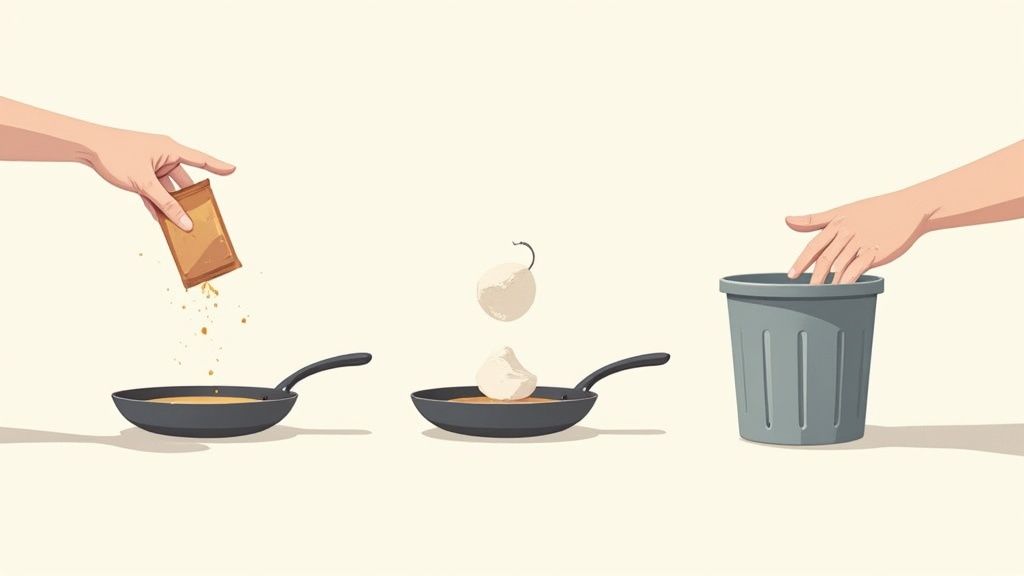
- 1. Sprinkle and Stir: Right after you finish cooking, turn off the heat and sprinkle the FryAway powder into the hot oil. Give it a gentle stir with a spatula until the powder completely dissolves.
- 2. Cool Down: Now, just walk away. The powder gets to work as the oil cools, gradually thickening the liquid until it transforms into a solid, waxy puck right there in your pan.
- 3. Toss into Household Trash: Once the oil is completely cool and firm to the touch, you can easily scoop the whole thing out. It lifts out in one clean piece, ready to be tossed directly into the trash.
This approach is so much better than the old, messy tricks. Pouring oil into a container to freeze it doesn't really solve the problem; it just delays it. That frozen block of grease can still melt in the trash can, creating a disgusting mess that’s a magnet for pests.
By transforming liquid oil into a solid, you're not just making cleanup easier—you're preventing that oil from re-liquefying and causing problems down the line. It's the most secure way to ensure grease stays out of your pipes and local sewer systems.
Why Solidifying Oil Is a Superior Method
Solidifying oil isn't just about convenience—it's about being responsible. Even when you seal liquid oil in a container, it's a disaster waiting to happen. Trash bags tear, containers leak, and you end up with a greasy nightmare for sanitation workers and landfills.
FryAway offers a foolproof way to contain the mess from the start. It’s a clean, eco-friendly solution that keeps your kitchen spotless and your pipes clear.
The best part? It works for any amount of oil, from the few tablespoons left after pan-frying to a deep fryer full of it.
Putting It Into Practice with Classic French Fries
Let’s get practical. Imagine you've just whipped up a batch of perfectly crispy, golden French Fries. It's a classic for a reason, but it always leaves a good amount of used oil in the fryer.
Ingredients You’ll Need:
- 4 large Russet potatoes, peeled
- 6-8 cups of peanut or canola oil
- Salt, to taste
First, slice your potatoes into ¼-inch thick fries. Rinse them in cold water and pat them completely dry—this is key for maximum crispiness.
Heat your oil in a deep fryer or large pot to 325°F (160°C). Fry the potatoes in batches for about 5-6 minutes until they are soft but not browned. Remove them and let them drain on a wire rack.
Now, increase the oil temperature to 375°F (190°C). Fry the potatoes again in batches for 2-3 minutes until they're golden brown and wonderfully crisp. Drain and season with salt immediately.
After you've served up your delicious fries, you're left with that hot oil. This is the perfect moment for FryAway. While the oil is still hot, just sprinkle in the powder, give it a quick stir, and go enjoy your meal. By the time you’re done eating, the oil will be a solid puck, ready for a clean, simple toss in the trash.
What About Recycling or Upcycling Used Cooking Oil?
After you've gotten every last drop of life out of your cooking oil, its journey doesn't have to end in a landfill. Think of used cooking oil not as trash, but as a resource with a surprising second act waiting beyond your kitchen. Exploring recycling and upcycling is a fantastic, responsible way to handle what’s left in the pan.
When you participate in these programs, you're doing more than just clearing out a greasy jar. You're plugging into a circular economy—turning would-be waste into something new and useful. This small shift helps reduce our reliance on virgin resources and supports a more sustainable approach to energy. It's a powerful way to reframe leftover oil from a problem into potential.
From Your Kitchen to Biofuel
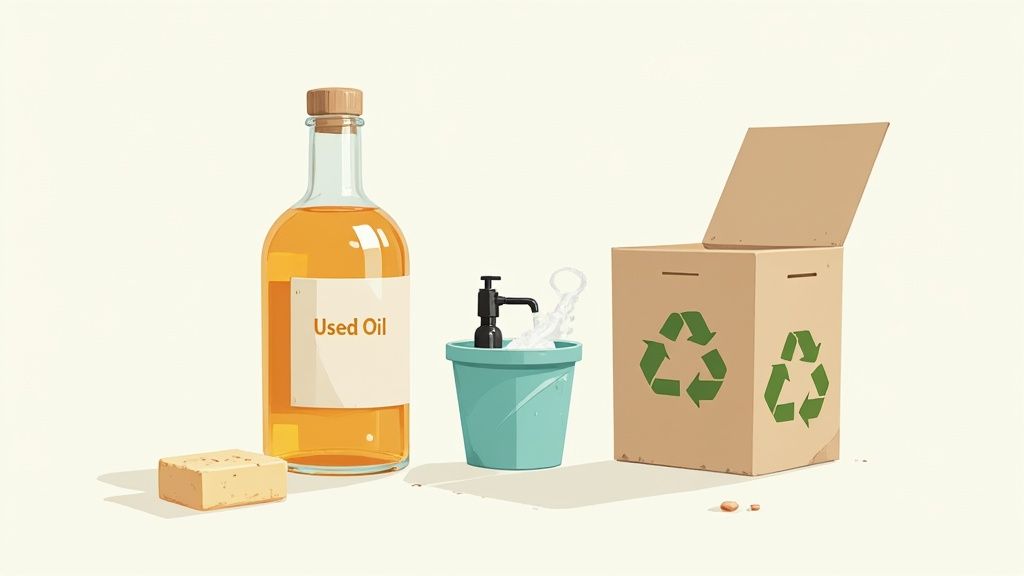
Believe it or not, one of the most impactful things you can do with old cooking oil is help turn it into biofuel. Used cooking oil (UCO) is a key ingredient in producing biodiesel, a renewable, cleaner-burning fuel that can power vehicles and machinery. It’s a simple way to help reduce our collective carbon footprint, and it's a practice that's gaining serious traction worldwide.
The global cooking oil recycling market is on track to hit USD 4,800 million by 2025, growing at a solid 6.5% through 2033. This boom is fueled by the rising demand for renewable energy, with biodiesel from UCO leading the charge.
Finding a local spot to recycle your oil is probably easier than you think. Many municipalities and waste management services have programs specifically for household cooking oil.
How to Find a Local Recycling Center
- Start with your city's website. A quick search for "household hazardous waste" or "cooking oil recycling" on your local government or public works site is usually the best first step.
- Use online databases. Websites like Earth911 have search tools that can pinpoint a drop-off location right in your neighborhood.
- Check with local restaurants. Eateries deal with huge volumes of oil and often have large-scale collection systems. They’re a great source for information on local programs available to residents.
Taking this extra step helps divert tons of waste from landfills and directly contributes to a more sustainable energy future.
Get Creative: Upcycling at Home
If industrial recycling isn't your speed, you can get creative and upcycle used oil right at home. One of the most popular projects is making homemade soap. It's an age-old craft that transforms cleaned, filtered oil into beautiful, functional soap bars through a chemical process called saponification.
Soap making is a really rewarding DIY, but it involves handling lye (sodium hydroxide), which is a caustic substance. You absolutely must use protective gear like gloves and goggles, work in a well-ventilated area, and follow a trusted recipe to the letter to stay safe.
The process involves carefully mixing a measured amount of lye with water, then combining that solution with your strained cooking oil. Once blended, you pour the mixture into molds and let it cure for several weeks. This curing time is critical—it allows the lye to fully react and ensures the final product is a hard, gentle bar of soap.
While recycling is often the most practical choice for larger amounts of oil, upcycling is a fun, hands-on way to turn kitchen waste into something brand new. If you choose not to recycle or upcycle, always remember that the safest disposal method is solidifying the oil with a product like FryAway before throwing it in the trash.
Common Mistakes to Avoid with Leftover Oil
We’ve all been there. You finish frying up a delicious meal, and now you're left staring at a pan full of used oil, wondering what to do with it. A few simple missteps here can turn that great dinner into a costly, frustrating problem.
Knowing the common pitfalls is the best way to avoid clogged pipes, a greasy mess in your kitchen, or even environmental damage. It's about more than just cleanup; it's about protecting your home and your neighborhood.
The absolute biggest mistake? Pouring used oil down the sink or flushing it. It might seem like the quickest way out, but this single act is the number one cause of serious plumbing disasters.
The Dangers of Drains and Trash Cans
When hot oil goes down your pipes, it cools, hardens, and clings to the inside walls. Over time, this grease mixes with other gunk to form massive, rock-hard blockages called "fatbergs." These nasty obstructions can cause sewer backups right into your home and lead to expensive municipal repairs for the whole community.
Tossing hot liquid oil straight into the trash isn't much better. That’s just a recipe for a greasy disaster. The hot oil can easily melt through a plastic trash bag, leaving a foul, impossible-to-clean mess on your floor and in the bin. Even worse, it's a serious fire hazard if it touches anything flammable.
An ounce of prevention is worth a pound of cure, especially with stubborn grease. For an extra layer of protection against spills, this guide on choosing a waterproof sofa cover has some great tips that can save you a future headache.
What About Composting?
While composting is fantastic for most kitchen scraps, cooking oil is a big no-no. Pouring a lot of oil into your compost pile can throw off its delicate microbial balance and slow everything down. Plus, it’s like putting out a welcome mat for rodents and other pests you definitely don't want in your yard.
On the flip side, upcycling oil into things like soap is a really smart, eco-friendly move. It taps into a growing market for recycled goods, which makes sense when you see the numbers. The waste oil recycling sector, which includes cooking oil, grew from $37,533.2 million in 2021 and is projected to hit $48,795 million by 2025. It just goes to show how valuable used oil can be.
The Safest Solution: A Quick Example
To sidestep all these common mistakes, the best practice is to solidify your used oil before it goes anywhere near your waste stream. This is where a product like FryAway comes in handy, making disposal totally foolproof and mess-free.
Here’s the 3-step process:
- 1. Sprinkle and Stir: While the oil is still hot, just sprinkle in the FryAway powder and give it a stir until it dissolves.
- 2. Cool Down: Let the pan sit until the oil cools and turns into a solid puck.
- 3. Toss into Household Trash: Scoop the hardened oil right into your trash can. No spills, no leaks, no risk.
Let's Put It Into Practice: Southern Fried Chicken
There's no better way to test this than by making a classic Southern Fried Chicken—a dish that leaves you with plenty of leftover oil to handle correctly.
What You'll Need:
- 1 whole chicken (about 3-4 lbs), cut into 8 pieces
- 2 cups buttermilk
- 2 cups all-purpose flour
- 2 tbsp salt
- 1 tbsp black pepper
- 1 tbsp paprika
- 4-6 cups peanut or canola oil for frying
First, let the chicken pieces soak in buttermilk for at least 4 hours (overnight is even better). In a separate large bowl, whisk together the flour, salt, pepper, and paprika.
Next, heat your oil in a large, heavy-bottomed skillet to 350°F (175°C). Take each piece of chicken from the buttermilk, dredge it completely in the flour mixture, and carefully place it into the hot oil.
Fry the chicken in batches for about 6-8 minutes per side until it's a beautiful golden brown and cooked all the way through. Once it's done, move it to a wire rack to drain. After you've enjoyed your meal, you can use the FryAway method to safely solidify and toss out the remaining oil.
Got Cooking Oil Questions? We’ve Got Answers.
Even when you have a solid plan for your used cooking oil, a few specific questions always pop up. It can feel a little tricky figuring out the details of reusing and tossing out old oil, but trust me, it's simpler than it sounds.
This section is all about clearing up those common questions. From wondering how many times you can really get away with reusing oil to figuring out what on earth to do with a giant pot of it after a fish fry, we’ve got your back. The goal is to make dealing with oil a total non-issue in your kitchen.
How Many Times Can I Safely Reuse Frying Oil?
As a general rule of thumb, you can safely reuse frying oil three to four times. This works best if you’re frying cleaner items that don’t leave a ton of breading or strong flavors behind, like potato wedges.
But for messier foods like beer-battered fish or breaded chicken, you might only get one or two good uses before the oil starts to go downhill.
Honestly, the oil itself will tell you when it’s done. If you notice any of these signs, its cooking days are over:
- It’s dark and murky. Fresh oil is bright and clear. Used oil darkens, but if it’s so cloudy you can’t see through it, it’s time to toss it.
- It smells rancid or just plain "off." Your nose knows. Any stale or funky odor is a sure sign the oil has spoiled.
- It foams up when heated. A little bubbling is normal, but if you see a layer of foam on the surface, the oil has broken down.
- It starts smoking way too early. A lowered smoke point is bad news. It means the oil will burn your food instead of making it crispy.
See any of these signs? Time to dispose of that oil. The safest and cleanest way to do this is with FryAway.
Can I Mix Different Types of Used Cooking Oil?
I wouldn't recommend it. Mixing different used cooking oils is generally a bad idea for a couple of key reasons.
First off, every oil—from peanut to canola—has its own unique smoke point. That’s the temperature where it starts to burn. When you mix them, you end up with a mystery blend that can burn unexpectedly, leaving you with a smoky kitchen and scorched food.
The other big issue is flavor transfer. Oil is amazing at soaking up the taste and smell of whatever you cook in it. So if you mix the oil from last night’s fish fry with the oil you use for french fries, guess what? Your next batch of fries is going to taste suspiciously fishy.
Keep your used oils separate to get the best results. A quick pro tip: grab a marker and label your storage containers. Something as simple as "Veg Oil - Fries - 11/15" can save you from a major flavor fail down the road.
What Should I Do with a Large Amount of Oil?
When you’re dealing with a huge amount of oil from a turkey fryer or a big cookout, you need a plan. But it’s totally manageable. Your two best bets are solidification or recycling.
Whatever you do, never pour that much oil down the drain or dump it outside. The damage to your plumbing and the local environment can be massive (and expensive).
This is where a product like FryAway is a lifesaver. It’s designed to handle large volumes of oil safely and without any mess. Just be sure to use the right amount of powder for the amount of oil you have.
The process is super straightforward:
- Sprinkle and Stir: While the oil is still hot, sprinkle in the FryAway powder and give it a good stir until it’s all dissolved.
- Cool Down: Now, just let the pot of oil cool down completely. The powder will do its thing, turning all that liquid oil into one solid puck.
- Toss into Household Trash: Once it’s firm, you can easily scoop the solid oil right into your household trash bin. Clean, simple, and done.
Your other option is to find a local municipal recycling center. Many of them have designated drop-off spots for household hazardous waste, and used cooking oil often falls into that category.
Is It Safe to Pour Cooled Oil in My Garden?
Absolutely not. It’s never safe to pour used cooking oil outside—not in your garden, on the lawn, or down a storm drain. It might seem like a natural, biodegradable solution, but it causes some serious harm.
Oil coats plant roots and essentially suffocates them, blocking them from absorbing the water and nutrients they need to live.
Beyond that, it can contaminate the soil and seep into the local groundwater, messing with the entire ecosystem. Oil also attracts rodents and other pests you definitely don’t want hanging around your house. Plus, it creates a slick, dangerous mess on any surface it touches.
The only truly responsible ways to handle leftover oil are to reuse it, recycle it at an approved facility, or solidify it for the trash with FryAway.
Ready to make your frying cleanup completely mess-free? With FryAway, you can say goodbye to messy jars and clogged pipes forever. Transform your used cooking oil into solid waste in three simple steps. Discover the magic of FryAway and make your kitchen cleaner and greener today.