


· By FryAway
How to dispose of used cooking oil: quick, safe steps
Before we even get into how to properly dispose of used cooking oil, we need to talk about the one thing you should never, ever do: pour it down the sink.
It’s tempting, I get it. The oil is warm and liquid, and the drain is right there. It feels like the quickest, easiest cleanup method. But that single, simple act is a recipe for disaster—for your home's plumbing, your city's sewer system, and the environment. Understanding what really happens next makes proper disposal feel less like a chore and more like a no-brainer.
Why You Should Never Pour Oil Down the Drain
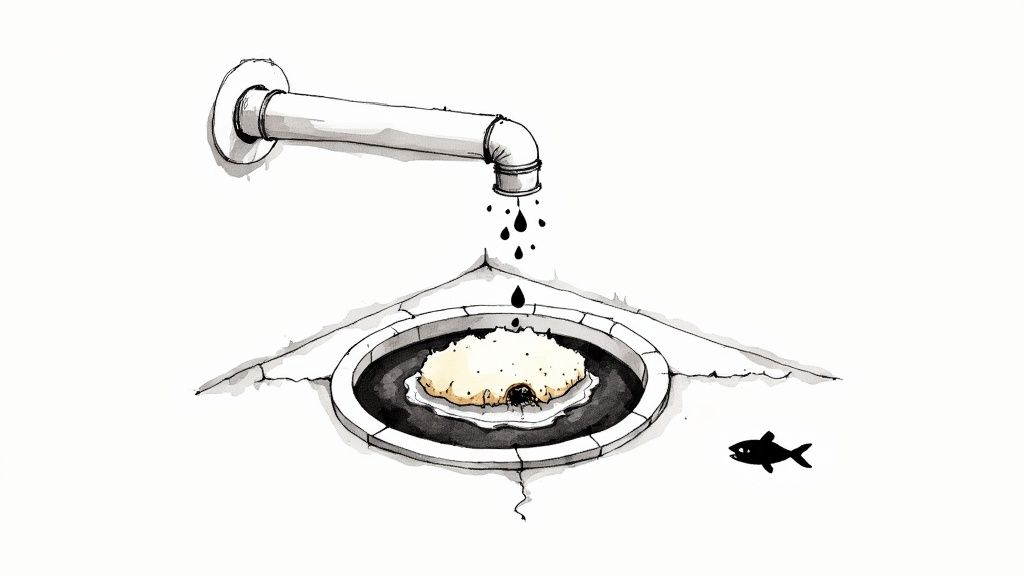
You’ve just finished making some amazing fried chicken. The leftover oil is still liquid, so down the drain it goes. Out of sight, out of mind, right? Not quite.
Once that hot oil hits the cold pipes, it starts to solidify. It congeals and clings to the inside of your pipes, creating a sticky trap. Every little bit of food, hair, and other gunk that goes down the drain gets caught in this greasy mess, building up over time. Slowly but surely, the pipe narrows until you’ve got a stubborn, tough-as-nails blockage.
The High Cost of a Clogged Pipe
It usually starts with a slow-draining sink. Before you know it, water is backing up, and you've got a full-blown clog on your hands. A routine visit from a plumber can set you back hundreds of dollars. If it's a serious blockage deep in your system, that bill can easily skyrocket into the thousands.
This isn't just a scare tactic; it’s a preventable expense homeowners face all the time. If you're already in this situation, you might find some helpful DIY tips and tricks for a blocked sink. But honestly, the best fix is to not let it happen in the first place.
The Menace of the Fatberg
Think the problem ends once the oil leaves your house? Unfortunately, its destructive journey is just beginning. As it travels into the municipal sewer system, your oil joins forces with grease from thousands of other homes. It then mixes with all the stuff people flush that they shouldn't—like "flushable" wipes and hygiene products.
This disgusting concoction creates massive, concrete-hard blockages called fatbergs. These things are monstrous, growing to weigh several tons and choking entire city sewer lines.
Fatbergs aren’t just a gross inconvenience. They can cause raw sewage to back up into streets, basements, and even local rivers. Removing them is a dangerous, difficult, and incredibly expensive job for city sanitation workers.
To get a real sense of this underground threat, you can learn more about what fatbergs are and why they matter in our in-depth guide. These blockages are a major public health risk and cost taxpayers millions of dollars every year to clear out.
Environmental Damage to Waterways and Wildlife
The damage doesn't stop at the sewer. When fatbergs cause overflows, untreated wastewater—cooking oil and all—spills directly into our rivers, lakes, and oceans.
The environmental fallout is devastating. Here’s a quick look at the damage:
- It Suffocates Aquatic Life: Oil forms a thin film on the water's surface, cutting off the oxygen supply for fish and other organisms below.
- It Harms Birds and Mammals: Oil coats the feathers and fur of animals, destroying their natural waterproofing. This makes them vulnerable to freezing temperatures and unable to fly or swim properly.
- It Contaminates Water Sources: Used oil can carry pollutants that contaminate the very water sources we and other wildlife rely on.
Learning how to dispose of used cooking oil the right way is a small change in your kitchen routine that has a huge positive impact. You’re not just saving your pipes—you're protecting your community's infrastructure and the fragile ecosystems around us.
The Easiest Way to Solidify and Toss Used Oil
Once you understand just how much damage used cooking oil can do to your pipes and the local environment, finding a simple, effective disposal method becomes a top priority. The old way—pouring hot oil into an empty jar, letting it cool, and hoping it doesn't leak all over your trash—is messy, unreliable, and frankly, a hassle.
But there's a much better approach that takes all the guesswork and mess right out of the equation.
We swear by FryAway, a 100% plant-based powder that magically transforms liquid cooking oil into solid organic waste. It's a non-toxic, incredibly easy-to-use solution that will completely change how you handle kitchen cleanup. No more greasy containers, no more accidental spills, and definitely no more worrying about clogged drains.
Your Simple Cleanup Process
Using FryAway is about as straightforward as it gets. Imagine you've just fried up some perfectly crispy beer-battered fish. Instead of staring at that pan of hot oil with a sense of dread, you can have it dealt with in just three simple steps.
- 1) Sprinkle and Stir: While the oil is still hot, just sprinkle the FryAway powder directly into the pan. Give it a gentle stir for about a minute until the powder completely dissolves. The packaging has clear guidelines on how much to use based on the amount of oil.
- 2) Cool Down: Now for the easy part: walk away. As the oil mixture cools, it will begin to solidify. This can take a few hours, so it's easiest to just leave it on the stovetop overnight.
- 3) Toss into household trash: Once it's completely cooled and hardened, you'll have a solid, waxy puck of oil. From there, you can easily scoop it out with a spatula and toss it straight into your household trash bin. Your pan will be nearly clean and ready for a quick wash.
This whole process means you can finally say goodbye to storing those messy, oil-filled jars under the sink or in the freezer.
The Real-World Benefits of Solidifying Oil
The true beauty of using a solidifier like FryAway is how it simplifies your entire kitchen routine. It’s not just about dodging a plumbing catastrophe; it’s about making everyday cooking more enjoyable and less of a chore. How many times have you skipped a recipe just because you didn't want to deal with a pan full of leftover oil?
The biggest win here is the total elimination of liquid waste. Solid oil can't spill, leak, or create a greasy mess in your trash can that attracts pests and creates nasty odors. It turns a hazardous kitchen liquid into a manageable solid.
Many municipal guidelines, like those from Portland, Oregon, are very clear that liquids and cooking oil should never go into compost bins. Their official recommendation for homeowners is to put grease in a sealed container before tossing it in the garbage. FryAway makes this foolproof by taking the "liquid" out of the equation entirely, ensuring you’re following local rules without any extra effort.
If you want to get into the nitty-gritty, our guide on how to solidify cooking oil offers an even deeper dive.
Perfect for Any Fried Food Lover
Whether you’re frying up a small batch of french fries for yourself or deep-frying a whole turkey for a crowd, this method scales to fit your needs. FryAway comes in different sizes designed for everything from a quick pan-fry to a large deep fryer.
Think about these common scenarios:
- Weekend Doughnuts: After making a fresh batch of glazed doughnuts, you're left with several cups of oil. Simply stir in the powder, let it set overnight, and toss the hardened block in the morning. Easy.
- Crispy Chicken Wings: For your next game day, you can fry wings to crispy perfection without giving the cleanup a second thought. The solidified oil just pops right out of the fryer basket or pot.
- Shallow-Frying Schnitzel: Even the smaller amounts of oil left from shallow-frying are a breeze to handle. A quick sprinkle of FryAway turns that greasy pan into a simple scoop-and-toss task.
By making cleanup this simple, you're free to enjoy all your favorite fried foods without that familiar post-meal dread. It’s a genuinely practical solution for any home cook who values convenience, a clean kitchen, and responsible habits.
What About Traditional Oil Disposal Methods?
While a solidifier like FryAway offers the cleanest and most straightforward way to handle used cooking oil, what happens if you don't have it on hand? You can still get rid of leftover oil responsibly using more traditional methods.
The classic strategy is often called “cool it, contain it, and trash it.” It gets the job done, but it definitely requires a bit more planning and effort on your part.
This old-school approach is all about finding the right kind of non-recyclable container with a lid you can trust. Think old coffee cans, empty detergent bottles, or even the original oil bottle. The most important thing is that the container seals tightly. A leaky container in your trash can is a recipe for a greasy mess that attracts pests and creates some seriously unpleasant odors.
The Cool, Contain, and Trash Method
So, you've just finished frying up a batch of crispy, golden-brown onion rings and are left with a pan of used oil. What now?
The first and most critical step is to let that oil cool down completely. Seriously, don't rush this part. Hot oil is incredibly dangerous, and if you try to pour it into a plastic container, you risk melting it and creating a disastrous mess you'll be cleaning up for hours.
Once the oil is at room temperature, carefully pour it into the container you've set aside. A funnel is your best friend here—trust me. Trying to pour straight from a heavy pan often leads to spills down the side of the container. After it’s full, screw that lid on as tight as you can.
Pro Tip: For an extra layer of leak protection, stick the sealed container in your freezer for a few hours. When the oil freezes into a solid block, it dramatically reduces the risk of it seeping out and making a mess in your trash bin.
Once frozen solid, you can toss the whole thing directly into your household garbage on trash day. While this method certainly works, its success really hinges on having the right container ready to go and taking those extra steps to prevent spills.
This infographic breaks down the modern alternative, showing just how simple the process becomes when you take containers out of the equation.
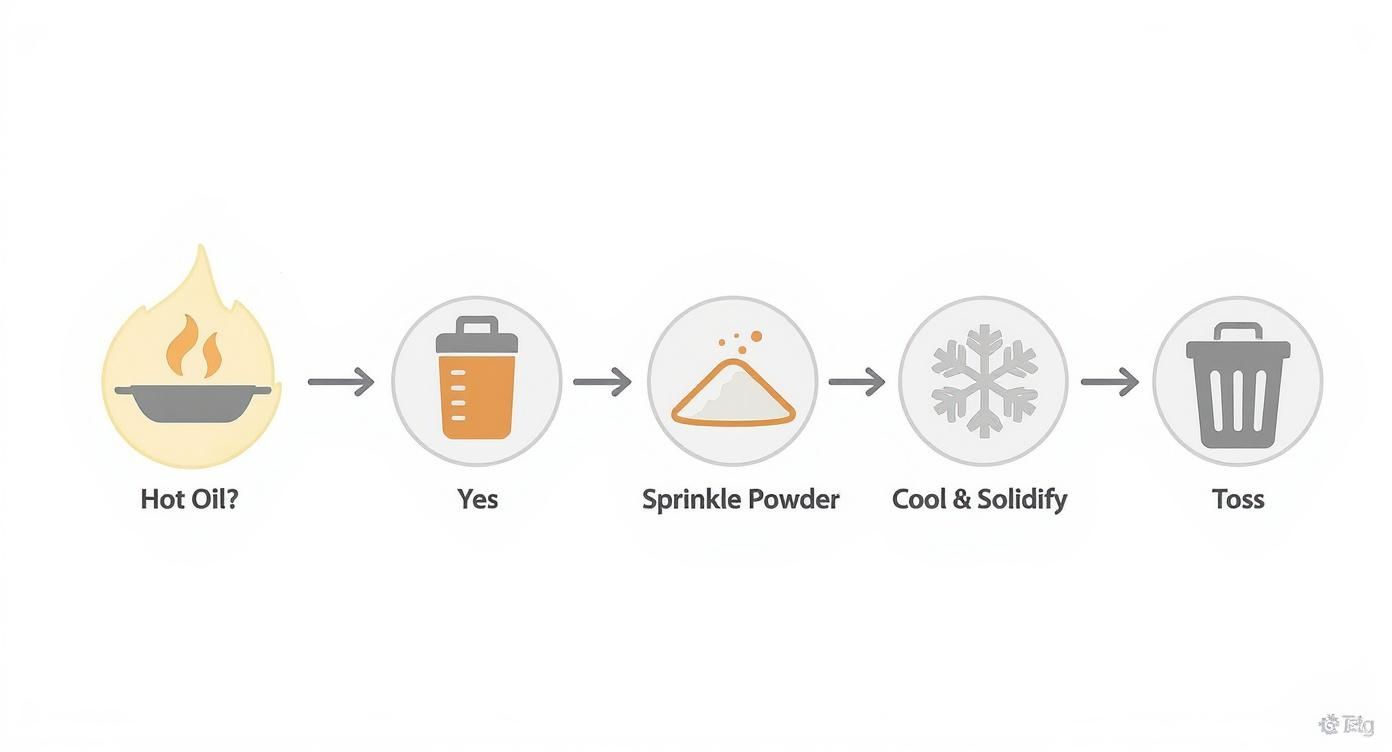
As you can see, a solidifier powder completely streamlines the process, eliminating the need to find and fill containers while getting rid of the risk of spills altogether.
Comparing Cooking Oil Disposal Methods
To make it easier to see the differences at a glance, here’s a quick comparison of the common ways people handle used cooking oil at home.
| Method | Convenience | Mess Factor | Container Needed? | Best For |
|---|---|---|---|---|
| Solidifier Powder | High | Low | No | Quick, no-fuss cleanup for any amount of oil. |
| Cool, Contain, Trash | Medium | Medium | Yes (Non-recyclable) | People who plan ahead and have suitable containers saved. |
| Freeze & Trash | Medium | Medium | Yes (Non-recyclable) | Anyone with extra freezer space who wants added leak security. |
| Recycling Center | Low | High | Yes (Transport-safe) | Large quantities of oil and those with nearby drop-off sites. |
Ultimately, the best method depends on what you value most—convenience, cleanliness, or using materials you already have.
The Downside of Traditional Disposal
The "contain and trash" method, while much better than pouring oil down the drain, isn't perfect. Finding a suitable container is often the biggest headache. You can't just grab any plastic bottle, since many are too flimsy to hold oil without leaking. This means you have to start saving and storing empty containers, which can quickly clutter up your kitchen.
Here are some of the most common frustrations people run into:
- Messy Transfers: Spilling oil while trying to pour it into a narrow-mouthed bottle is an all-too-common problem.
- Leaky Containers: Even with a tight lid, containers can get punctured or crushed in the trash, leading to greasy leaks all over your bin and driveway.
- Wasted Space: Storing empty containers until you need them—and then storing them again once they’re full of used oil—takes up valuable pantry or freezer space.
These little annoyances can make the cleanup process feel like a major chore. It's honestly one of the main reasons people avoid frying delicious food at home in the first place.
Why FryAway Is a Better Way
When you put the traditional methods side-by-side with the simplicity of FryAway, the difference in convenience and cleanliness is crystal clear. FryAway completely eliminates the need for a container by turning the liquid oil into a solid right in your cooking pan.
It’s a simple, three-step process designed to be as easy as possible:
- Sprinkle and Stir: Right after you finish cooking, while the oil is still hot, just sprinkle the FryAway powder into the pan. Give it a good stir for about a minute until the powder completely dissolves.
- Cool Down: Now, just leave the pan on the stovetop to cool down. As it cools, the oil mixture will magically transform into a solid, waxy puck. This usually takes a few hours.
- Toss into household trash: Once it's fully hardened, the solid oil puck can be easily scooped out with a spoon or spatula and tossed directly into your trash can. No mess, no container, no problem.
This approach makes cleaning up after frying something like classic Southern Fried Chicken or homemade Glazed Doughnuts completely stress-free. You get all the joy of incredible fried food without any of the dreaded cleanup afterward.
Recycling Cooking Oil for a Greener Kitchen
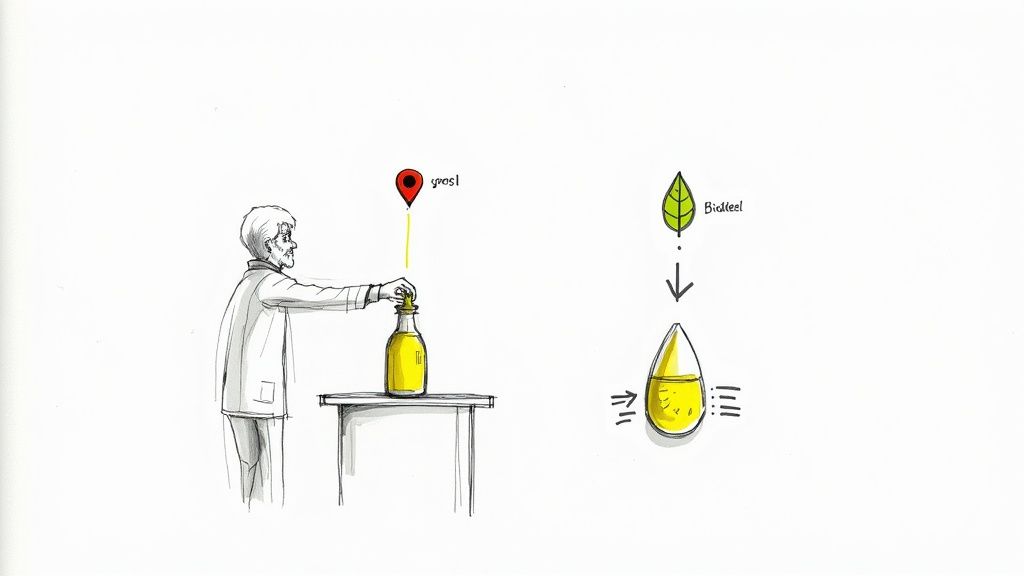
While solidifying used cooking oil with FryAway is hands-down the easiest way to handle cleanup, some of us want to take our green game a step further. If that’s you, recycling your used oil is a fantastic way to join the circular economy, transforming everyday kitchen waste into something incredibly useful.
The process is pretty straightforward: you collect your used oil and take it to a special facility. There, it gets refined and repurposed, most often into biodiesel. This renewable fuel can power vehicles and machinery, which helps cut our reliance on fossil fuels and lowers carbon emissions.
The Growing Demand for Recycled Oil
Recycling oil isn't just a small-time operation anymore; it’s a massive global industry. The push for greener energy has created a huge demand for used cooking oil. In fact, about 80% of all used cooking oil collected around the world gets a new life as biofuel.
This demand has turned what you might see as kitchen trash into a hot commodity. The global used cooking oil market hit $6.6 billion in 2023 and is expected to soar to $11.2 billion by 2032. As governments and industries keep searching for sustainable alternatives, that leftover oil from your French fries is only going to get more valuable.
How to Find a Local Recycling Center
Finding a place to drop off used oil may be easier than you think, although available programs and accepted quantities vary by location. Our guide explains where to take used cooking oil and how to identify local recycling centers, household waste facilities, collection events, and other suitable drop-off options.
Here’s how to track one down:
- Go Online: A simple search for "used cooking oil recycling near me" or "cooking oil drop-off [your city]" usually does the trick. Your city or county website is a great place to start.
- Call Your Waste Management Company: The folks who pick up your trash and recycling are in the know. Give them a call or check their website for local programs or special collection days.
- Ask Local Restaurants: Restaurants go through gallons of oil and have established recycling systems. They’ll likely know who handles residential collection, and some might even let you add your container to their bin if you ask nicely.
Thinking beyond the kitchen helps put things in perspective, highlighting the crucial role of recycling for the planet's future and our part in it.
Storing and Transporting Oil for Recycling
Proper storage is everything. If your oil is contaminated with water, food scraps, or other gunk, the recycling facility might turn it away.
First things first, let the oil cool down completely. Once it’s at room temperature, strain it through a fine-mesh sieve or some cheesecloth to get rid of any crumbs and food bits. Don't skip this part—it's key to keeping the oil pure.
Next, pour the clean oil into a sturdy container with a tight-fitting, screw-on lid. The bottle the oil originally came in works great, as does a clean plastic jug. Make sure to label it "Used Cooking Oil" so nobody mistakes it for something else.
Keep your container in a cool, dark spot, like under the sink or in the garage, until you have enough to make a trip to the recycling center worth your while. This also stops the oil from going rancid.
When you're ready to go, double-check that the lid is on tight. I like to place the container in a small box or bucket in my car just in case it tips over. Better safe than sorry!
Recycling is an awesome green choice, but let's be honest, it takes more work. You have to store liquid oil and make a special trip to a drop-off site. For many, the simple convenience of a solidifier is the more practical day-to-day solution. We break down the pros and cons in our article on the https://fryaway.co/blogs/blog/the-most-eco-friendly-cooking-oil-disposal-technique.
But for those who are up for it, recycling is an incredibly rewarding way to give your kitchen waste a second life.
Fried Recipes to Try Without the Cleanup Fear
Now that you know how to handle used cooking oil without the stress, it’s time for the best part—getting back in the kitchen. Let’s be honest, the thought of dealing with a pan full of hot, greasy oil can kill your motivation to cook something amazing.
But with a solid cleanup plan, you're free to explore all the crispy, golden goodness you’ve been missing. This is your official invitation to start frying with confidence. We’ve rounded up three incredible recipes that are guaranteed crowd-pleasers, so you can focus on the flavor and not the fuss.
Classic Southern Fried Chicken
There's just nothing that compares to the crunch of perfectly seasoned, buttermilk-brined fried chicken. This recipe is a classic for a reason. The real secret is a double dredge in seasoned flour, which creates that craggy, ultra-crispy crust we all crave.
- Key Ingredients: Bone-in chicken pieces, buttermilk, all-purpose flour, salt, black pepper, paprika, and garlic powder.
- Best Oil to Use: Go for a neutral oil with a high smoke point, like peanut, canola, or vegetable oil. You'll want about an inch of oil in a large, heavy-bottomed skillet.
- Pro Tip: After frying, let your chicken rest on a wire rack for at least 10 minutes. This is crucial for letting the crust set and preventing the bottom from getting soggy.
After everyone’s full and happy, that leftover oil is ready for its quick transformation. That’s where FryAway comes in to make cleanup a total breeze.
Cleanup is as easy as 1-2-3:
- Sprinkle and Stir: While the oil in your skillet is still hot, just sprinkle in the FryAway powder. Give it a quick stir for about a minute until it dissolves.
- Cool Down: Leave the pan on the stovetop to cool completely. You'll watch the oil magically turn into a solid, waxy puck.
- Toss into household trash: Once it's hard, scoop the solid oil out with a spatula and toss it right into your household trash. Done.
Beer-Battered Fish Tacos
Light, airy, and unbelievably crispy—beer-battered fish is the hero of any great taco night. The carbonation from the beer creates a delicate, puffy crust that fries up to a perfect golden brown, keeping the flaky white fish inside moist and tender.
Serve these up in warm tortillas with a zesty slaw and a drizzle of crema. You won't regret it.
- Key Ingredients: Firm white fish (cod or tilapia are great choices), flour, cornstarch, your favorite lager or pilsner, baking powder, and seasonings.
- Best Oil to Use: Canola or vegetable oil works perfectly here. You’ll need a few inches of oil in a Dutch oven or deep pot.
- Pro Tip: Getting the oil temperature right is key. Aim for 350-375°F. If the oil is too cool, the batter will get greasy instead of crispy.
Homemade Glazed Doughnuts
Why stand in line at a doughnut shop when you can make warm, fluffy, perfectly glazed yeast doughnuts right at home? Frying is what gives them that classic airy texture and golden exterior that you just can't replicate by baking. The taste of a doughnut fresh from the fryer is pure joy.
- Key Ingredients: All-purpose flour, active dry yeast, milk, sugar, eggs, butter, and a simple glaze made from powdered sugar.
- Best Oil to Use: A neutral vegetable oil is your best bet for frying doughnuts without adding any unwanted flavor.
- Pro Tip: Don't overcrowd the pot! Frying just a few doughnuts at a time keeps the oil temperature steady, which means you’ll get evenly cooked, perfectly puffed results every single time.
And once again, when the last doughnut is gone, the cleanup is nothing to worry about. The simple FryAway method—Sprinkle and Stir, Cool Down, and Toss into household trash—turns that pot of oil into a solid you can easily discard, leaving you with nothing but sweet memories.
Of course, every home cook runs into a few lingering questions when it comes to dealing with used cooking oil. Getting those sorted out is the key to building good habits that stick. Let's dig into some of the most common ones.
Can I Reuse My Cooking Oil?
Yes, you definitely can, but you've got to be smart about it. Reusing oil from something fairly clean, like frying potatoes, is a fantastic way to cut down on waste and save a little money.
Once you're done cooking, let the oil cool down completely. Then, pour it through a fine-mesh sieve or a couple of layers of cheesecloth to catch all the leftover food bits. Store that filtered oil in a sealed, airtight container somewhere cool and dark.
Most oils are good for two to three uses. But this is where you need to trust your senses. If the oil looks dark and gunky, smells off, or starts smoking way sooner than it should, its cooking days are over. Time to toss it.
What Is the Absolute Worst Thing to Do With Oil?
Without a doubt, pouring it down the drain or flushing it down the toilet. We've talked about this, but it bears repeating: that liquid grease solidifies in your pipes, creating stubborn clogs and contributing to those massive, city-blocking fatbergs in the public sewer system. It's a one-way ticket to expensive plumbing bills and a whole lot of environmental damage.
Another big mistake is adding used oil to your compost pile. Fats, grease, and liquids throw the whole system out of whack, attracting pests and creating some truly awful smells. Just keep oil out of your drains and your compost—period.
Is It Better to Recycle Oil or Use a Solidifier?
That's a great question, and honestly, the best answer depends on your lifestyle. Recycling is a fantastic option for the environment, turning old cooking oil into useful biodiesel. The catch? It means you have to filter, store, and then physically transport containers of liquid oil to a specific drop-off location. For some, that's just not practical.
A solidifier like FryAway offers a different angle on sustainability—one that's all about convenience and consistency. It turns messy liquid oil into a solid, right in your pan, which makes responsible disposal incredibly simple. You don't have to worry about storing greasy jugs or scheduling a special trip. That ease of use encourages you to do the right thing every single time you fry.
The scale of this problem is huge. The Asia-Pacific region alone is expected to make up 29.5% of the global used cooking oil market by 2025, thanks to its massive population and food industry. As the energy demands of countries like China and India grow, so does the challenge of managing all this waste. It really highlights why we need simple, effective solutions for everyone, not just commercial kitchens. You can find more data on this growing market over at Coherent Market Insights.
For the average person who just wants a foolproof method that fits right into their cleanup routine, a solidifier is often the most practical and reliable choice.
Think about it. You just finished frying up some amazing beer-battered fish tacos. Instead of a messy cleanup, it’s just three quick steps:
- 1) Sprinkle and Stir: Just add the FryAway powder to the hot oil and give it a stir for a minute.
- 2) Cool Down: Let the pan sit until the mixture cools and hardens into a solid puck.
- 3) Toss into household trash: Scoop the solid oil out and drop it right in the garbage can.
This little trick removes all the usual barriers—the mess, the containers, the travel—and makes it the easiest way to handle used oil correctly.
Ready to say goodbye to messy oil disposal for good? FryAway makes cleanup after frying your favorite foods simple, safe, and planet-friendly. Explore FryAway products and change your kitchen routine today!