


· By FryAway
How to Dispose of Frying Oil The Right Way
After you’ve cooked up a delicious fried meal, what you do with the leftover oil is a pretty big deal. The golden rule is simple: never, ever pour it down the drain. The best practice is to let the oil cool completely, pour it into a container you don't plan on recycling, seal it up, and toss it in your household trash. This one small habit can save you from massive plumbing headaches and helps protect the environment, too. For the easiest and most effective method, we recommend using a cooking oil solidifier like FryAway.
Why You Should Never Pour Frying Oil Down the Drain
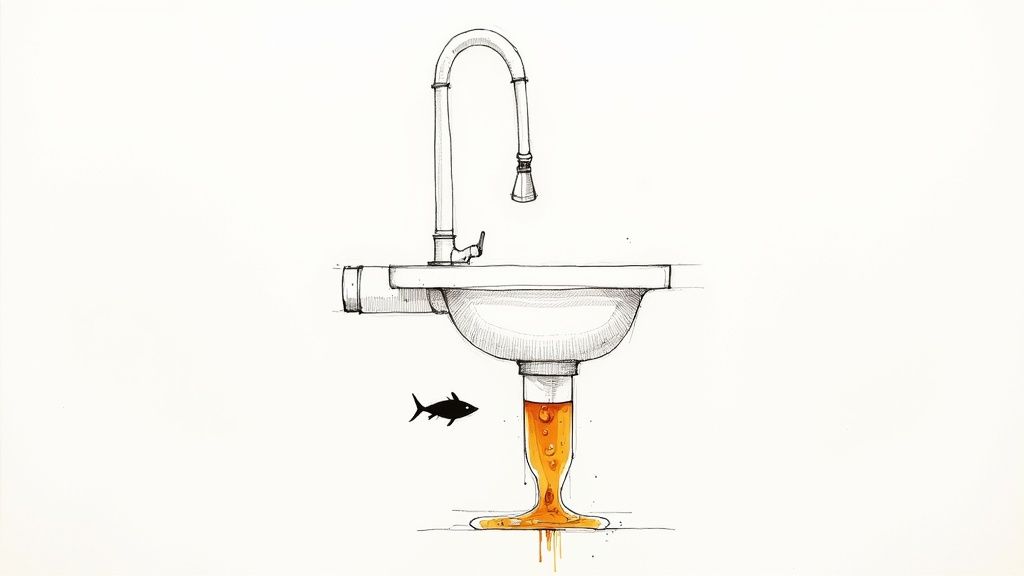
It seems like the quickest, easiest way to get rid of used oil, but sending it down the sink is a costly mistake just waiting to happen. While it might look like a harmless liquid, hot oil changes dramatically once it hits the cool environment of your plumbing.
As soon as that hot grease meets the colder temperatures inside your pipes, it starts to solidify. It becomes a sticky, hard gunk that clings to the inside of your pipes, creating a stubborn buildup that hot water and dish soap just can't wash away.
The Problem Inside Your Pipes
Think of it like plaque building up in an artery. The first time you do it, the impact is small. But with every fried meal, another layer of solidified fat gets added to the collection.
Over time, this buildup traps food scraps, hair, and other gunk going down your drain, narrowing the pipe until it forms a complete blockage.
Before you know it, you're dealing with:
- Sinks that take forever to drain
- Weird gurgling noises coming from your pipes
- Foul smells wafting up from the drain
- Gross, messy backups into your sink or tub
These problems almost always mean calling in a professional plumber, which means an unexpected and expensive bill. What started as a simple cleanup shortcut can quickly spiral into a major household headache.
The idea that running hot water and soap will flush grease away is just a myth. Once the oil travels further down the line and cools, it's going to solidify no matter what. You're just kicking the can down the road and setting the stage for a future clog.
The Bigger Picture Beyond Your Home
The consequences of pouring oil down the drain stretch far beyond your property line. When that grease leaves your house, it joins the municipal sewer system, where it mixes with fats and oils from thousands of other homes.
This collective waste is the primary ingredient in forming massive, concrete-like blockages known as "fatbergs."
These fatbergs can clog entire city sewer lines, leading to widespread sewage backups and requiring costly, difficult, and labor-intensive removal. You can get the full story on the staggering impact of what fatbergs are and why it matters in our detailed guide.
And if the oil makes it all the way to natural waterways? It can devastate aquatic life by coating the gills of fish and the feathers of birds, throwing entire ecosystems out of balance. Understanding the full impact is the first step toward adopting a safer, more responsible kitchen routine.
The Easiest Way to Handle Used Cooking Oil
Picture this: you've just fried up a batch of perfectly crispy, golden-brown chicken. The kitchen smells incredible, but you're left staring at a pan full of hot, sloshy oil. The old way of dealing with this mess meant waiting for it to cool, then gingerly pouring it into an old jar, praying it wouldn't spill all over the counter.
But there's a much, much simpler way to handle this dreaded kitchen chore.
What if you could turn that messy liquid into a solid, easy-to-handle puck that you just toss right in the trash? That’s exactly what FryAway does. It’s a plant-based powder that takes all the hassle out of frying oil disposal, making cleanup an absolute breeze for anyone who loves fried food but hates the aftermath.
How to Use FryAway for Mess-Free Disposal
Using FryAway is almost laughably simple. It transforms a once-tedious task into a quick, clean process that feels like a magic trick. The secret is a simple three-step method that works with any kind of cooking oil, from the deep pot of peanut oil to the shallow slick of canola oil from a quick pan-fry.
This method completely gets rid of the need for messy containers or those risky trips to the trash can with a sloshing jar of grease.
Here’s all you have to do for best results:
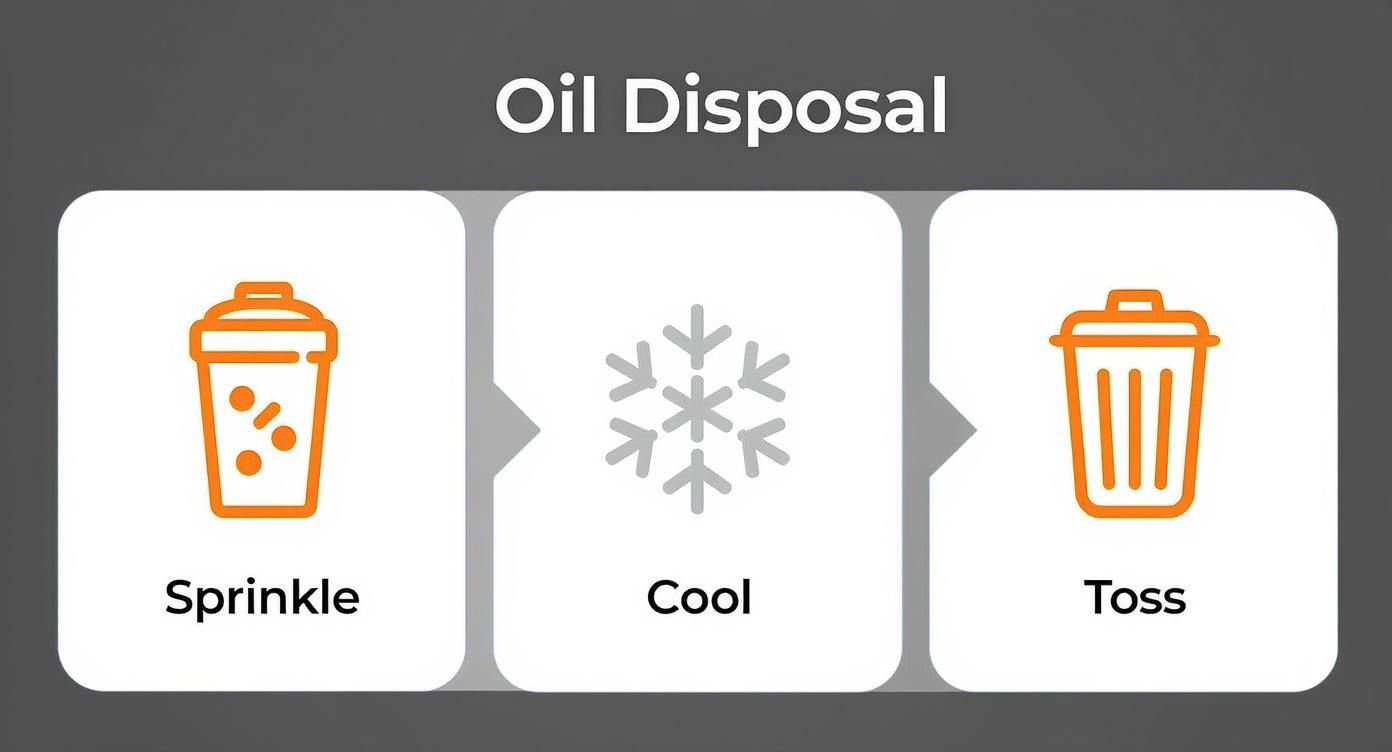
- 1) Sprinkle and Stir: While your used cooking oil is still hot, just sprinkle the FryAway powder directly into the pan. Give it a quick stir to make sure the powder dissolves and gets mixed in evenly.
- 2) Cool Down: Now, just walk away and let the pan cool down. As the oil loses heat, the FryAway powder gets to work, magically solidifying the entire pan of liquid into a solid, waxy disc.
- 3) Toss into household trash: Once the oil has completely hardened, you can easily scoop the solid puck out of your pan and toss it directly into your household trash. No spills, no mess, no extra container needed.
Turning that liquid oil into a solid doesn't just make your life easier—it ensures that not a single drop ends up where it shouldn’t. No more clogged sinks or greasy messes leaking in your garbage can. It’s a clean, simple, and seriously effective solution.
Why This Method Works So Well
This approach is a total game-changer because it tackles the root of the problem: the oil's liquid state. By solidifying it, the oil becomes completely manageable. You eliminate the risk of spills that can attract pests or create a leaky, disgusting mess in your trash bags.
So whether you're frying up tempura vegetables or a batch of homemade donuts, the cleanup is always just as simple. You can dive deeper into the science behind this solution in our ultimate guide to how a cooking oil solidifier works.
For a broader look at managing used oils, you can also find great tips on how to recycle old oil safely and easily. This way, you can enjoy all your favorite fried foods without ever dreading the cleanup again.
While an oil solidifier like FryAway makes cleanup incredibly simple, it’s good to know the old-school ways of handling used cooking oil. For years, home cooks have figured out how to manage leftover grease without ever thinking of pouring it down the drain.
These traditional methods take a bit more work, but they get the job done when you’re in a pinch.
The Classic "Cool, Contain, and Toss" Method
This is the go-to strategy for many. It’s exactly what it sounds like: you let the oil cool down, pour it into a container, and throw it in the trash. Simple, right? But the devil is in the details.
First, and this is non-negotiable, you have to let the oil cool completely. Hot oil is a hazard—it can melt right through a trash bag or plastic container, creating a greasy nightmare you do not want to deal with. Just be patient. A big pot of oil can take a few hours to cool to a safe temperature.
Once it's cool, pour it into a non-recyclable container with a lid you can seal tightly. Think old takeout containers, milk cartons, or that glass jar you were never going to reuse. Screw the lid on tight to prevent leaks, then toss the whole thing in your regular household trash.
The biggest risk here is a messy leak. If that lid isn't secure, you'll end up with a greasy mess in your trash bin, which is basically an open invitation for pests.
Community Recycling Programs
Looking for a greener option? Check out local recycling programs in your community. Many towns and cities have designated drop-off centers that accept used cooking oil. It’s a fantastic way to keep waste out of landfills and give your old oil a new purpose.
A quick Google search for "cooking oil recycling near me" or a visit to your local waste management's website should point you in the right direction. Just keep a couple of things in mind:
- Know the Rules: Collection centers usually have specific guidelines for what kind of oil they accept and how it should be contained.
- Store It Right: You’ll probably need to save up your oil for a bit. Store it in a large, sealed container away from heat until you’re ready for a drop-off.
It's not as quick as tossing it at home, but recycling your oil is a huge win for the environment.
Comparing Oil Disposal Methods
To help you decide what works best for your kitchen, here's a quick look at how these methods stack up against each other.
| Method | Convenience Level | Environmental Impact | Best For |
|---|---|---|---|
| Cool, Contain, & Toss | Moderate | Low (if contained) | Quick, occasional disposal without special products. |
| Community Recycling | Low | High (Positive) | Eco-conscious cooks willing to store oil for drop-off. |
| FryAway Solidifier | High | High (Plant-based) | Anyone wanting a fast, mess-free, and eco-friendly cleanup. |
Each method has its pros and cons, but they all beat pouring oil down the drain. The key is finding a system that fits your cooking habits and lifestyle.
From Kitchen Waste to Biofuel
So, what happens to all that recycled oil? It often gets turned into biofuel, a renewable energy source that’s helping to reduce greenhouse gas emissions.
The global market for used cooking oil (UCO) is growing fast, largely because of this demand for biodiesel. Valued at around USD 7.89 billion in 2025, the market is expected to jump to USD 12.75 billion by 2032. The foodservice industry is a massive player, supplying nearly 46% of the raw material. You can read more about the booming used cooking oil market on coherentmarketinsights.com.
No matter which method you choose, planning your oil disposal is key to a clean kitchen and a healthier planet. To see how these classic approaches measure up against modern solutions, take a look at our comparative study of FryAway vs. traditional oil disposal methods.
The Global Impact of Cooking Oil Recycling
When you figure out what to do with that pan of leftover frying oil, you’re doing more than just keeping your pipes clear. That small kitchen decision connects you to a massive, worldwide effort to manage resources more sustainably.
It might seem like just a household chore, but you're tackling a small-scale version of a huge challenge faced by restaurants, food manufacturers, and even entire cities. This global movement is turning a common kitchen waste into a valuable commodity, all thanks to growing environmental awareness and stricter waste laws.
By adopting a responsible practice, like using a solidifier such as FryAway, you become an active part of the solution.
The process is incredibly simple: 1) Sprinkle and Stir, 2) Cool Down, and 3) Toss into household trash. Just like that, you’ve handled your used oil cleanly and safely, keeping it far away from our fragile water systems.
A Rapidly Growing Global Market
The push to recycle used cooking oil has sparked a major global industry. By 2025, the worldwide cooking oil recycling market is projected to be worth around USD 4.8 billion.
And it's not slowing down. Experts predict it will keep expanding at a rate of 6.5–8% annually through 2033. This growth is being driven by the ever-expanding fast-food industry and the globalization of our eating habits. You can dig deeper into these market dynamics on datainsightsmarket.com.
This boom is a direct response to the urgent need for sustainable waste solutions. As more people realize the damage that improper oil disposal causes, the demand for effective recycling and conversion technologies just keeps climbing.
Your decision to properly dispose of the oil from frying chicken wings or tempura vegetables contributes directly to this positive trend. It’s proof that individual habits can collectively support a more sustainable, circular economy.
Regional Leadership and Future Outlook
Some parts of the world are really leading the charge. The Asia Pacific region, for example, is expected to dominate the market. With its huge population, rapid urbanization, and massive food processing sector, countries like China and India are producing enormous quantities of used cooking oil. That makes effective recycling programs an absolute necessity.
Looking at it from this global perspective, it’s clear that knowing how to dispose of frying oil is more than just good home maintenance—it’s about being a responsible global citizen.
Every time you choose a smart disposal method, you’re helping to turn a potential pollutant into a useful resource like biodiesel or soap. You're not just cleaning your kitchen; you're contributing to a cleaner, healthier planet for everyone.
Delicious Fried Recipes That Are Worth the Cleanup
Now that you have a foolproof plan for cleanup, it's time to get back to the fun part—the cooking. When you master how to dispose of frying oil without the usual hassle, you unlock the freedom to make all those crispy, golden dishes you crave. No more dread, just deliciousness.
To get your creative juices flowing, we're sharing two of our favorite fried recipes. Trust us, they're absolutely worth the (now incredibly simple) cleanup.
Crispy Southern-Style Fried Chicken
There's nothing quite like classic Southern fried chicken. It’s all about getting that shatteringly crunchy crust while keeping the inside unbelievably juicy. A good, heavy-bottomed pot and the right cooking oil are your tickets to perfection here.
What You'll Need:
- Chicken: 8 pieces of bone-in, skin-on chicken (thighs and drumsticks are fantastic for this).
- Buttermilk Marinade: 2 cups of buttermilk, a splash of hot sauce (1 tablespoon), and a teaspoon each of salt and pepper.
- Flour Dredge: 2 cups all-purpose flour, 2 tablespoons cornstarch, and a generous mix of paprika, garlic powder, onion powder, salt, and black pepper.
- Cooking Oil: About 4-6 cups of peanut or vegetable oil.
Let the chicken hang out in that buttermilk marinade for at least four hours—overnight is even better. When you're ready to fry, get your oil heated to a steady 350°F. Give each piece of chicken a thorough coating in the seasoned flour, shake off the excess, and gently lower it into the hot oil. Fry for about 6-8 minutes per side until it's a beautiful golden brown and cooked all the way through.
Once you’re done feasting, the cleanup is almost an afterthought. Just let the hot oil cool down a bit before following the simple FryAway process: 1) Sprinkle and Stir, 2) Cool Down, and 3) Toss into household trash.
Forget about stressing over that big pot of used peanut oil. When disposal is this easy, you can focus all your energy on achieving that perfect, crispy skin everyone fights over.
Light and Crispy Tempura Vegetables
If you're in the mood for something a bit lighter but just as satisfying, you can't go wrong with tempura. The batter is incredibly delicate, creating a light, airy crunch that lets the vegetables shine.
Here's the Game Plan:
- Veggies: Slice up your favorites! Sweet potatoes, broccoli florets, zucchini rounds, and onion rings are all excellent choices.
- Tempura Batter: This is the secret. Whisk 1 cup of iced sparkling water with 1 cup of all-purpose flour. Mix it just until combined—a few lumps are not only okay, they're perfect!
- Cooking Oil: You'll want a light, neutral cooking oil for this. Canola oil works great. Plan on using about 3-4 cups.
Heat your canola oil to 360°F. Dip your prepared vegetables into the batter, let the excess drip off for a second, and then fry for just 2-3 minutes until they're a pale golden color. Serve them immediately with a soy-ginger dipping sauce.
After you've devoured every last crispy bite, the leftover oil is no problem. Just remember the three simple steps: 1) Sprinkle and Stir the FryAway powder into the hot canola oil, 2) Cool Down until it turns into a solid puck, and 3) Toss it straight into your household trash. It really is that simple.
Got Questions About Frying Oil Disposal?
Even with a solid game plan for your used cooking oil, a few questions can still pop up. That’s totally normal. Getting clear, straightforward answers is the best way to build confidence in your kitchen cleanup routine, making sure every choice you make is safe for your home, your pipes, and the planet.
Here are some of the most common questions we get about how to handle used frying oil.
Can I Reuse Frying Oil Before Getting Rid of It?
Absolutely, and you should! Reusing cooking oil is a fantastic way to stretch your budget and be a little more sustainable in the kitchen. For most foods, you can safely reuse the same oil three or four times.
Here’s how to do it right. First, let the oil cool down completely. Next, strain it through a fine-mesh sieve or a few layers of cheesecloth to catch any of those lingering food particles. Store your cleaned-up oil in a sealed, light-proof container somewhere cool and dark, like your pantry.
You’ll know it’s time to toss it for good when the oil gets dark, starts to foam up on the surface, or just smells off. Trust your senses on this one.
What's the Absolute Worst Way to Discard Cooking Oil?
Without a doubt, the worst thing you can possibly do is pour used cooking oil down any drain—whether that's your kitchen sink, the garbage disposal, or the toilet. It’s a recipe for disaster.
As soon as that warm, liquid oil hits the cooler pipes, it starts to solidify. This creates stubborn, greasy clogs that are a nightmare to clear and can lead to expensive plumbing emergencies. This gunk also contributes to those massive "fatbergs" in city sewer systems, causing widespread blockages and serious environmental hazards.
Tossing large amounts of oil in your compost pile is another bad idea. It can attract pests, throw off the whole composting process, and create smelly, unpleasant conditions.
The bottom line is simple: any disposal method that involves pouring liquid oil down a drain or just dumping it outside is the wrong choice. It kicks off a chain reaction of problems that are difficult, messy, and expensive to fix.
How Does FryAway Work? Is It Safe to Use in My Kitchen?
FryAway is a 100% plant-based, non-toxic powder that makes oil disposal incredibly simple and clean. When you stir the powder into hot used oil, it kicks off a natural process that solidifies the liquid into an organic solid as it cools.
It's completely safe for household use and contains no harsh chemicals. It magically transforms messy liquid oil into an easy-to-handle solid puck that you can just scoop out and toss directly into your regular trash bin.
It really is as simple as it sounds:
- 1) Sprinkle and Stir the FryAway powder into your hot used oil.
- 2) Cool Down and just let the oil solidify right there in the pan.
- 3) Toss into household trash. No mess, no spills, no problem.
Does the Type of Cooking Oil Change How I Dispose of It?
When it comes to safe home disposal, the type of oil you're using—whether it's vegetable, canola, peanut, or olive oil—doesn't change the main rule. None of them should ever go down the drain. Period.
Products like FryAway are designed to work with all common types of cooking oils. So you can use the same easy, mess-free method whether you’re pan-frying with a little canola oil or deep-frying with a pot full of peanut oil.
If you’re planning to take your oil to a local recycling service, they generally accept all liquid vegetable-based oils, but it never hurts to check their specific guidelines beforehand just to be sure.
Ready to make your fried food cleanup totally mess-free? With FryAway, you can say goodbye to messy jars and clogged pipes forever.
Discover how easy it is to handle used cooking oil at fryaway.co