


· By FryAway
The Best Way to Get Rid of Frying Oil for Good
We’ve all been there. You’ve just finished frying up some incredible french fries or perfectly crispy chicken, and now you’re staring at a pan full of hot, used cooking oil. What do you do with it?
The easiest answer—pouring it down the sink—is tempting, but it’s the absolute worst thing you can do.
The Problem with Used Cooking Oil
Once that hot grease hits your cool pipes, it solidifies. It starts small, but over time it builds up, trapping food scraps and other gunk until you’ve got a stubborn clog on your hands. Suddenly, that "quick fix" turns into a pricey call to the plumber.
This isn’t just a problem for your house; it’s a massive headache for entire cities. When oil from thousands of homes mixes in the public sewer system, it forms enormous, concrete-hard blockages called fatbergs. These monsters can cause sewer backups into streets and homes, damage infrastructure, and cost municipalities millions of dollars to remove.
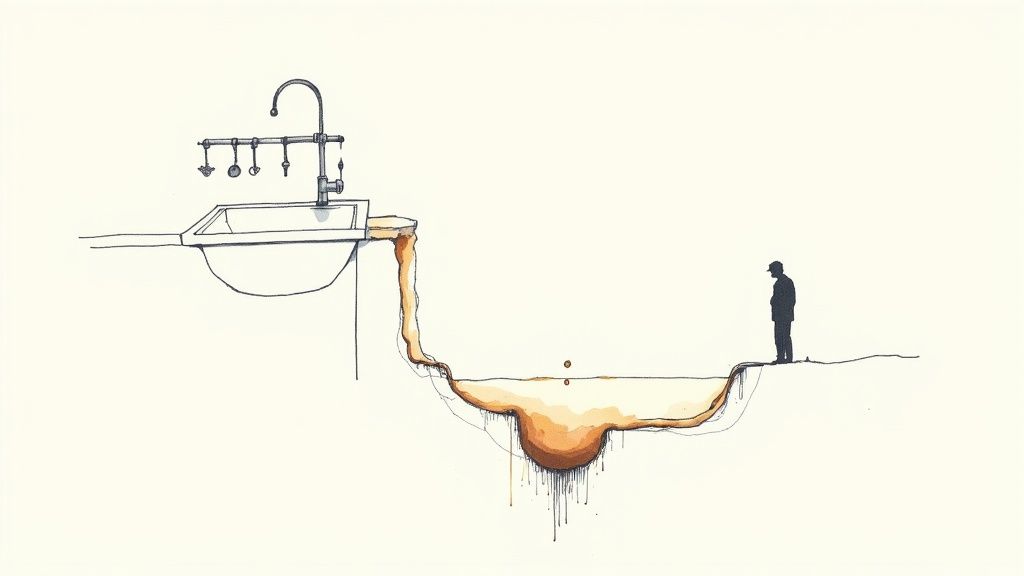
The scale of the issue is staggering. Globally, it’s estimated that we generate over 15 million tonnes of used vegetable oil every single year. When handled improperly, a huge portion of that ends up where it shouldn’t. You can learn more about the hidden environmental cost of used cooking oil in our detailed guide.
Choosing a responsible disposal method is more than just protecting your own plumbing. It’s about protecting your community and local waterways from pollution.
The consequences of improper oil disposal are cumulative. What starts as a small amount of grease down the drain can contribute to city-wide problems that affect everyone, from plumbing bills to environmental pollution.
Simply put, what goes down the drain doesn’t just disappear. The best way to get rid of frying oil is to shift from damaging habits to smarter, safer practices that protect our homes and our shared resources.
To highlight just how bad some common practices are, let's look at the mistakes many of us have made and the trouble they cause.
Common Oil Disposal Mistakes and Their Consequences
| Disposal Method | Immediate Problem | Long-Term Consequence |
|---|---|---|
| Pouring Down the Sink | Coats pipes with a layer of grease. | Builds up over time, creating severe clogs and plumbing emergencies. Contributes to city-wide fatbergs. |
| Dumping in the Yard | Attracts pests like rats and insects; can harm plants and soil. | Pollutes groundwater and can create a foul-smelling, greasy mess that's difficult to clean up. |
| Throwing in Compost | Slows decomposition, attracts pests, and can create an oily, smelly compost pile. | Disrupts the balance of your compost, potentially killing beneficial microorganisms and ruining the batch. |
| Pouring into Storm Drains | Oil flows directly into local waterways without treatment. | Causes significant water pollution, harms aquatic life, and can lead to fines from local authorities. |
Seeing the damage these methods cause makes it clear why finding a better solution is so important for every home cook.
So, what's the right way to handle it? The best way to get rid of frying oil is to turn it into a solid before you toss it. We recommend using FryAway, a plant-based powder designed for exactly this purpose. It transforms hot liquid oil into a solid, rubbery puck that you can easily lift out of the pan and throw right into your household trash.
No spills, no clogs, and no environmental guilt. It’s a simple, clean, and responsible solution for any home cook who loves to fry.
A Simple Plant-Based Solution for Oily Messes
What if you could turn that pan of messy, liquid oil from your weekend batch of fried chicken into a solid, scoopable puck? One you can just toss right into the trash. That’s the simple genius behind FryAway.
This innovative, 100% plant-based powder is the modern answer to an age-old kitchen problem. It's hands-down the best way to get rid of frying oil without the usual hassle and mess.

The non-toxic formula works its magic in a few easy steps. Just sprinkle it into the hot oil right after cooking, give it a quick stir until it dissolves, and then let it cool down completely. This simple act gets rid of any risk of spills, pipe damage, or environmental guilt.
FryAway totally changes your kitchen cleanup. It’s a must-have tool for any cook who loves the results of frying—from crispy potato chips to golden tempura—but dreads dealing with the leftover oil. It's interesting to see how other alternative, plant-based solutions can tackle tough messes, like the unique CitruSolution® Carpet Cleaning Process which uses a completely different approach for a different problem.
The Easy FryAway Process
The real beauty of FryAway is just how simple it is. After you've finished frying your favorite foods, the cleanup is quick and clean.
- Sprinkle and Stir: While the cooking oil is still hot, sprinkle the right amount of FryAway powder into the pan. Stir it gently until everything has completely dissolved.
- Cool Down: Now, just let the pan sit and cool down. As it cools, you'll see the oil magically transform into a solid, almost rubber-like puck.
- Toss into household trash: Once it's solid, you can easily scoop the puck out of your cookware and toss it straight into your regular household trash bin.
It's a mess-free solution that feels almost too good to be true. No more greasy jars, no more worrying about spills, and absolutely no risk to your plumbing or the environment. It’s frying cleanup, solved.
Your Guide to Using FryAway for Easy Cleanup
Ready to see just how simple frying cleanup can be? Using FryAway is a straightforward process that will completely change how you deal with used cooking oil. Forget the messy jars and risky drains; this is how you get rid of frying oil for good.
Picture this: you just finished making a batch of delicious, golden-brown fried chicken. The kitchen smells amazing, but a pan full of hot peanut oil is sitting on your stove. This is where FryAway steps in to make cleanup a total breeze. The entire process boils down to just three simple actions.
Sprinkle and Stir
This first part is crucial for success. While the oil is still hot—right after you’ve pulled out the last of your food—carefully sprinkle the FryAway powder directly into the pan. The heat is what activates the plant-based formula, making sure it dissolves completely.
For a family-sized batch of fried chicken that used about four cups of oil, you'll need one packet of FryAway Deep Fry. Give it a gentle stir with a spatula until the powder is fully mixed in. You’ll notice it dissolves quickly, leaving no clumps behind.
Pro Tip: Always add FryAway to hot oil. If you forget and the oil cools down, just reheat it gently before stirring in the powder. The key is making sure the powder fully dissolves before it starts to cool.
Cool Down and Solidify
Once the powder is dissolved, your job is pretty much done. Just turn off the heat and let the pan sit at room temperature to cool down completely. This can take a few hours, depending on how much oil you used.
As it cools, you’ll see the oil transform from a liquid into a solid, rubbery puck. You’ll know it’s ready when it’s firm to the touch and has pulled away from the sides of the pan a bit. It’s a satisfying, almost magical thing to watch.
For a more detailed walkthrough and some extra tips, check out our complete FryAway setup-to-cleanup guide.
Scoop and Toss
Now for the final, super-gratifying step. Once the oil is completely solid, you can easily scoop the entire puck out of your pan or fryer with a spatula. There’s no greasy residue, no drips, and no oily mess to wipe up.
From there, you just toss the solid puck right into your household trash bin. It’s now a piece of solid organic waste, ready for the landfill without any risk of leaking or causing environmental harm. That’s it—your cookware is clean and ready to go for next time.
Why Traditional Disposal Methods Fall Short
For many of us, the go-to method for getting rid of used cooking oil is pouring it into an old jar or bottle and just tossing it in the trash. It feels like a better choice than sending it down the drain, but it's far from perfect. Those containers almost always leak, creating a greasy mess in your trash can that’s a magnet for pests. In the end, that liquid oil still makes its way to a landfill, where it can cause real environmental problems.
Then there's the idea of reusing the oil. Sure, you can get a few more uses out of it for certain foods, but its lifespan is pretty short. Every time you fry, the oil breaks down a little more and can quickly go rancid, leaving your next batch of delicious fried food with a funky off-flavor. Reusing oil is just a temporary fix, not a real disposal solution.
Seeking a Better Alternative
Finding a local recycling center that accepts used cooking oil is a fantastic eco-friendly option, but let's be honest—it's usually a huge hassle. These facilities can be few and far between, meaning you have to make special trips and store jugs of old, greasy oil somewhere in your home. This inconvenience is a big reason why so many of us fall back on less sustainable methods.
The growing awareness around these issues has kicked off a major push for better disposal options. The global used cooking oil management service market was valued at an incredible $6.1 billion in 2022. This number alone shows there's a huge demand for solutions that are both structured and convenient.
The best way to get rid of frying oil shouldn’t be a complicated chore. An effective solution has to be clean, easy, and safe for your home and the environment.
The Clear Advantage of Solidification
This is exactly why solidifying oil with a product like FryAway is such a game-changer. It directly tackles the problems with old-school methods by turning messy liquid oil into a solid, easy-to-handle piece of organic waste. To see just how different it is, you can check out a detailed comparative study between FryAway and traditional methods.
The process couldn't be simpler, as you can see below.
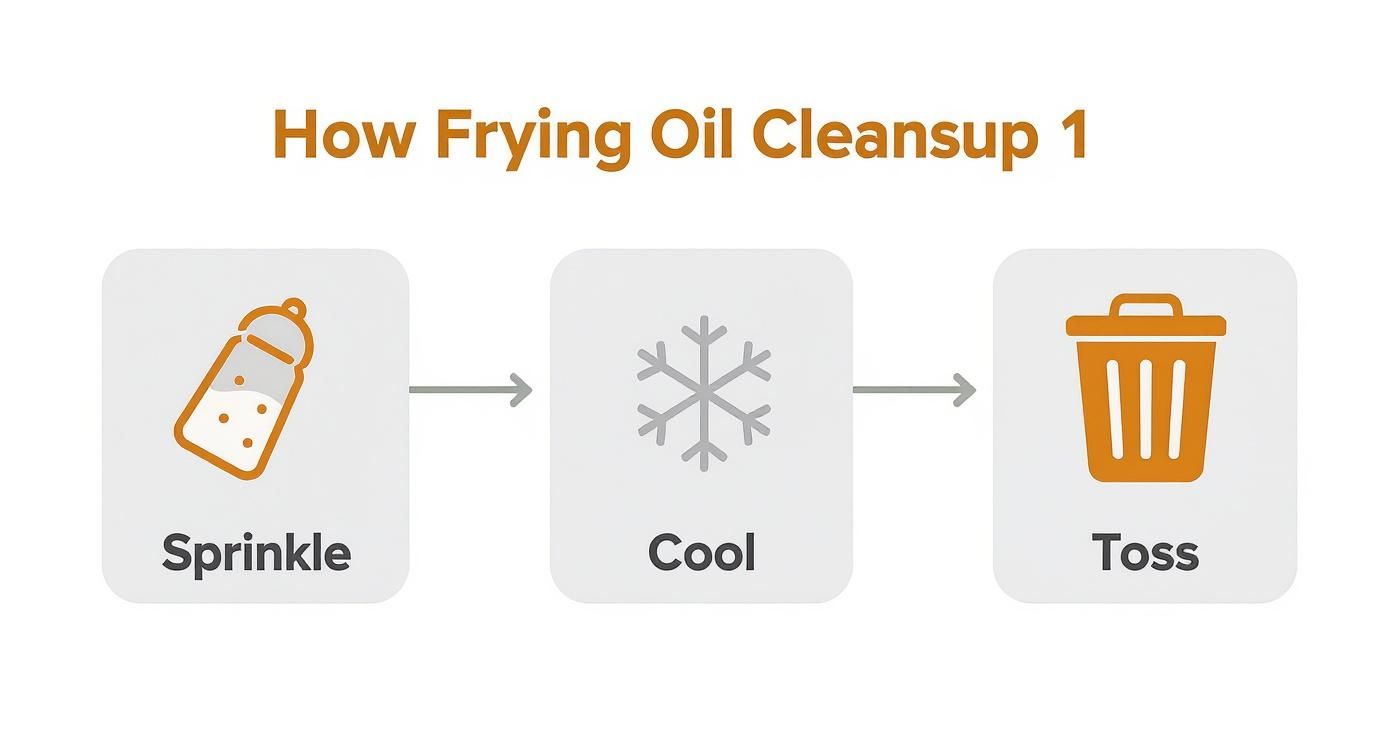
This simple visual shows you everything you need to know. You just 1) Sprinkle and Stir the powder into your hot oil, let it 2) Cool Down, and then 3) Toss the solid block right into the trash. This three-step method gets rid of spills, leaks, and annoying trips to the recycling center, making it the most practical and mess-free choice for any modern kitchen.
Fried Recipes That Are Worth the Cleanup
Now that you know how to get rid of frying oil without the mess, a whole world of crispy, delicious food opens up. The old dread of cleanup is gone, replaced by the fun of making golden-fried favorites right in your own kitchen. It's time to fry more and worry less.
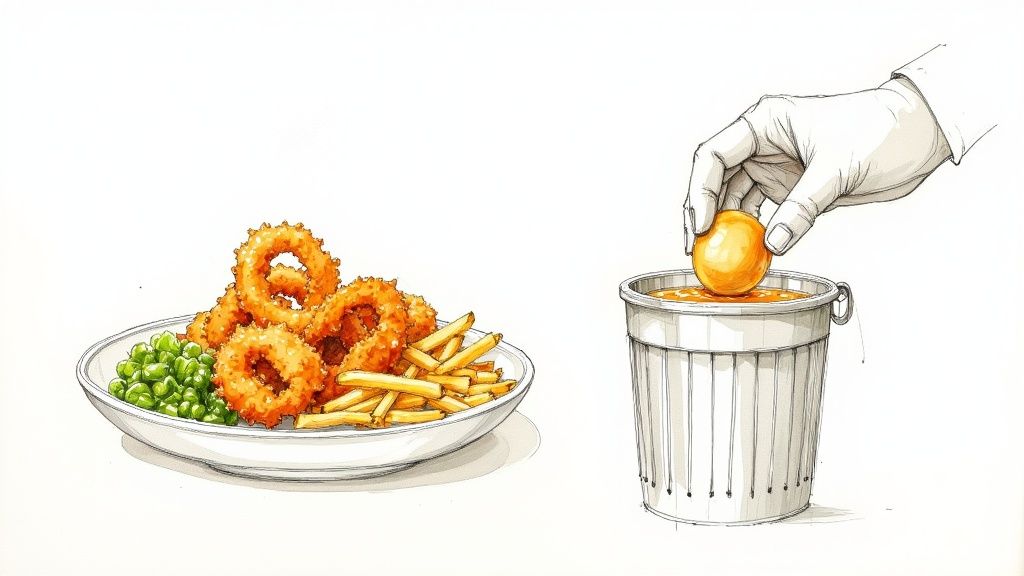
To get you started, here are a couple of classic fried recipes that are absolutely worth the (now minimal) effort.
Restaurant-Quality Crispy Tempura Vegetables
Imagine light, airy tempura that’s impossibly crispy, just like you’d find at a great Japanese restaurant. You can make it at home. The secret is all about temperature contrast: a super-cold batter hitting hot oil. A neutral oil like canola or vegetable works perfectly here.
- Prep Your Veggies: Slice up your favorites—sweet potatoes, broccoli florets, zucchini sticks—into uniform pieces so they all cook at the same rate.
- Keep it Cold: Your batter needs to be ice-cold. Seriously. Some pros even toss a few ice cubes into the bowl to keep the temperature down.
- Fry Fast: Working in small batches, dip your veggies in the batter and drop them into oil heated to around 350°F (177°C). Fry just until they turn a pale golden color.
After you pull that last perfect piece from the vegetable oil, the dreaded cleanup is a breeze. No more staring at a pan of greasy liquid, wondering what to do with it.
The real joy of cooking is in the creation and the taste, not the cleanup. Having an easy disposal plan means you can focus on perfecting your recipes without a second thought about the oily mess.
Perfectly Golden French Fries
There's nothing quite like homemade french fries. Getting them right—crispy on the outside, fluffy on the inside—is one of the most rewarding kitchen victories. The key is the double-fry method, using a starchy potato like a Russet. You fry them once at a lower temp, let them cool, then fry them again at a higher heat for that ultimate golden-brown crunch.
Once you’ve devoured every last fry, that pan of peanut or canola oil is no longer a problem. Just use the FryAway process:
- Sprinkle and Stir: Add the FryAway powder to the still-hot oil and give it a good mix until it dissolves.
- Cool Down: Just let the pan sit until the oil turns into a solid, scoopable puck.
- Toss into household trash: Scoop the solid waste out and toss it right into your regular garbage bin.
It really is that easy. Now you can embrace frying, knowing the cleanup is the simplest part of the whole process.
Still Have Questions? Let's Clear Things Up
Even with a simple solution like FryAway, a few questions always come up when you're trying something new. We get it. You want to make sure you’re doing it right. So, we’ve put together answers to the most common questions we hear from home cooks.
Our goal is to make sure you feel totally confident, whether you're frying up crispy tempura in canola oil or a batch of golden french fries in peanut oil. Let's tackle those lingering doubts so you can get back to enjoying your food.
Is FryAway Safe for My Good Pans?
This is probably the number one question we get asked, especially from people who've invested in quality cookware. The short answer? Absolutely, yes.
FryAway is 100% plant-based and non-toxic, so it’s completely safe for all your kitchen gear. That includes:
- Your trusty non-stick skillets
- That seasoned-to-perfection cast iron pan
- Shiny stainless steel pots
- Even countertop deep fryers
The powder works its magic on the oil itself; it doesn't react with your cooking surfaces at all. Just stick to the simple process: 1) Sprinkle and Stir into the hot oil, let it 2) Cool Down, then 3) Toss the solid puck straight into the trash.
Help! I Forgot to Add It While the Oil Was Still Hot!
It happens to the best of us. You finish cooking, you’re busy getting dinner on the table, and next thing you know, you’re looking at a pan of cold, greasy oil. Don’t sweat it—you haven’t missed your window.
Just gently reheat the oil on the stove over low to medium heat. You don't need it screaming hot, just warm enough to be liquid again. Once it’s warmed through, stir in the FryAway powder like you normally would. The key is making sure the powder fully dissolves before you leave it to cool and solidify.
Can I Throw the Solid Oil Puck in My Compost Bin?
This is a fantastic question, and we love that so many of you are thinking about composting! While FryAway is entirely plant-based, the final solidified oil puck needs to go into your household trash, not the compost.
Here's why: large amounts of fats and oils, even when solid, can really throw off the delicate microbial balance in a compost pile. It can attract pests you definitely don't want hanging around and slow down the decomposition process for everything else in there.
So, for the health of your compost, tossing the solid block into your regular garbage is the way to go. It's still the cleanest, most responsible way to handle used frying oil because it keeps the mess contained and out of our pipes and waterways.
Ready to make kitchen cleanup ridiculously easy? With FryAway, you can say goodbye to messy jars and clogged pipes for good. Explore our products and find the perfect size for your frying needs!