


· By FryAway
Finding the Best Non Stick Wok for Your Kitchen
Finding the best non stick wok is all about striking that perfect balance between screaming-hot heat, long-lasting durability, and cleanup that doesn’t make you want to order takeout instead.
For most of us cooking at home, that sweet spot is a wok with a lightweight aluminum core—it heats up in a flash—and a modern, PFOA-free non-stick coating. When you have the right wok and a smart way to clean up, high-heat cooking goes from a chore to a total joy.
Why a Great Non Stick Wok Belongs in Your Kitchen
A quality non stick wok is so much more than a stir-fry pan; it's a versatile workhorse that deserves a spot in every kitchen. Those high, sloping sides and slick surface are perfect for everything from deep-frying crispy tempura to steaming veggies, all while using way less oil. That’s why it’s become such a go-to for home cooks looking for healthier, easier meals.
The numbers don't lie. The global non-stick cookware market is now valued at a whopping USD 19.59 billion, which shows just how much people are leaning into tools that make cooking and cleanup simpler. With all the new innovations in coating technology, today's non stick woks are tougher and more eco-friendly than ever before. You can read more about these cookware market trends to see just how much the industry is changing.
The Ultimate Kitchen Duo: Wok Cooking and Easy Cleanup
The real magic happens when you pair the perfect non stick wok with an equally brilliant cleanup method, especially after frying. Imagine whipping up a batch of crispy fried chicken or tempura shrimp without dreading the oily mess left behind. This is where a game-changer like FryAway comes in. It completely simplifies oil disposal, turning a messy job into a non-issue.
Once you’re done cooking, getting rid of the oil is as easy as 1-2-3:
- Sprinkle and Stir: Turn off the heat and just sprinkle FryAway powder into the hot cooking oil. Give it a quick stir to mix it all in.
- Cool Down: Now, just let the wok sit for a bit. You’ll watch as the oil and powder mixture cools and hardens into a single, solid puck.
- Toss into household trash: Once it's solid, you can easily scoop the hardened oil right out of your wok and toss it straight into the trash. No spills, no clogged drains, no mess.
This simple process completely takes the headache out of frying, so you can enjoy your favorite crispy meals more often. It keeps your pipes safe from greasy clogs and is a much friendlier way to handle waste for the planet.
A great wok is truly one of the must-have kitchen essentials every cook needs, opening up a whole new world of things you can cook. By combining its incredible performance with a cleanup solution this smart, you create a seamless flow from prep to disposal. Suddenly, those ambitious meals feel incredibly easy and fun to make.
Understanding Wok Materials and Coatings
Picking the right non-stick wok is a bit like choosing the perfect knife for a chef—the materials it's made from will completely define how it performs. Think of the wok's core material as its engine. It dictates how fast it heats up, how evenly it cooks, and how well it holds that heat. Getting this part right is the first step to finding a wok that feels like an extension of your hands in the kitchen.
This infographic breaks down the big three decision points: material, shape, and size.
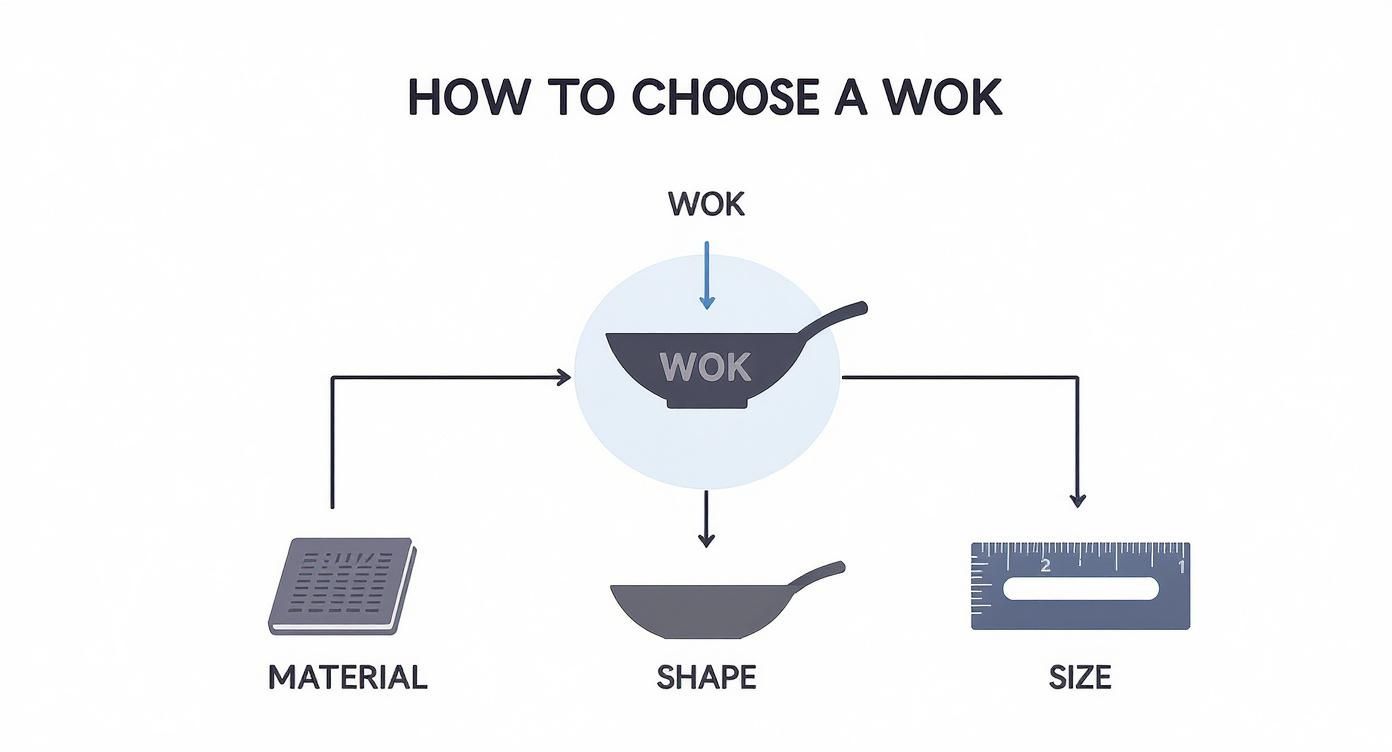
As you can see, the material is the cornerstone that influences almost everything else about how the wok will behave on your stovetop.
The Foundation of a Great Wok
Let's dig into the most common materials and what they bring to the table. Each one has its own personality, and matching it to your cooking style is key to avoiding frustration and getting great results.
-
Aluminum: This is the sprinter of the group. It's incredibly lightweight and heats up in a flash, making it a go-to for quick weeknight stir-fries. Its fantastic thermal conductivity means heat spreads evenly across the whole surface, so you can say goodbye to annoying hot spots.
-
Carbon Steel: The traditional choice for a reason. Carbon steel is famous for being highly responsive; it heats up and cools down almost instantly as you adjust the flame. This gives you the kind of precise control that's absolutely essential for authentic stir-frying.
-
Cast Iron: Meet the heavyweight champion of heat retention. While it's slower to get up to temperature, a cast iron wok holds onto heat like nothing else. This makes it the undisputed king for deep-frying or getting a perfect sear, where consistent high heat is non-negotiable.
Decoding Modern Non Stick Coatings
The non-stick surface is where the real magic happens, letting your ingredients glide around effortlessly and making cleanup feel less like a chore. But not all coatings are created equal. Thankfully, modern woks feature options that are safer and more durable than ever before.
The demand for better cookware is booming. In fact, the global non-stick cookware market is expected to hit USD 20.37 billion by 2032. This surge is fueled by home cooks who want versatile, high-performing tools like non-stick woks, especially with the growing interest in gourmet home cooking and safer materials. You can dive deeper into this trend by checking out the latest non-stick cookware market research.
Here are the main types of non-stick coatings you'll come across:
-
Ceramic Coatings: Made from a sand-derived silicon layer, ceramic surfaces are naturally free from chemicals like PTFE and PFOA. They offer a super slick cooking surface but tend to be more delicate, so you'll want to stick with wood or silicone utensils.
-
Granite-Style Coatings: Don't let the name fool you—these are essentially PTFE coatings reinforced with tiny particles of stone or minerals. This reinforcement adds some serious toughness, making them more resistant to scratches and daily wear-and-tear than standard non-stick.
-
PFOA-Free PTFE: This is the most common non-stick surface you'll find today. While it's based on PTFE (the same stuff as Teflon), modern versions are made without PFOA, a chemical that raised health concerns in the past. They deliver excellent food release and are generally quite durable.
The sweet spot for most home cooks is an aluminum core paired with a tough, PFOA-free coating. This combination gives you the best of both worlds: lightning-fast heating and dead-simple maintenance.
Comparing Wok Materials and Non Stick Coatings
This table breaks down the characteristics of common wok materials and their associated non-stick coatings to help you choose the best combination for your cooking habits.
| Material/Coating | Heat Conduction | Durability | Best For | Maintenance Level |
|---|---|---|---|---|
| Aluminum | Excellent; heats quickly and evenly | Moderate; prone to warping at very high heat | Quick stir-fries, everyday cooking | Low |
| Carbon Steel | Excellent; highly responsive to heat changes | Very high; becomes naturally non-stick with use | Authentic stir-frying, high-heat techniques | High (seasoning) |
| Cast Iron | Slower to heat, but retains heat exceptionally | Extremely high; virtually indestructible | Deep-frying, searing, braising | High (seasoning) |
| Ceramic | Good; provides a slick, non-toxic surface | Lower; susceptible to chipping and scratching | Low to medium-heat cooking, healthy eating | Medium |
| PFOA-Free PTFE | N/A (coating); works with any base material | Good; resistant to sticking but can be scratched | General-purpose non-stick cooking | Low |
| Granite-Style | N/A (coating); enhances the base material | Very good; reinforced for better scratch resistance | Heavy daily use, cooks who want extra durability | Low |
Ultimately, pairing a fast-heating material like aluminum with a durable coating like granite-style PTFE gives you a wok that's ready for just about anything.
After whipping up a delicious fried meal like crispy sesame shrimp, the last thing anyone wants to deal with is a pan full of used oil. This is where a product like FryAway is a total game-changer, transforming used cooking oil into a solid for clean, simple disposal.
Just follow these three easy steps for a mess-free cleanup every time:
- Sprinkle and Stir: Turn the heat off but, while the oil is still hot in your wok, sprinkle in the FryAway powder. Give it a quick stir to make sure it's fully mixed.
- Cool Down: Now, just let the wok sit and cool down completely. You'll see the oil magically transform into a solid, rubbery puck.
- Toss into household trash: Once it's hardened, you can easily scoop the solid oil out with a spatula and toss it right into your garbage bin. No spills, no clogged drains, and zero mess.
Choosing the Right Wok Shape and Size
Beyond the material and coating, the actual shape and size of a non-stick wok make a massive difference in how it performs. It's a bit like choosing the right tires for a car—the design has to match the road you're driving on, or in this case, your cooktop. Get this part right, and your wok becomes an efficient, go-to tool instead of an awkward pan that just gathers dust.
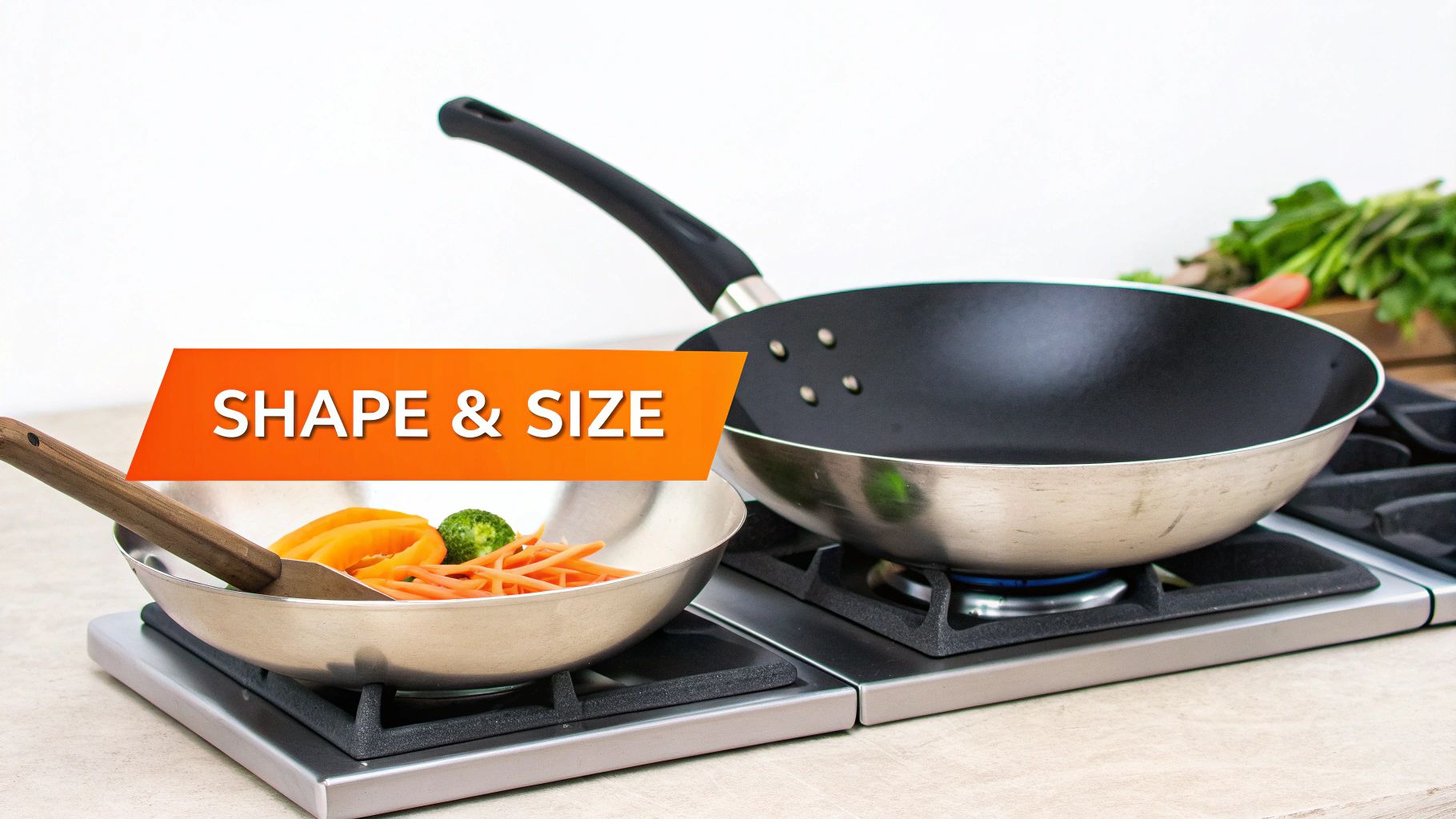
It’s no surprise that home cooks are looking for versatile, easy-to-use cookware. In fact, the global cookware market is expected to skyrocket to USD 49.40 billion by 2033. This boom is driven by people who love the convenience of low-maintenance tools like non-stick woks that fit perfectly into a modern, health-conscious lifestyle. You can learn more by checking out these insights on cookware industry growth.
Round Bottom vs. Flat Bottom Woks
The first big decision you'll make is the shape of the wok's base. This single feature dictates how it sits on your stove and, ultimately, how you cook with it.
-
Traditional Round-Bottom Woks: This is the classic design. It's absolutely perfect for gas stoves where the flames can lick up and around the curved bowl, creating an intensely focused heat zone at the very bottom. This is how you get that iconic wok hei—the "breath of the wok"—that gives stir-fries their signature smoky flavor. The catch? They're completely unstable on flat electric or induction cooktops and need a special wok ring just to stay upright.
-
Modern Flat-Bottom Woks: Made for the modern home kitchen, these woks have a small, flat base that makes direct contact with electric coils, glass tops, and induction burners. That stability is a huge plus, meaning no extra gadgets are needed. While the heat distribution isn't exactly the same as a round bottom over a roaring gas flame, a good flat-bottom wok is easily the best non stick wok for the vast majority of home cooks.
If you're cooking on an electric or induction stove, a flat-bottom wok isn't just an option—it's a must. It gives you the stability and direct heat you need to cook effectively, blending traditional wok benefits with modern kitchen realities.
Handles: The Key to Control and Balance
How you hold your wok is just as important as how it heats up. The handles determine your ability to toss ingredients like a pro and manage the wok's weight, especially when it's loaded with food.
Long Stick Handle (Mandarin Style)
This is the style you'll see on most non-stick woks. It lets you use a one-handed push-and-pull motion to toss food, similar to how you’d handle a skillet. Most also come with a small "helper handle" on the other side, which is a lifesaver when you need to lift a heavy wok off the stove.
Dual Loop Handles (Cantonese Style)
This design has two small, ear-like handles on opposite sides. You need two hands to lift it, so it's better suited for things that don't involve constant tossing, like braising, steaming, or deep-frying. While it's an authentic style, it's less practical for the fast, dynamic movements of a stir-fry.
Finding Your Perfect Wok Size
Finally, picking the right diameter ensures your wok is a helpful tool, not a clunky burden. Too small, and you'll be chasing food all over your stovetop. Too big, and it'll be a nightmare to heat evenly and find a place to store.
Here’s a quick guide to help you choose:
- 12-Inch Wok: This is perfect for cooking for one or two people. It’s big enough for a complete meal without being too massive for a standard home burner.
- 14-Inch Wok: The fan favorite. This is the most popular and versatile size, ideal for families of three to five. It gives you plenty of room to toss ingredients freely, which prevents steaming and helps you get a proper stir-fry.
- 16-Inch Wok or Larger: These are best left for very large families or people who entertain a lot. A wok this big needs a seriously powerful burner to get hot enough and can be a real challenge to store.
Easy Oil-Based Recipes for Your Non-Stick Wok
Alright, you've got the perfect non-stick wok. Now for the fun part: putting that beautiful pan to work. A great wok is built for high-heat, fast-paced cooking, where a slick surface and killer heat distribution are non-negotiable. These fried recipes are designed to show off just what your wok can do, from getting that perfect crispy texture to creating those glossy, restaurant-quality sauces, all using cooking oil.
The real magic of using a non-stick wok for these dishes is seeing the results immediately. You get that gorgeous golden-brown color without the headache of food sticking and falling apart, which is a classic problem with lesser pans.
Classic General Tso's Chicken
This takeout legend is the ultimate first test for your new wok. It’s all about shallow-frying chicken in cooking oil until it’s perfectly crispy, then tossing it in a sweet, savory sauce. The wok’s high, sloping sides are a game-changer here—they keep oil splatters contained and make that final toss, where every piece gets coated, an absolute breeze.
Key Steps for Success:
- The Fry: Get about an inch of a high-smoke-point cooking oil (canola or peanut work great) shimmering in your wok. The non-stick surface is your best friend here, preventing the battered chicken from gluing itself to the bottom. Instead, the pieces float and fry to a perfect crisp on all sides.
- The Sauce: Once the chicken is done, carefully drain most of the oil. You can build your sauce right in the same wok. The slick surface keeps the sugars in the sauce from scorching and sticking, helping you whip up a flawless, glossy glaze.
- The Toss: Add that crispy chicken back into the wok with the simmering sauce. The wok's deep bowl gives you plenty of room to toss everything together, making sure every nook and cranny gets coated without turning soggy.
The result? A dish that tastes just as good as your favorite takeout spot, but with the satisfaction of knowing you nailed it yourself. And the cleanup that follows is surprisingly easy, especially when you’re properly equipped.
Crispy Sesame Shrimp Tempura
Next up, a fried recipe that really lets a non-stick wok shine in its deep-frying element. Shrimp tempura demands precise temperature control and a surface that lets that delicate batter puff up into a light, airy masterpiece without sticking. The wok’s unique shape is naturally perfect for deep-frying because its curved bottom needs less cooking oil than a flat-bottomed pot to get the depth you need.
For a deeper dive into wok cooking, check out this guide on mastering stir-frying techniques and seasoning.
Achieving the Perfect Crunch:
- Light Batter: The secret to amazing tempura is an ice-cold, light batter. A non-stick surface is super forgiving, so if a piece of shrimp bumps the side of the wok, the batter won’t cling to the pan.
- Consistent Heat: Keep your cooking oil right around 350-375°F. A good wok conducts heat so well that the oil temperature bounces back quickly between batches. This is crucial for getting a crispy, not greasy, finish.
- Easy Removal: Once they’re golden brown, the shrimp are effortless to lift out with a slotted spoon or spider strainer. No stuck-on bits left behind to burn in the oil.
If you're looking for more shrimp ideas, this easy fried shrimp recipe with eco-friendly cleanup is another fantastic match for your wok.
The real game-changer with these recipes isn't just the cooking—it's the cleanup. Frying often comes with the dreaded task of disposing of used cooking oil, but it doesn't have to be a mess.
Effortless Cleanup with FryAway
After you’ve cooked up these incredible fried meals, facing a pan full of leftover cooking oil can feel like a buzzkill. That's where FryAway steps in, turning a messy chore into a ridiculously simple process. It's the perfect partner for your non-stick wok, making sure the entire cooking experience is a joy from start to finish.
Here's how simple it is:
- Sprinkle and Stir: When you're done frying, turn off the heat and carefully sprinkle FryAway powder into the still-hot oil. A quick stir is all it takes to dissolve it completely.
- Cool Down: Now, just walk away. As the wok and oil cool down, FryAway works its magic, turning that liquid oil into a solid, organic puck.
- Toss into household trash: Once it’s completely solid, the hardened oil is a breeze to scoop out of your non-stick wok with a spatula. You can toss it straight into your household trash bin—no messy jars, no clogged pipes, and no harm to the environment.
Safely Dispose of Cooking Oil with FryAway
You’ve just whipped up a fantastic, crispy meal in your new non-stick wok. Everything's perfect... until you’re left staring at a pan full of hot, used cooking oil. What now? Pouring it down the drain is a definite no-go—that’s a fast track to stubborn clogs and serious plumbing headaches.
This is exactly where FryAway steps in, turning the messiest part of frying into a clean, simple, and surprisingly satisfying task.
Instead of hunting for an old jar to pour greasy, liquid oil into (which can still leak in the trash), FryAway gives you a solid solution. This plant-based powder works like magic, turning used cooking oil into a solid, rubbery puck that you can just toss in the bin. It’s the perfect partner for your best non stick wok, making the entire cooking experience, from sizzle to cleanup, completely stress-free.
The Simple Three-Step Cleanup Process
Using FryAway couldn't be easier. There are no complicated instructions or special tools needed. Just follow these quick steps while the oil is still hot in your wok.
-
Sprinkle and Stir: After you've finished cooking and turned off the heat, just sprinkle the FryAway powder right into the hot oil. Give it a quick stir to make sure it's all mixed in and dissolved.
-
Cool Down: Now, just leave the wok to cool down on the stovetop. As it cools, you’ll watch the oil mixture thicken up and transform into a solid block.
-
Toss into Household Trash: Once the oil has completely hardened, it won’t stick to your wok's non-stick surface at all. You can easily scoop out the solid puck with a spatula and toss it straight into your household trash.
This simple method gets rid of the mess and risk that comes with handling liquid oil. No more greasy spills, no more looking for old containers, and best of all, no more creating expensive plumbing blockages.
Why FryAway is the Superior Choice
Choosing FryAway goes beyond just convenience; it’s about making a smarter, more responsible choice for your home and the environment. Let's be honest, traditional oil disposal methods often fail, leading to big problems later on. You can see a full breakdown here: FryAway vs. traditional oil disposal methods.
By solidifying oil, you stop it from ever entering your pipes and the city's sewer system, where it’s a major cause of massive "fatbergs" that block infrastructure. Your solidified oil puck can be thrown away safely with your regular garbage. To keep your kitchen waste disposal totally seamless and eco-friendly, you can find the best compostable bags for your compost bin to manage other kitchen scraps responsibly.
Ultimately, when you pair a great non-stick wok with a smart cleanup solution like FryAway, you can enjoy all your favorite fried foods more often, without any of the cleanup headaches.
How to Care for Your Non Stick Wok
So, you've brought home the best non stick wok for your kitchen. Awesome. Now comes the important part: making sure it performs beautifully for years to come. Proper care is what separates a wok that gives up in a few months from one that becomes your go-to pan for countless meals. It really just boils down to a few simple habits that protect its delicate surface.
Think of that non-stick coating like a high-performance engine. It needs the right kind of attention and maintenance to keep running smoothly. This starts from the very first stir-fry and continues with every meal after.
Daily Cooking Best Practices
The daily grind is where your wok's durability is truly put to the test. Your number one job is protecting that non-stick coating from damage while you're cooking. Even small tweaks in your technique can make a massive difference in how long that slick surface lasts.
-
Choose the Right Tools: Metal utensils are the arch-nemesis of non-stick surfaces. Always, always reach for silicone, wood, or heat-resistant nylon spatulas and spoons. These softer materials are gentle on the coating and prevent those tiny scratches that eventually cause food to stick.
-
Mind the Heat: Non-stick woks are built for efficiency, not for blasting them with extreme heat. Cooking on medium to medium-high heat is almost always plenty. Cranking the heat too high can degrade the coating, making it lose its non-stick magic and even release fumes. And please, never preheat an empty wok for too long.
-
Avoid Temperature Shock: Plunging a sizzling hot wok into a sink of cold water is a recipe for disaster. That drastic temperature change can cause the metal to warp, leaving you with a wobbly base. Just let it cool down on the stovetop for a few minutes before you start washing. It's a simple step that preserves its shape and structural integrity.
Cleaning and Maintenance Tips
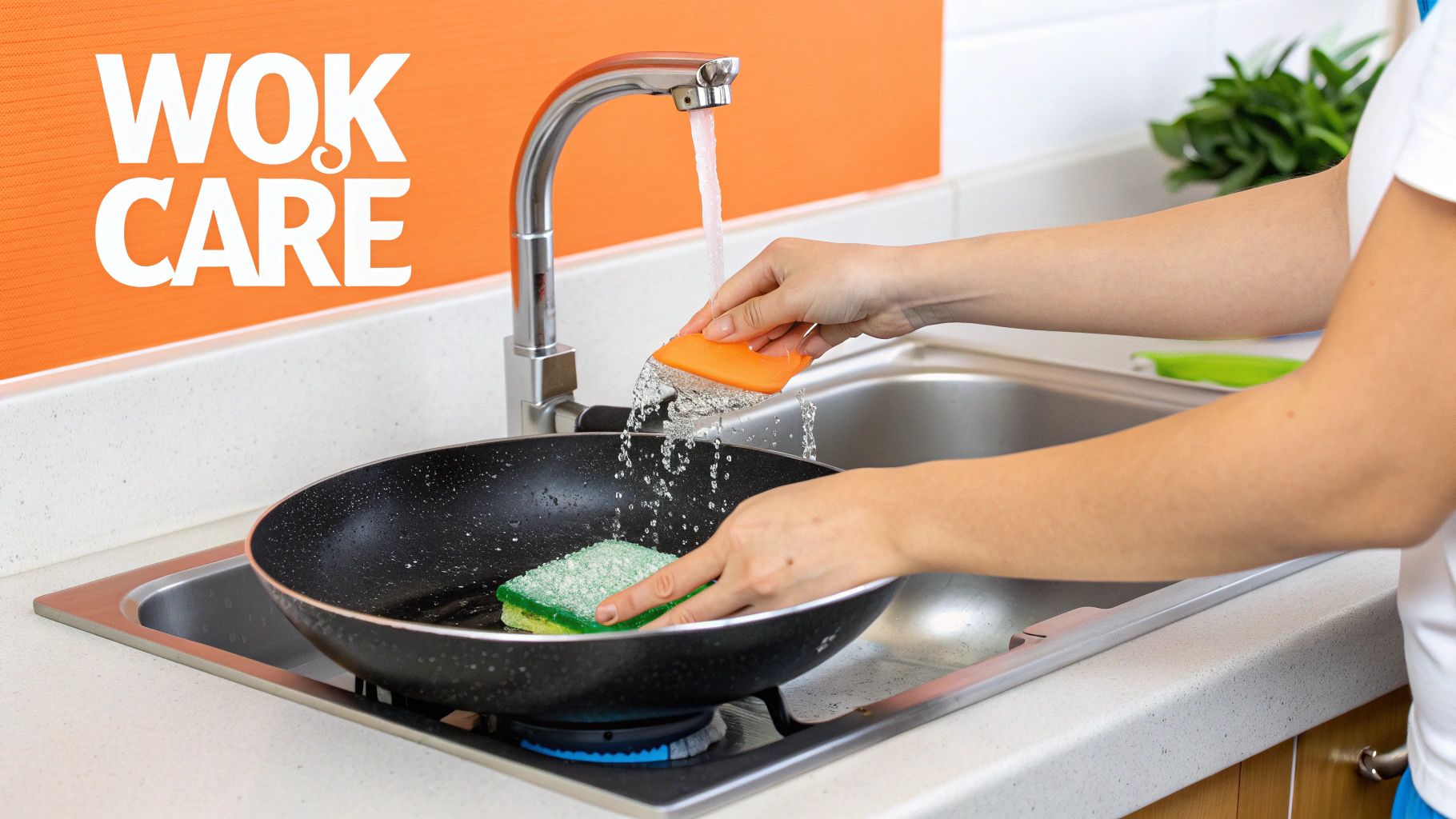
How you clean your wok is every bit as important as how you cook with it. It might be tempting to just toss it in the dishwasher, but trust me, hand-washing is the way to go if you want to preserve that non-stick coating.
Hand-washing with a soft sponge and mild dish soap is the single most effective way to extend the life of your non stick wok. The harsh detergents and high heat of a dishwasher can strip away the coating and drastically shorten its lifespan.
After cleaning, always dry your wok completely with a soft cloth before putting it away. If you need to stack it with other pans, just place a paper towel or a soft pan protector inside. This prevents the non-stick surface from getting scratched up by the cookware sitting on top of it.
A Note on Oil Cleanup
After whipping up a delicious fried recipe like General Tso’s Chicken, you're usually left with a pool of used cooking oil. Pouring it down the drain is a huge no-no—it leads to serious clogs. An easy cleanup solution is a crucial part of proper wok care.
We recommend using FryAway, a plant-based powder that makes oil disposal ridiculously simple. It's the perfect finishing touch to your cooking and cleaning routine.
- Sprinkle and Stir: With the heat turned off, just sprinkle the FryAway powder into the still-hot oil and give it a stir.
- Cool Down: Let the mixture cool down completely until it solidifies into a solid puck.
- Toss into household trash: Scoop the hardened oil out and toss it right into the garbage.
This method not only keeps your pipes clear but also makes wok cleanup faster, so your pan is ready for its next adventure without any greasy residue left behind.
Got Questions About Non-Stick Woks? We’ve Got Answers.
Jumping into the world of non-stick woks can bring up a few questions. From worries about coatings to how you can actually use them, getting straight answers makes all the difference. Let's clear up the most common questions so you can feel great about your choice.
Are Non-Stick Wok Coatings Safe?
Yes, modern non-stick woks are considered perfectly safe for everyday cooking at home. Good brands stopped using PFOA (a chemical that used to be a concern) years ago. The real key is just using your wok the way it was designed to be used.
That means avoiding cranking the heat up on an empty pan and sticking to medium or medium-high heat. Honestly, that’s all you need for a fantastic stir-fry anyway.
Also, always reach for wooden or silicone utensils. Metal tools will scratch the surface. While a tiny scratch isn't a health hazard, it's best to replace your wok if the coating gets heavily damaged.
Can I Use My Non-Stick Wok for Deep Frying?
You bet! A non-stick wok is actually a fantastic tool for deep-frying. Its high, sloped sides are brilliant for keeping oil splatters contained, and the wide shape gives you plenty of room to fry in batches without everything getting crowded. The non-stick surface is just a bonus, making sure battered foods like tempura don't glue themselves to the bottom.
Of course, after you've fried up a batch of crispy goodness, you're left with a pan full of used cooking oil. The absolute easiest and safest way to deal with it is with FryAway. This plant-based powder makes cleanup a breeze in three quick steps.
- Sprinkle and Stir the powder into the hot oil right after you finish cooking.
- Cool Down and just let the oil mixture turn into a solid puck.
- Toss the hardened oil straight into your household trash.
This simple trick completely removes the messiest part of frying, making the whole process way more enjoyable. It's the perfect partner for your non-stick wok.
How Long Will a Non-Stick Wok Last?
The lifespan of your non-stick wok really comes down to one thing: how you treat it. With a little bit of care—using the right utensils, avoiding crazy-high heat, and always washing it by hand—a quality wok can easily last for several years.
The minute you see major scratches, peeling, or food starting to stick all the time, that's your sign. It's time for a replacement to get back to that perfect, non-stick performance.
Ready to make frying mess-free and eco-friendly? Join thousands of happy home cooks and see how FryAway transforms your cleanup routine. Visit FryAway.co to find the perfect product for your kitchen!