


· By FryAway
Finding the Best Alternative to Heavy Cream
Figuring out the best alternative to heavy cream really comes down to what you’re making. For everyday cooking, a simple mix of milk and butter often does the trick, but for whipping, you’ll want something like chilled, full-fat coconut cream. The goal is to find a substitute that delivers the right richness and texture, whether you’re in a bind or sticking to a specific diet.
Luckily, there’s a simple swap for almost any situation.
Finding the Best Substitute for Heavy Cream
Choosing the right alternative is all about matching the taste and consistency your dish needs. Heavy cream brings the magic with its 36-40% milk fat, which gives it that signature rich flavor, keeps sauces from breaking, and lets it whip into glorious stiff peaks. When you grab a substitute, you're trying to mimic that fat content and its role in the recipe.
The perfect choice depends on a few things: Is your dish sweet or savory? Cooked or raw? And does it need to be whipped? For example, a creamy mushroom soup needs a substitute that won’t curdle when heated, while a delicate mousse requires something that can hold air and stay fluffy.
Think of it like a quick decision tree to find the best path forward for your kitchen adventures.
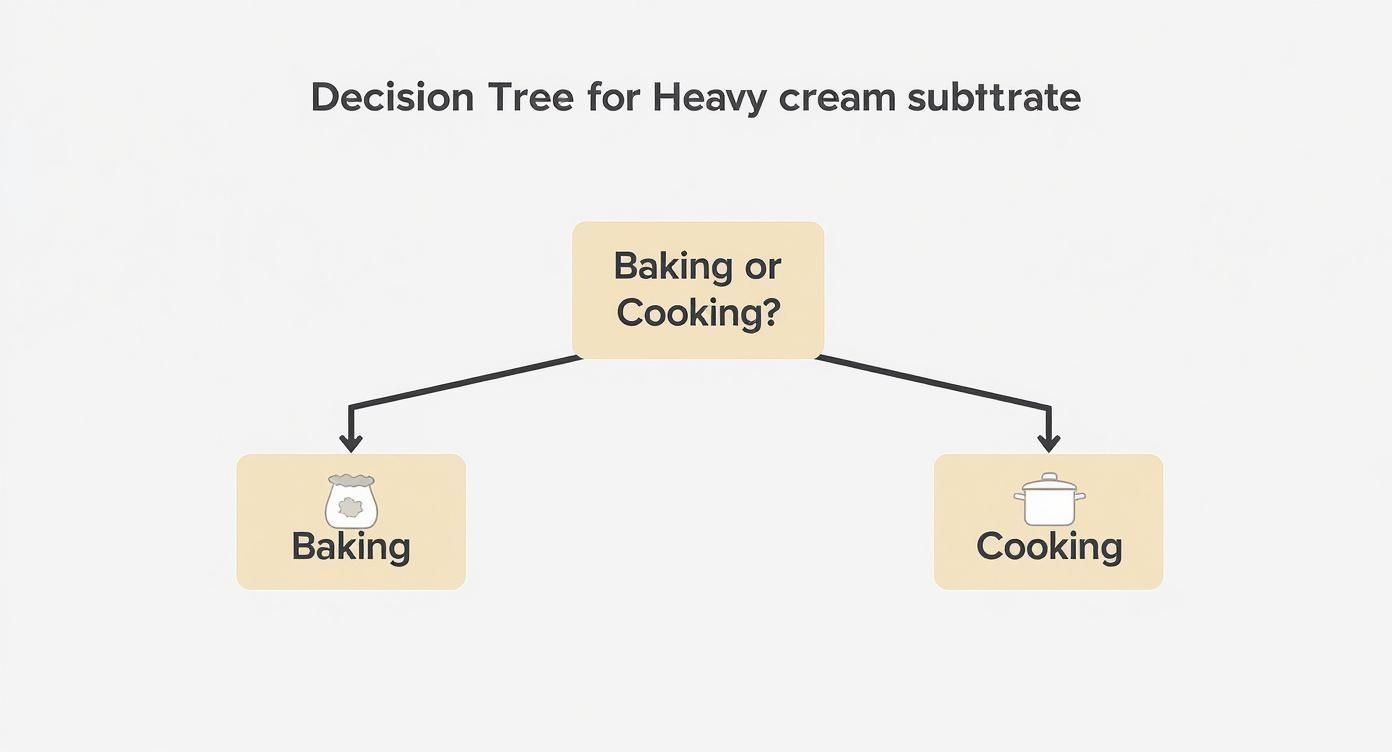
This guide makes it clear: your first thought should always be the recipe's end goal—cooking versus baking. That simple distinction immediately helps narrow down your options for the best results.
Quick Comparison of Heavy Cream Substitutes
To make your decision even easier, I've put together a table comparing some of the most reliable and popular heavy cream substitutes. It breaks down their best uses and what you can expect in terms of flavor and texture, helping you make a quick, confident choice for your recipe.
| Substitute | Best For | Flavor Profile | Texture |
|---|---|---|---|
| Milk & Butter | Soups, sauces, baking | Rich and buttery | Creamy, but won't whip |
| Coconut Cream | Vegan desserts, curries | Distinctly coconutty | Very thick, whips well |
| Cashew Cream | Creamy pasta, vegan sauces | Neutral and nutty | Silky and smooth |
| Greek Yogurt | Soups, marinades, dips | Tangy and acidic | Thick and dense |
Why You Might Need a Heavy Cream Substitute
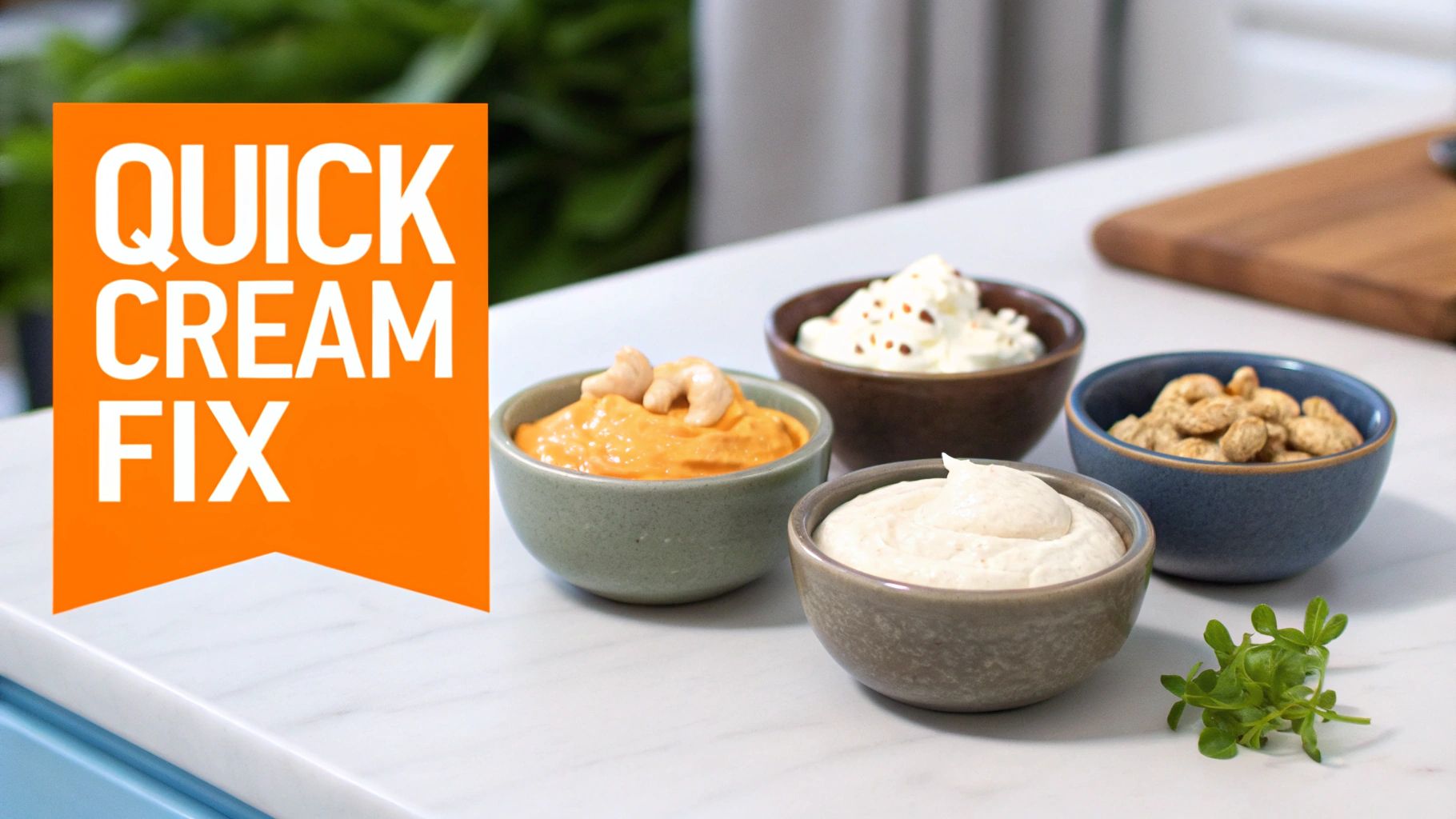
We’ve all been there. You’re halfway through a recipe, reaching for the heavy cream, only to find the carton is empty. It’s a classic kitchen panic, but it’s just one of many reasons home cooks find themselves looking for a good substitute.
Beyond a simple empty fridge, dietary needs are a huge factor. With so many people dealing with lactose intolerance or dairy sensitivity, traditional cream is often off-limits. Finding a reliable dairy-free option is key to making meals that everyone at the table can enjoy without worry.
Dietary and Lifestyle Choices
Even if you can handle dairy, you might be looking for a lighter alternative. Heavy cream is decadent and delicious, but health-conscious cooks often want to cut back on saturated fat and calories. The good news is, plenty of substitutes can deliver that creamy texture in sauces and soups without the nutritional weight.
The explosion of plant-based eating has also completely changed the game. Whether for ethical, health, or environmental reasons, more people are ditching dairy. This isn't just a small trend—the global dairy alternatives market is set to skyrocket from USD 38.51 billion in 2025 to nearly USD 114 billion by 2035. If you're curious, you can learn about the dairy alternatives market growth and see just how massive this shift is.
Understanding why you need a substitute is the first step toward choosing the right one. Your specific reason—be it a dietary restriction, a health goal, or an empty fridge—will guide you to the perfect ingredient swap for your recipe.
Perfecting Fried Recipes with Any Cream
Lots of classic fried dishes, from chicken croquettes to crispy fish with a creamy dipping sauce, rely on a rich binder or base. Swapping out heavy cream doesn't mean you have to give up on that perfect texture or flavor. In fact, it opens up a new world of possibilities for creating amazing fried meals that fit your lifestyle.
Of course, after you’ve enjoyed that perfectly fried meal, you’re left with the greasy cleanup. Disposing of all that used cooking oil is a messy chore, but that’s where FryAway makes things incredibly simple.
It’s an easy three-step process for mess-free oil disposal:
- Sprinkle and Stir: Just pour the FryAway powder into the hot cooking oil and give it a quick stir until it’s all dissolved.
- Cool Down: Let the oil mixture cool down completely. You'll see it harden into a solid, easy-to-handle puck.
- Toss into household trash: Scoop the solidified oil right out of your pan and toss it in the trash.
This trick completely eliminates messy spills and, more importantly, keeps that grease from clogging your drains. Cleanup becomes the easiest part of frying.
Ran out of heavy cream but your fridge is stocked with dairy? You're in luck. Your pantry probably holds the perfect stand-in. The trick is knowing how each substitute’s fat content and consistency will play out in your recipe. A smart swap can deliver all the richness you need if you pick the right one.
Let's walk through the most common dairy options and see how they actually perform when you're in a pinch.
Milk and Butter: The Classic Fix
One of the most dependable substitutes is a simple mix of whole milk and melted butter. Since heavy cream is basically just milk with a ton of fat (around 36%), this combo gets you pretty close to the real thing.
To make it, melt 1/4 cup of unsalted butter and slowly whisk it into 3/4 cup of whole milk. This works beautifully in sauces, soups, and many baked goods, adding that necessary moisture and creamy texture.
But it does have its limits. Because the butterfat isn't naturally emulsified, this mixture won't whip into stiff peaks. Save it for recipes where you just need to add richness, not create an airy topping like whipped cream.
For sauces and soups, the milk-and-butter blend is a lifesaver. It mixes in smoothly and keeps you from making a last-minute trip to the store.
Half-and-Half and Evaporated Milk
Half-and-half is another great option, with a fat content between 10.5% and 18%. You can usually swap it for heavy cream in a one-to-one ratio for things like creamy pasta sauces or mashed potatoes. It's definitely richer than milk, but still not fatty enough to whip on its own. If you need more stability for a sauce, whisking in a little melted butter does the trick.
Then there's evaporated milk. With about 60% of its water removed, it has a thick consistency and a slightly sweet, caramelized flavor. It's a fantastic shelf-stable choice for adding creaminess to savory dishes or desserts like custards. Just be mindful of its distinct taste—it might not be the right fit for more delicate recipes.
Greek Yogurt for a Tangy Twist
For something thicker and tangier, Greek yogurt is a surprisingly good substitute. Just thin it with a splash of milk, and it can add a luxurious body to soups, marinades, and dips. Its natural acidity brings a welcome brightness that cuts through richness, perfect for something like a creamy dill sauce for fish.
A word of caution: yogurt's proteins can curdle when they get too hot. It's always best to temper it first by stirring a little of the hot liquid into the yogurt before adding it all back into the pot. It also adds a lot of density, so it can make baked goods heavy if you're not careful.
Exploring Plant-Based and Vegan Alternatives
For anyone embracing a vegan lifestyle or dealing with dairy sensitivities, the world of plant-based heavy cream substitutes has never been better. Gone are the days of sad, watery sauces or desserts that just don't hold up. Today's options deliver that rich, creamy texture you're after.
The trick to a successful swap lies in knowing what each alternative brings to the table. Just like their dairy-based cousins, vegan creams like coconut, cashew, and oat each have their own unique personality in the kitchen.
Getting to Know the Most Popular Vegan Creams
Full-fat coconut cream is probably the first thing that comes to mind. It's famous for its high-fat content, which allows it to whip into gorgeous, stiff peaks—a total game-changer for dairy-free desserts. But that distinct coconut flavor means it’s best used where that tropical note is a feature, not a bug, like in a Thai green curry or a piña colada-inspired mousse.
On the flip side, cashew cream is the quiet workhorse of the vegan kitchen, loved for its incredibly neutral flavor. You make it by blending soaked raw cashews with water until it’s silky smooth, creating a rich base that thickens pasta sauces and soups without overpowering them. It's also fantastic in fried recipes, providing a creamy, binding element. For example, you can learn how to make amazing crispy croquettes with a vegan cheese filling, where cashew cream is often the secret ingredient.
This shift isn't just happening in our kitchens; it's a global trend. The dairy alternatives market was valued at USD 32.77 billion and is expected to hit USD 66.91 billion by 2030. A huge part of that growth comes from regions like Asia Pacific, which holds a 45.8% market share thanks to high demand for lactose-free products.
Performance of Plant-Based Alternatives
With so many options out there, it helps to see how they stack up in the kitchen. The biggest tests for any cream substitute are whether it can be whipped for desserts and how it behaves when heated in a sauce or soup. This table breaks down some of the most common vegan alternatives.
| Vegan Substitute | Whips Well? | Heat Stability | Best For (Recipes) |
|---|---|---|---|
| Coconut Cream | Yes, excellent | Good | Desserts (mousse, whipped topping), curries, soups |
| Cashew Cream | No | Excellent | Creamy pasta sauces, soups, vegan cheese fillings |
| Soy Cream | Yes | Moderate | Whipped toppings, coffee creamer, light sauces |
| Oat Cream | No | Good | Soups, sauces, casseroles (adds creaminess without fat) |
| Almond Cream | No | Moderate | Light sauces, smoothies, coffee |
Ultimately, the best choice comes down to your recipe's specific needs. Coconut cream is a superstar for desserts, while cashew cream is the go-to for savory dishes where you need richness without added flavor.
Making the Right Choice for Your Recipe
When you're picking a plant-based alternative, think about both taste and texture. Is a neutral flavor essential, or will a hint of coconut work? Does the cream need to be whipped, or are you just looking for a smooth, creamy consistency?
A great pro-tip for store-bought vegan creams: check the label. Products that blend coconut and sunflower oils, often stabilized with fava bean protein or guar gum, tend to hold up well under heat and offer a more balanced flavor.
Many fried dishes are made even better with a rich, creamy element, whether it's in the batter, the filling, or a dipping sauce. A stable vegan cream ensures your creations are delicious and accessible to everyone.
And when you're done cooking, FryAway makes cleanup simple. Dealing with leftover cooking oil is always a pain, but it doesn't have to be.
Just follow these three easy steps:
- Sprinkle and Stir the FryAway powder into your hot cooking oil until it’s completely dissolved.
- Cool Down and let the mixture solidify into a single, waxy puck.
- Toss into household trash by scooping the solid oil out of the pan. No mess, no clogged pipes.
Fried Recipes Using Cream Alternatives
It's one thing to talk about how an alternative to heavy cream can work, but the real test is seeing it in action. Fried recipes are the perfect proving ground, since they often depend on a rich, creamy element to balance out the crunch and deliver that signature comfort-food flavor.
Let's look at a couple of delicious fried food examples that show you don't need traditional heavy cream to make incredible fried food. These recipes prove just how versatile both plant-based and dairy-based substitutes can be, helping you lock in a moist, flavorful interior while achieving that perfect golden-brown crust.
Crispy Fried Chicken with a Creamy Cashew-Based Gravy
This recipe takes classic fried chicken to a new level with a silky-smooth gravy built on cashew cream. Because cashews have such a neutral flavor, they let the savory chicken spices take center stage for a beautifully balanced dish.
- For the Chicken: Start by marinating your chicken pieces in a buttermilk alternative. Thinned yogurt or plant-based milk with a splash of vinegar works wonders here. Then, dredge in seasoned flour and fry in hot cooking oil until it's golden brown and cooked through.
- For the Gravy: In the same pan, sauté some onions and garlic in the drippings. Whisk in flour to make a roux, then slowly stream in your homemade cashew cream. Keep stirring until the gravy thickens up, and season with salt, pepper, and a hint of thyme.
Southern-Style Fried Fish with a Tangy Yogurt-Based Dill Sauce
This is a classic pairing: light, flaky fried fish with a bright, refreshing dipping sauce. Instead of a heavy cream base that can weigh things down, this sauce uses Greek yogurt thinned with a bit of milk. The result is a tangy counterpoint that cuts right through the richness of the fried coating.
The acidity in the yogurt is the secret weapon here. It slices through the richness of the fried fish in a way that proves an alternative can sometimes offer a more dynamic and interesting flavor than the original.
To get the best results with your fried recipes, having the right gear helps. You can browse a range of different models of fryers to find the perfect one for your kitchen. And if you’re looking for another fun idea, check out this guide on making deep-fried mac and cheese balls.
Once you’re done cooking up these delicious meals, the cleanup is easier than you might think. Whatever you do, don't pour that used cooking oil down the drain! That's where FryAway comes in to make disposal simple and mess-free.
- Sprinkle and Stir: Just add the FryAway powder to your hot cooking oil and give it a stir until it dissolves.
- Cool Down: Let the oil cool completely. It will solidify into a hard, waxy puck.
- Toss into household trash: Simply scoop the hardened oil out of the pan and toss it straight into your regular garbage can. No mess, no clogged pipes.
Effortless Cleanup for Fried Foods

So, you've just whipped up a delicious fried meal using an alternative to heavy cream. But now you're staring at a pan full of hot, used cooking oil. Let's be honest—the cleanup can feel like the worst part of the whole deal, especially since pouring that oil down the drain is a definite no-go for your plumbing.
Luckily, there’s a ridiculously simple, mess-free way to handle leftover frying oil. FryAway is a 100% plant-based powder that works like magic, turning liquid oil into solid, organic waste. It makes cleanup fast, easy, and keeps your kitchen (and pipes) spotless.
The Simple Three-Step Process
Using FryAway couldn’t be easier. Just follow these three steps to turn a greasy chore into a quick, satisfying task.
-
Sprinkle and Stir: While your cooking oil is still hot, just sprinkle the FryAway powder right into the pan. Give it a gentle stir until the powder dissolves completely.
-
Cool Down: Now, just set the pan aside and let it cool down. As the temperature drops, the oil and FryAway mixture will solidify into a single, waxy puck that’s super easy to manage.
-
Toss into household trash: Once it’s fully hardened, grab a spatula, scoop the solid puck out of the pan, and toss it straight into your household garbage. Done.
This method completely takes away the risk of messy spills and nasty clogs. It’s a clean, effective way to manage leftover oil, making the last step of your cooking experience just as enjoyable as the meal itself.
By adding this simple cleanup step, you can enjoy fried foods more often without dreading what comes after. You can find more tips for a spotless kitchen in our guide to effortless post-frying cleanup.
For kitchens that do a lot of frying, managing grease efficiently is a must. If that's you, this guide to selecting a kitchen grease trap might be a helpful resource for bigger-scale needs.
Common Questions About Cream Substitutes
Switching out heavy cream for an alternative can feel a little risky the first time. You might be wondering if your whipped topping will actually whip, if your sauce will curdle, or if your cake will come out dry. Getting these questions sorted out is the key to making sure your recipes are a success.
Don't worry, navigating the world of substitutes is easier than you think, especially once you know a few tricks of the trade.
Can I Use Any Heavy Cream Alternative for Whipping?
Not all substitutes are created equal when it comes to whipping. If you want those light, airy peaks, you need a high-fat content—that's non-negotiable. Your best bets are going to be chilled, full-fat coconut cream or some of the store-bought vegan whipping creams designed specifically for the job.
On the other hand, most dairy-based options like a milk-and-butter mixture or Greek yogurt just don't have the right fat or protein structure to hold air. They'll stay liquid no matter how long you whip them.
Will My Sauce Curdle If I Use a Substitute?
Curdling is a real concern, especially if you're using lower-fat dairy options like milk in a hot or acidic sauce. The proteins can separate and create a grainy, unappealing texture. The trick to avoiding this is to temper the substitute: slowly whisk a small amount of the hot liquid into your milk or cream alternative before adding it all back into the pot.
Plant-based options like cashew cream are generally much more stable in heat. This makes them a reliable choice for creamy soups and sauces where curdling is a big risk.
How Do I Choose the Best Substitute for Baking?
When it comes to baking, fat is your friend. It's what creates moisture and a tender crumb. A simple blend of milk and melted butter is an excellent choice here because it closely mimics the fat content of heavy cream, giving you a similar result.
It's no surprise that more and more people are looking for these kinds of swaps. Household usage of dairy alternative products in the United States recently jumped from 40% to 56%. You can learn more about dairy alternative trends to see just how much dietary patterns are shifting.
After you've enjoyed your delicious baked or fried foods, cleanup shouldn't be a chore. That’s where FryAway comes in to handle that leftover cooking oil.
The process is incredibly simple:
- Sprinkle and Stir: Just add the powder to your hot oil and mix it until it dissolves completely.
- Cool Down: Let it cool down, and the oil will solidify into a hard puck.
- Toss into household trash: Scoop out the solid oil and throw it right in the trash.
Enjoying your favorite foods is much easier when you have a mess-free cleanup plan. Discover how FryAway can simplify your kitchen routine by visiting https://fryaway.co.