


· By FryAway
The Ultimate Batter for Chicken Wings
That perfect, shatteringly crisp crust on a chicken wing? That’s all thanks to the batter. A great batter does more than just get crunchy; it creates a golden-brown shell that seals in all the juices, making sure every single bite is as flavorful as it is satisfying. It's truly the foundation of a top-tier wing experience.
The Building Blocks of an Unbeatable Wing Batter
So, what separates a decent wing from a truly unforgettable one? It all comes down to the science happening in your mixing bowl. When you understand what each ingredient brings to the party, you can stop just following recipes and start creating a signature batter that's perfectly suited to your tastes. This is how you get consistently amazing results every time you fire up the fryer.
Chicken wings have become a non-negotiable staple, especially for big events. To give you an idea, the National Chicken Council estimated that Americans would devour around 1.47 billion chicken wings during the last Super Bowl alone. The experts at Meat+Poultry have even more details on America’s obsession with wings.
The Foundation: Dry Ingredients
The dry mix is where that glorious crunch is born. All-purpose flour gives the batter structure and a solid base, but the real MVP for crispiness is cornstarch. Cornstarch works by inhibiting gluten development in the flour, which leads to a lighter, more delicate, and audibly crunchy crust once it hits the hot oil.
To get that airy texture, you'll need a leavening agent like baking powder. As soon as it hits the heat, it creates tiny air bubbles that give the batter lift, preventing it from turning out dense and heavy.
This infographic breaks down how these key players work together.
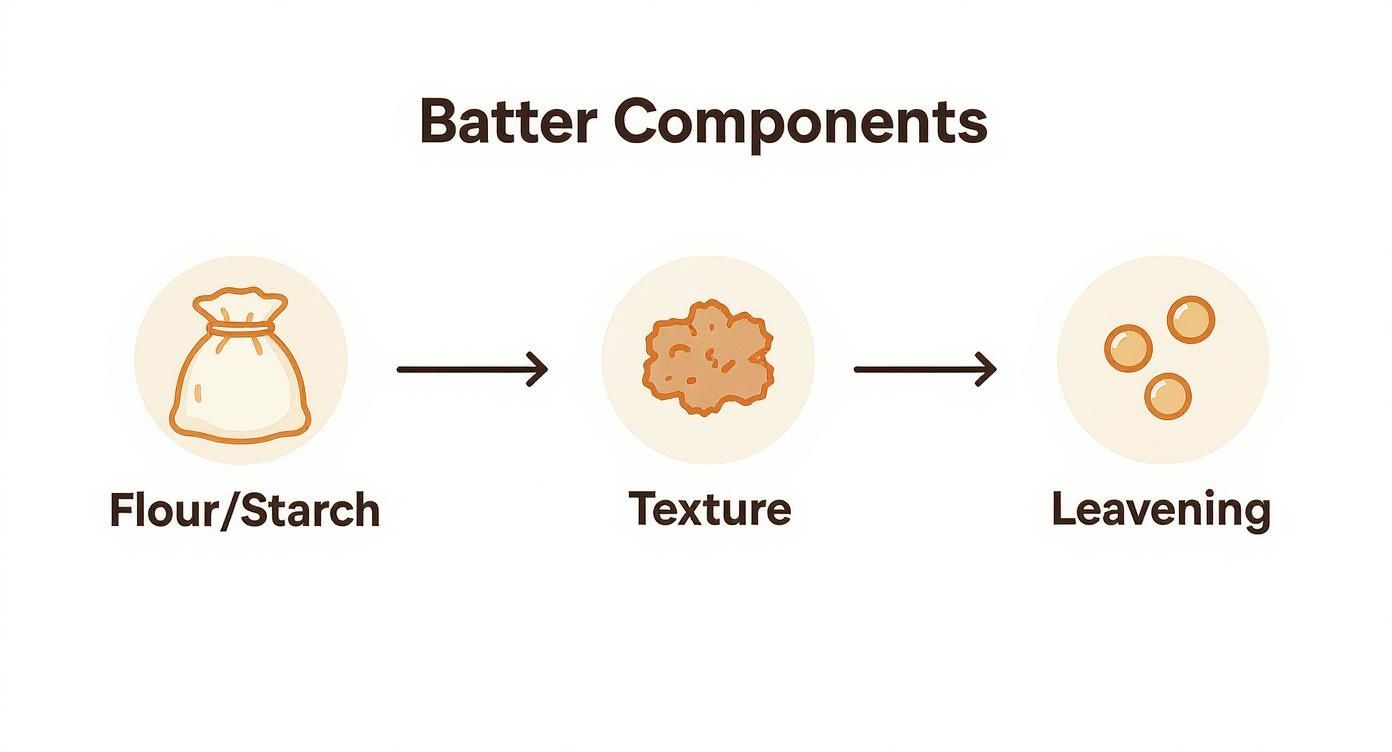
As you can see, it’s that specific trio of flour, starch, and leavening that ultimately delivers that signature crispy finish we're all after.
How Key Ingredients Shape Your Batter's Texture
Use this quick guide to see how different ingredients will change the texture of your homemade chicken wing batter.
| Ingredient | Primary Role | Resulting Texture |
|---|---|---|
| All-Purpose Flour | Provides structure and a solid base for the coating. | Creates a classic, substantive crust. |
| Cornstarch | Inhibits gluten, promoting a lighter, crispier finish. | Results in a delicate, airy, and audibly crunchy shell. |
| Baking Powder | Acts as a leavening agent, creating air pockets. | Gives the batter lift, making it puffy and less dense. |
| Ice-Cold Water | Creates a temperature shock when hitting hot oil. | Produces an extra-crispy, flaky texture. |
| Beer | Carbonation adds extra leavening for an airy lift. | Delivers a light, crispy, and slightly puffy crust. |
Playing with these ratios is the best way to find the exact texture you love.
The Role of Wet Ingredients
The liquid you choose will have a huge impact on your final product. Ice-cold water is a classic for a very good reason.
The temperature shock created when a cold batter hits hot oil is a fundamental principle for achieving maximum crispiness. This rapid temperature change causes the water in the batter to evaporate quickly, leaving behind a perfectly crunchy shell.
Other liquids can bring both flavor and unique textures to the table. Beer, for example, is a fantastic choice. The carbonation acts like an extra leavening agent, creating a remarkably light and airy crust. You can see this technique in action in our guide to making crispy beer-battered fish.
Of course, no matter what you're frying, dealing with the leftover cooking oil is always a pain. That’s where FryAway comes in. It’s a simple, plant-based powder that makes cleanup a breeze. After frying, just follow these three steps for the best results:
- Sprinkle and Stir the powder into your hot cooking oil as soon as you're done.
- Cool Down and let the oil solidify completely into a solid block.
- Toss the hardened puck right into your household trash.
It's a completely mess-free solution that makes enjoying homemade fried foods like chicken wings that much better.
Our Go-To Recipe for Seriously Crispy Wings
Alright, enough with the theory. Let’s put these techniques into practice. This wing batter delivers a light, crisp coating that works as a base for a wide range of sauces and seasonings. For additional preparation and frying techniques, read our guide on how to make crispy fried chicken without ending up with a greasy or soggy crust.
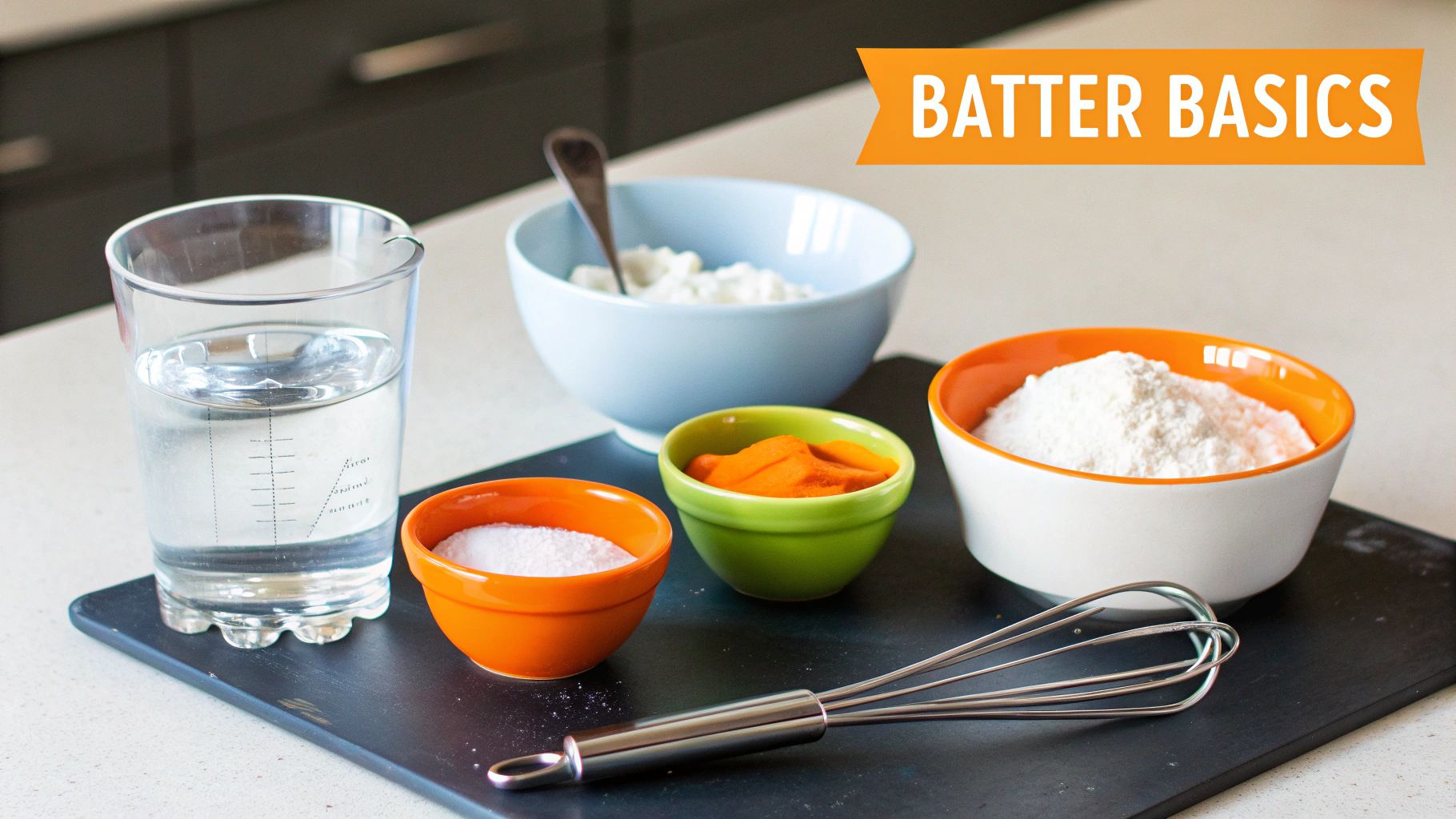
Think of this less as a strict set of rules and more as a method. We're focusing on the key moves that ensure your batter for chicken wings actually sticks and fries up to a perfect, shattering golden-brown.
The Ingredients and Ratios That Matter
The magic here is in the balance. It’s simple, but every ingredient pulls its weight. For about 2 pounds of chicken wings, here's what you’ll need:
- 1 cup all-purpose flour: This is our foundation, giving the batter structure.
- ½ cup cornstarch: The secret weapon for a light, shatteringly crisp texture.
- 2 teaspoons baking powder: This gives the batter an airy lift as it fries.
- 1 teaspoon salt: To season the coating from the inside out.
- ½ teaspoon black pepper: Just a touch of warmth.
- ½ teaspoon garlic powder: For that savory, can't-stop-eating-it depth.
- 1 ½ cups ice-cold water: Pro tip: use club soda for even more fizz and lift!
- 4-6 cups of cooking oil for frying (like canola, vegetable, or peanut oil).
This particular batter is egg-free, but some chicken-wing batters use raw eggs. Our guide answers are eggs pasteurized, explains how to check the package, and discusses when pasteurized eggs may be preferred for batter preparation.
You're aiming for a consistency like thin pancake batter. If it feels thick and gloopy, it’s going to be heavy and just fall off in the fryer. If it's watery, you won't get a good crust. Don't be afraid to adjust with a tablespoon of water or flour to get it just right.
From Bowl to Fryer: The Step-by-Step
First things first: pat your chicken wings completely dry with paper towels. I can't stress this enough. A dry surface is the only way the batter will cling properly instead of sliding right off into the hot oil. It's a non-negotiable step.
Next up, grab a big bowl and whisk all your dry ingredients together. Now, slowly pour in that ice-cold water (or club soda) while whisking the whole time until it's mostly smooth. A few little lumps are totally fine—don't overmix it into a paste.
Dip each wing into the batter, making sure it’s fully coated. Let the excess drip back into the bowl for a second, then place the wing on a wire rack.
Pro Tip: Let the battered wings hang out on that wire rack for 5-10 minutes before they hit the oil. This gives the batter time to set and form a "skin," creating a sturdier crust that won't disintegrate the second it meets the heat.
Time to fry. Carefully lower the wings into cooking oil heated to the appropriate temperature and work in small batches so the oil does not cool too quickly. Cooking time varies according to wing size, oil temperature, and whether the wings are fried once or twice, so use our guide on how long to deep fry chicken wings for more detailed timing and doneness guidance. Always confirm that the chicken has reached a safe internal temperature before serving.
Cleanup Is No Longer a Chore (Thanks to FryAway)
You've just fried up a batch of incredible wings, and the last thing you want to face is a pan of sloshing, messy cooking oil. With FryAway, the cleanup is almost unbelievably simple. This plant-based powder solidifies your used cooking oil, so you can toss it right in the trash. For the best results, just follow these steps:
- Sprinkle and Stir the FryAway powder into the hot cooking oil right after you're done.
- Cool Down and let the pan sit until the oil hardens into a solid puck.
- Toss that solid block of oil straight into your garbage can.
No spills. No clogged pipes. No greasy containers sitting by your sink. It’s the perfect, hassle-free end to a great cooking session and makes you much more likely to make another batch of crispy wings. When you are finished cooking, follow this complete guide on how to dispose of frying oil without pouring it into the sink or leaving a messy container in the kitchen.
Beyond the Basics: Creative Batter Variations
Once you've nailed the classic crispy batter, the real fun begins. Stepping outside the box lets you build bold new flavors directly into the crust, creating wings that are unforgettable even before you think about sauce. Prefer oven cooking? See our best baked wings recipe for a crisp alternative that does not require deep-frying. This is where you graduate from a good cook to a creative one.
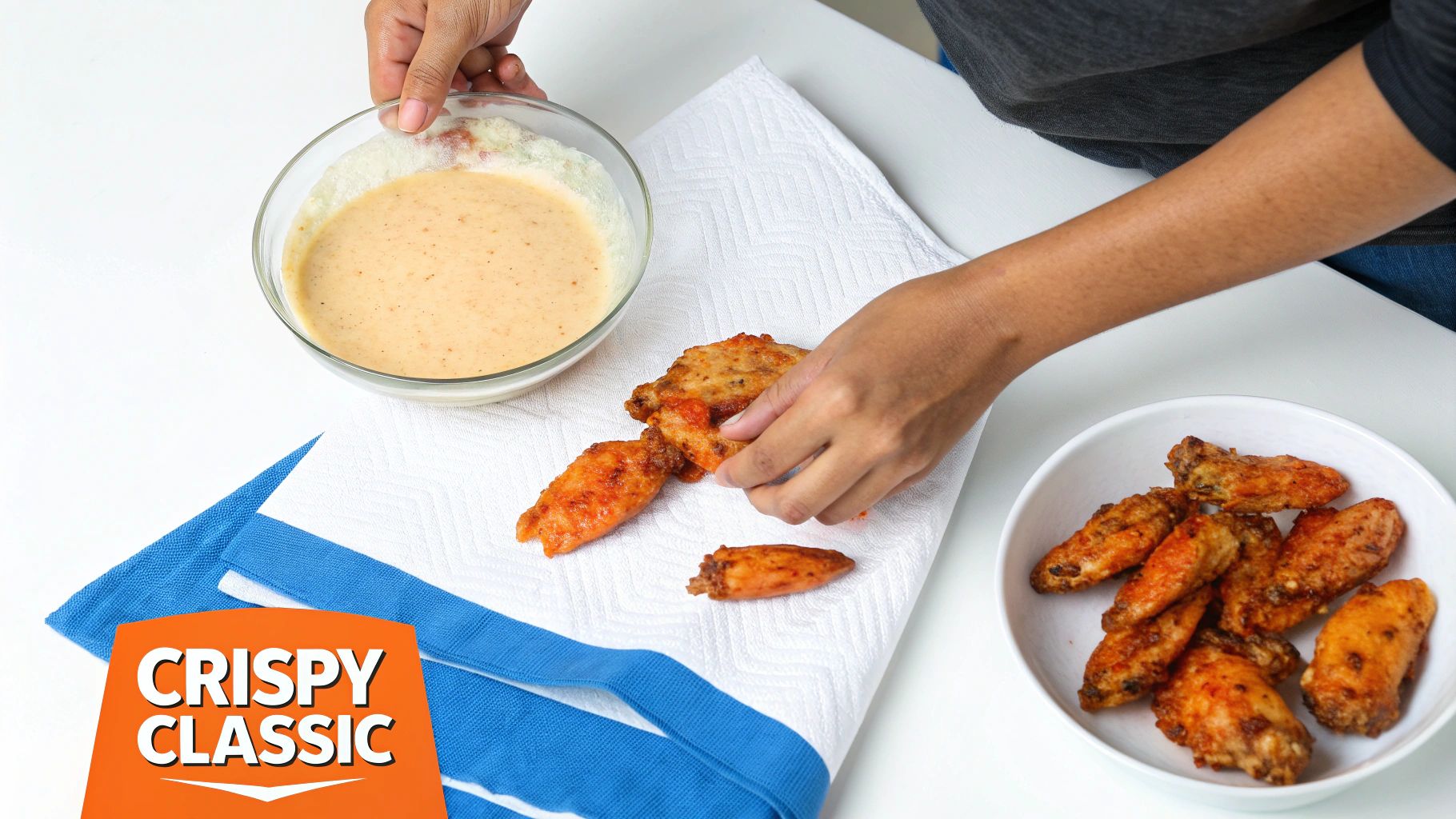
These variations aren't just about tossing in extra ingredients; it's about understanding how those additions play with the core elements of your batter. Let's walk through three distinct flavor profiles designed to deliver a serious punch while frying up to golden-brown perfection. All these fried recipes will need a high-smoke point cooking oil.
Zesty Sriracha-Lime Batter
This one brings a vibrant, tangy heat that cuts right through the richness of fried chicken. The key is to balance the wet ingredients carefully, so the batter doesn't get too thin and just slide off in the hot cooking oil.
You’ll want to add:
- 2 tablespoons of Sriracha: This gives you a garlicky heat without watering things down.
- 1 tablespoon of fresh lime juice: That acidity brightens everything up and adds a citrusy kick.
- 1 teaspoon of lime zest: For an extra layer of fragrant lime oil that really pops.
To make this work, you'll need to reduce the ice-cold water in your base recipe by about 3 tablespoons. This tweak keeps you in that sweet spot of a "thin pancake" consistency, ensuring the batter clings tight for a fiery, zesty crust. For another spicy variation that combines crispy chicken with a creamy, sweet-and-hot sauce, try our complete bang bang chicken recipe.
Savory Garlic-Herb Batter
For a more aromatic, savory profile, a garlic and herb batter is an absolute winner. The trick here is to stick with dried herbs and granulated garlic, not fresh. Fresh ingredients hold too much moisture and are notorious for burning in cooking oil heated to 375°F (190°C), which can leave your wings with a bitter, acrid taste.
Using dried spices is essential for infusing deep, savory notes directly into the batter. They rehydrate slightly when mixed into the liquid, releasing their flavor without the risk of scorching in the hot cooking oil.
Just combine your standard dry batter mix with:
- 1 tablespoon granulated garlic (not garlic salt!)
- 1 teaspoon dried oregano
- 1 teaspoon dried thyme
- ½ teaspoon onion powder
This combo creates a beautifully fragrant crust that’s incredible on its own or paired with a creamy dipping sauce. It’s a classic profile for a reason.
Light and Airy Beer Batter
A beer batter is the ultimate way to get a delicate, airy, and exceptionally crispy coating. The carbonation in the beer acts like an extra leavening agent, creating thousands of tiny bubbles that expand in the hot cooking oil.
The result is a light, puffy crust with a satisfying crunch. For the best results, use a cold, light-bodied beer and replace the water in the base recipe with the same amount of beer. For an even lighter Japanese-style coating made with minimal gluten development, compare this method with our best tempura batter recipe.
For even more flavor ideas, check out our guide on making a crispy Korean fried chicken wing recipe at home.
No matter which delicious variation you fry up, cleanup is the same easy process with FryAway. Just follow the simple three-step method for best results:
- Sprinkle and Stir FryAway powder into the hot cooking oil when you're done.
- Cool Down and let the oil solidify completely.
- Toss the hardened block of oil straight into your household trash.
Mastering the Art of Frying
An incredible batter is only half the battle; the real magic happens in the hot cooking oil. Honestly, nailing the frying process is what separates soggy, greasy wings from those with a perfectly cooked, shatteringly crisp exterior. With a few key techniques, you can get restaurant-quality results right in your own kitchen.
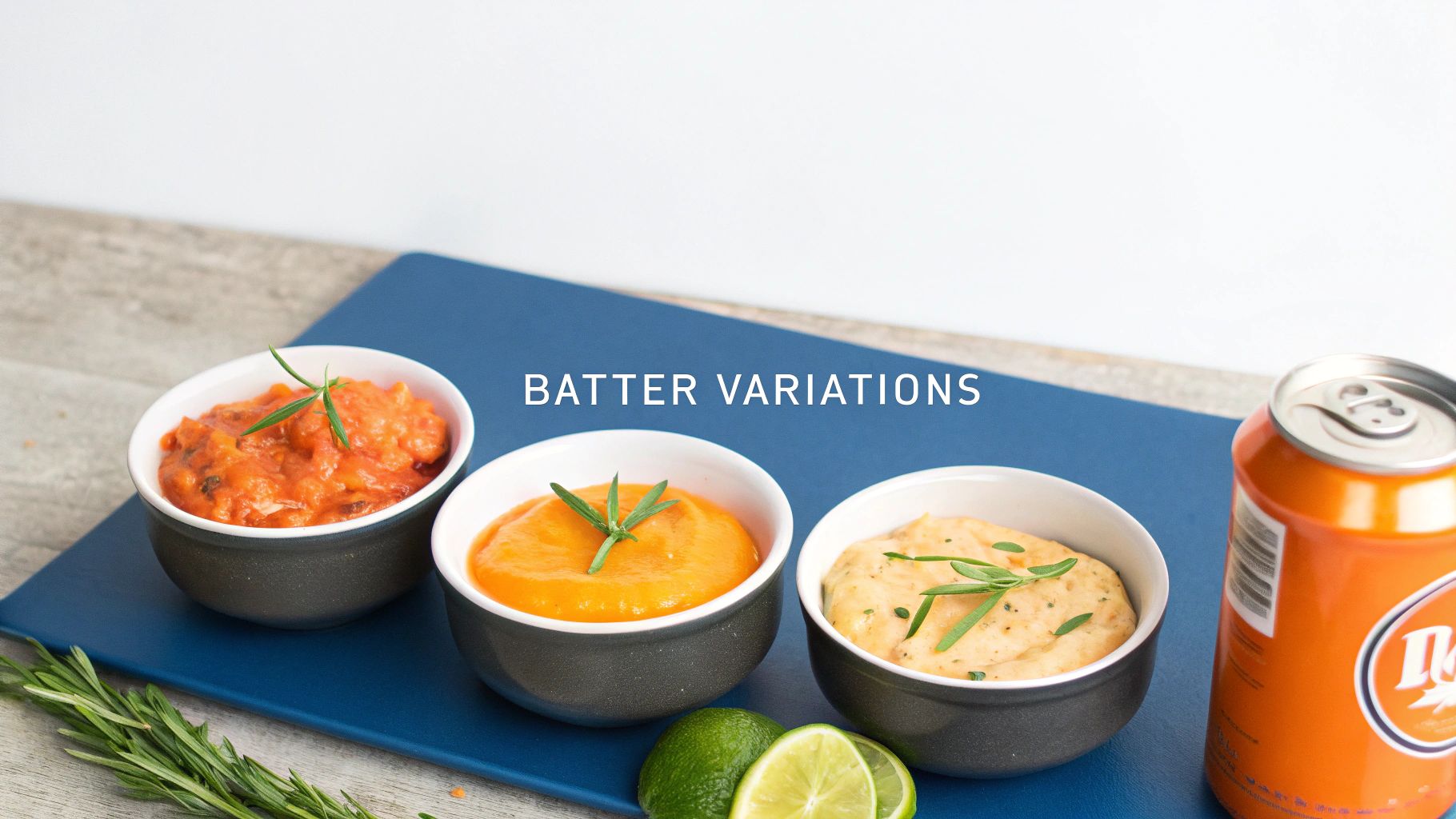
This process is so critical that it’s a huge focus for the foodservice industry, which is responsible for roughly 60% of chicken wing consumption around the world. The global market, valued at about USD 1.62 billion, is expected to hit USD 2.36 billion by 2032. That just goes to show how much people truly love a perfectly fried wing. If you're a numbers person, you can dig into these market trends over at Archive Market Research.
The Importance of Oil Temperature
If you take away just one thing, let it be this: maintaining the correct cooking oil temperature is everything. Read our guide on what temperature to fry chicken to understand the recommended oil range, how temperature changes between batches, and how to prevent the coating from becoming greasy or browning before the chicken cooks through.
If the oil is too cool, the batter will just soak it up like a sponge, leaving you with a heavy, greasy mess. Too hot, and the outside will burn long before the chicken inside is fully cooked.
If you're frying multiple batches of wings, FryAway Deep Fry makes it easy to handle and dispose of the larger volume of used cooking oil once you're finished.
Unlock Next-Level Crunch with Double Frying
Want to know the real secret to an ultra-crisp crust that stays crunchy even after you sauce it? It’s a technique called double-frying, and it makes a massive difference.
- First Fry: Cook the wings in cooking oil at a lower temperature, around 325°F (163°C), for about 6-8 minutes. They'll be fully cooked but still look pale. Pull them out and let them rest on a wire rack.
- Second Fry: Crank the heat up to 375°F (190°C). Drop the rested wings back in for just 2-3 minutes until they're deeply golden brown and audibly crispy.
This two-step process does two things. The first fry cooks the chicken and renders out fat. The second, hotter fry rapidly crisps the exterior, creating a durable, super-crunchy shell that can stand up to any sauce.
Easy Cleanup After Frying
You've just created the perfect batch of wings, but now you’re staring at a pan full of used cooking oil. If you're cooking for a crowd or frying multiple batches, FryAway Multi Fry can simplify cleanup by turning the unwanted oil into a solid that is easier to discard. Instead of pouring it down the drain or transferring it into a greasy jar, take a moment to choose the best way to dispose of frying oil based on the amount of oil and whether it is still suitable for reuse.
The whole thing couldn't be simpler. For best results, just follow the 3 steps:
- Sprinkle and Stir the FryAway powder into your hot cooking oil right after you're done.
- Cool Down and let the oil solidify completely into a solid puck.
- Toss the hardened block of oil directly into your household trash can.
It’s a totally mess-free solution that makes enjoying fried foods like chicken wings so much more convenient.
The Secret to a Mess-Free Cleanup
You’ve just fried up a batch of perfectly golden, crispy chicken wings. The kitchen smells amazing. But then you look at the pan, filled with hot, greasy cooking oil, and the enthusiasm just… deflates. That messy cleanup is often the biggest reason people avoid frying at home, but it really doesn't have to be a chore.
There's a game-changing way to handle used cooking oil that makes the whole process ridiculously easy.
Meet FryAway, a plant-based, non-toxic powder that was created to solve this exact problem. It works like magic, turning that pan of hot liquid oil into a solid, organic block. From there, you just toss it right in the trash. No more pouring oil into jars, no more greasy spills, and definitely no more dumping it down the drain where it can cause some serious plumbing nightmares.
https://www.youtube.com/embed/jbqzILwdKCk
The Simple Three-Step Process
Using FryAway is about as simple as it gets. It takes almost no effort and completely sidesteps the usual mess.
Here’s the breakdown for best results:
- Sprinkle and Stir: Right after you're done frying, just sprinkle the FryAway powder into the hot cooking oil. Give it a quick stir to make sure it's mixed in well.
- Cool Down: Now, just walk away. Let the pan cool down on its own. As it cools, the powder solidifies the oil into a single, scoopable puck.
- Toss in the Trash: Once it's completely hardened, you can lift the entire block of oil out of the pan and drop it straight into your household garbage.
That's it. Your pan is practically clean, and the oil is gone. It makes an effortless post-frying cleanup a reality for anyone who loves fried food.
By solidifying used oil, you’re not just saving your own pipes. You're also helping prevent the massive "fatbergs" that clog up municipal sewer systems. It's a small kitchen habit that has a surprisingly big environmental impact. Used oil does not always need the same treatment after every frying session. Some oil may still be suitable for filtering and storing, while oil that smells burnt, has become unusually dark, or is no longer performing well should be discarded. This guide explains what to do with frying oil after cooking and how to choose the right next step.
Of course, even with the best technique, frying wings can lead to a few splatters on the counter or your shirt. For those stubborn spots, knowing how to remove grease stains is a lifesaver. When you pair a smart cleanup product like FryAway with a few good stain-fighting tricks, you can enjoy fried chicken without any of the usual dread.
Got Wing Batter Questions? We've Got Answers
Even the most seasoned home cooks run into trouble now and then. Getting that perfect, crispy batter for chicken wings often comes down to a few small details that are easy to miss. Let's tackle some of the most common questions that pop up mid-fry.
"Help! Why Is My Batter Sliding Off the Chicken?"
This is hands-down the most frustrating wing problem, but the fix is almost always simple. The two main culprits are too much moisture on the chicken's surface or a batter that’s just too thick and heavy.
First things first: pat your wings completely dry with paper towels. You want to get them as dry as humanly possible. This creates a slightly tacky surface that the batter can actually grip. If the wings are even a little damp, the batter will just slide right off into the hot cooking oil.
Next, take a look at your batter's consistency. It should be similar to a thin pancake batter—able to coat the wing without being gloppy. If it looks more like paste, it's way too heavy and will fall off under its own weight. Just thin it out with a splash of cold water or beer until you get it right.
"Can I Make the Batter Ahead of Time?"
Absolutely! In fact, prepping your batter in advance is a smart move that saves you a ton of stress on wing night.
You can mix all the dry ingredients—flour, cornstarch, baking powder, and seasonings—and keep them in an airtight container for weeks at room temperature.
When you're ready to cook, all you have to do is whisk in your ice-cold liquid. Here's a pro-tip: using a very cold batter is one of the secrets to an extra-crispy crust. The shock of the cold batter hitting the hot cooking oil forces rapid evaporation, creating that light, crunchy texture we're all after.
If you want to mix the full wet batter ahead of time, that works too. You can make it up to 24 hours in advance. Just keep it covered tightly in the fridge and give it a quick whisk before using it to bring everything back together.
"What's the Best Oil for Frying Wings?"
The cooking oil you choose makes a huge difference in getting that perfect golden-brown finish without any off-putting, burnt flavors. The most important thing is to pick an oil with a high smoke point, which is the temperature where it starts to break down and smoke.
Here are a few of the best oils for the job:
- Canola Oil: This is a popular, affordable, and neutral-tasting workhorse.
- Vegetable Oil: Another versatile and neutral option that can handle the heat.
- Peanut Oil: A classic for a reason. It has a super high smoke point and a mild flavor that won't overpower your wings.
- Sunflower Oil: A light, clean-tasting oil that also works great for deep frying.
Stay far away from oils with low smoke points, like extra virgin olive oil or butter. They'll just burn at frying temperatures and make your wings taste bitter and smoky—and not in a good way.
No matter which cooking oil you choose, cleanup doesn't have to be a nightmare. FryAway is a plant-based powder that magically solidifies used cooking oil, so you can just toss it in the trash. Simply follow three steps for best results: 1) Sprinkle and Stir into the hot oil, 2) Cool Down until it's solid, and 3) Toss the hardened puck right into the garbage. Find out how to make frying cleaner at FryAway.co.