


· By FryAway
How to Prevent Clogged Drains: Simple Habits That Work
Let’s be honest, the only thing that should ever go down your drains is water. That’s the golden rule. Preventing a clog comes down to being mindful of what you're rinsing, flushing, and washing away in your kitchen, bathroom, and laundry room. A few proactive habits, like using a simple drain strainer or knowing how to properly dispose of cooking grease, will save you a world of trouble compared to dealing with a nasty blockage later on.
Why Clog Prevention Is Your Best Strategy
That slow-draining sink isn't just a minor inconvenience; it's a warning bell. It’s a sign that a much bigger, messier problem is building up inside your pipes. Too many of us wait until the water is standing still before we do anything about it, often grabbing a quick-fix chemical cleaner that rarely solves the underlying issue. This reactive approach is a recipe for repeat clogs, potential pipe damage, and eventually, an expensive emergency call to a plumber.
The first step to beating clogs is knowing your enemy. Blockages almost never happen overnight. They build up gradually, bit by bit, as gunk clings to the inner walls of your pipes.
The Most Common Causes of Clogs
The culprits behind clogs are usually specific to the room they're in.
Here's a quick look at the most common materials responsible for clogs in different household drains.
Common Drain Clog Culprits by Location
| Drain Location | Primary Clog Culprits |
|---|---|
| Kitchen Sinks | Fats, Oils, and Grease (FOG); fibrous food scraps (like celery or potato peels); coffee grounds. |
| Bathroom Drains | Hair is the top offender, which combines with soap scum to form stubborn, dense mats in showers and sinks. |
| Toilets | Anything other than human waste and toilet paper. "Flushable" wipes, paper towels, and cotton swabs are notorious clog-causers. |
Once you know what causes clogs in each area, you can be more mindful about what goes down the drain.
The financial cost of ignoring drain health is staggering. The market for drain cleaners is on track to hit over $3.5 billion by 2033, which tells you just how common this preventable problem has become. According to research on drain cleaner market trends, this growth is fueled by increased urbanization and improper waste disposal—making it more important than ever to learn how to keep drains clear.
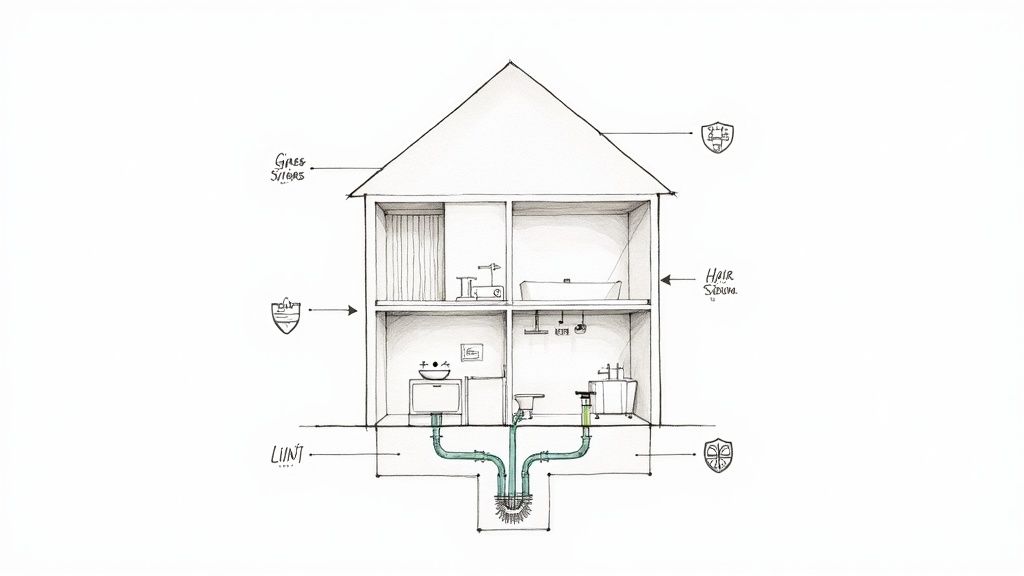
The most effective way to manage your plumbing is to stop clogs before they start. Simple, consistent daily habits are the key to maintaining healthy, free-flowing drains throughout your home.
Mastering Your Kitchen Sink Prevention Habits
The kitchen sink is ground zero for some of the most stubborn clogs. It's constantly hit with a barrage of food particles, soap, and—the biggest culprit of them all—fats, oils, and grease (FOG). This combination is the perfect recipe for plumbing disasters.
It seems harmless to rinse a little leftover bacon grease or cooking oil down the drain, right? Wrong. That single habit is one of the leading causes of massive, expensive blockages.
When you pour liquid cooking oil down the sink, even if you chase it with hot water, it eventually cools down and solidifies. That sticky mess clings to the inside of your pipes, acting like flypaper for every other bit of food and debris that follows. Over time, this gunk grows into a dense, greasy mass that can bring your entire plumbing system to a grinding halt.
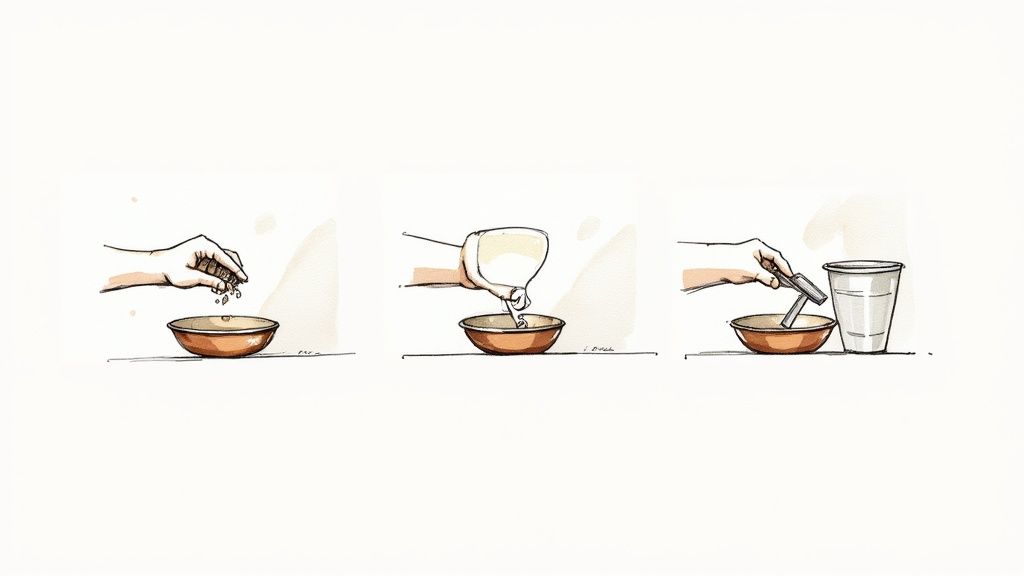
The Smart Way to Handle Cooking Oil
The only way to truly prevent grease clogs is to keep oil out of your pipes in the first place. This is where a product like FryAway becomes a total game-changer in the kitchen.
It's a 100% plant-based powder that magically transforms hot, liquid cooking oil into a solid, organic block. You can just lift it out and toss it right into your household trash. No more messy jars, no more greasy spills, and zero risk to your drains.
Using it couldn't be simpler:
- Sprinkle and Stir: Right after you finish cooking, while the oil is still hot, sprinkle the FryAway powder into the pan. Give it a gentle stir to make sure it mixes in completely.
- Cool Down: Let the pan sit and cool down. As it does, you'll see the oil mixture start to solidify into a solid, rubbery puck.
- Toss into Household Trash: Once it's completely solid, you can easily scoop the entire thing out and drop it straight into the trash can.
This little habit tackles the problem at its source, making it one of the most effective things you can do to prevent clogged drains in the kitchen. For a deeper dive into best practices, check out our guide on how to dispose of cooking oil the right way so it doesn't damage your pipes.
Putting FryAway to the Test: Crispy Pan-Fried Chicken Thighs
Let's walk through a real-world scenario. You've just fried up a delicious batch of crispy chicken thighs. Now you're left with a skillet full of flavorful but problematic chicken fat and cooking oil. Instead of stressing about it, you can put FryAway to work.
Ingredients:
- 4 bone-in, skin-on chicken thighs
- 1 teaspoon salt
- ½ teaspoon black pepper
- ½ teaspoon garlic powder
- 2 tablespoons of vegetable oil
Instructions:
First, pat the chicken thighs dry and season them well. Heat your vegetable oil in a large skillet over medium-high heat. Place the chicken skin-side down and cook for about 10-12 minutes until the skin is beautifully golden and crisp. Flip them over and cook for another 10 minutes or so, until they're cooked all the way through.
Once you take the chicken out, you'll see all that hot, rendered fat and oil left in the pan. This is the perfect time to use FryAway. Just sprinkle it in, give it a quick stir, and set the pan aside to cool while you sit down to eat. By the time you’re ready for cleanup, that greasy liquid will be a solid mass you can just scoop into the garbage.
This simple cleanup method doesn't just protect your pipes—it makes frying food at home so much less messy and a lot more enjoyable.
More Essential Kitchen Sink Habits
Beyond just handling oil, a few other daily practices will make a huge difference.
- Scrape Your Plates: Before you even think about rinsing dishes, scrape every last food scrap into the trash or compost bin. Tiny particles of rice, pasta, and fibrous veggies can easily build up and contribute to clogs.
- Use a Drain Strainer: A good mesh drain strainer is your plumbing's best friend. It catches all those little food particles that scraping misses, stopping them from ever entering your drain.
- Be Mindful of the Garbage Disposal: Your disposal isn't invincible. Avoid putting starchy or stringy foods like potato peels, celery, and coffee grounds down there. They can create a thick, cement-like sludge that’s a nightmare to clear.
Keeping Bathroom Drains Flowing Freely
While kitchen drains are busy fighting a war against grease, your bathroom pipes face a completely different enemy. It’s a stubborn combination of hair, thick soap scum, and gunk from conditioners and shaving creams that team up to create dense, slimy clogs. Before you know it, your sink or shower is backing up.
The first line of defense is the simplest: a physical barrier. A good drain protector is an absolute must-have for preventing clogs in the bathroom. These little gadgets are surprisingly effective at catching hair before it gets a chance to wash down the drain and start building a blockage.
Choosing the Right Drain Protector
You've got a couple of great options here, and each one has its perks:
- Silicone "Mushroom" Stoppers: These sit right inside the drain opening and are fantastic at snagging long hair. To clean them, you just pull them out, wipe off the gunk, and pop them back in. Easy.
- Metal Mesh Screens: These lay flat over the drain and are great for catching both hair and stray chunks of soap. They’re durable and have a classic look that works with just about any bathroom decor.
The real trick is finding one that fits snugly and remembering to clean it out regularly. If you make it part of your weekly bathroom wipe-down, you’ll be amazed at the clogs you prevent.
The Hidden Problem of Soap Scum
But it’s not just hair causing all the trouble. Soap scum is that waxy, gunky residue that loves to build up inside your pipes. It forms when the fats and oils in your bar soap react with the minerals naturally present in your water.
Interestingly, some of those "natural" or handcrafted soaps with high oil content can actually make the problem worse, accelerating the buildup. This sticky film creates the perfect surface for hair and other bits of debris to latch onto, forming the foundation of a serious clog.
A simple weekly flush can work wonders. Just pour a kettle of boiling water down any metal pipes to help melt away fresh soap scum before it has a chance to harden and build up.
This kind of proactive thinking is key. The numbers show just how common these clogs are. The drain clog remover market was valued at around $2.5 billion in 2025 and is expected to hit $3.5 billion by 2033, mainly because more people are focused on household sanitation. This tells us people are constantly dealing with clogs, but a little prevention goes a long way.
Sometimes, a slow drain isn't a deep clog but a problem right at the surface. For a sluggish bathroom sink, the issue is often just a clump of hair and gunk caught on the stopper mechanism itself. It's usually a quick and easy fix. If that sounds familiar, you can learn how to fix common bathroom sink stopper issues with a few simple DIY steps. These small, consistent habits are what ultimately keep minor annoyances from turning into major plumbing headaches.
Essential Maintenance for Long-Term Drain Health
Going beyond those day-to-day habits is key to keeping your pipes healthy for the long haul. A little preventative maintenance goes a long way, saving you from the headache of slow drains and the shock of a plumbing emergency. Think of it as a small time investment that protects your entire plumbing system. A simple monthly and quarterly routine is your best defense against the gunk that builds up over time and causes those stubborn clogs.
This proactive mindset is catching on. The global market for drain cleaning equipment grew to $2.33 billion in 2025, an 8.8% jump in just one year. That number tells a story: people are tired of dealing with clogs and are actively looking for ways to prevent them. You can read more about the growing demand for drain cleaning solutions and see how prevention is becoming the new standard.
Creating a Simple Maintenance Routine
A monthly drain flush is a fantastic starting point. For most drains, especially those with sturdy metal pipes, you can just carefully pour a kettle of boiling water down them. This helps melt and wash away any fresh soap scum or grease that's starting to cling to the sides.
If you want a gentler, pipe-safe alternative, this natural DIY flush works like a charm:
- Start by pouring about half a cup of baking soda down the drain.
- Follow it up with half a cup of white vinegar.
- You'll hear it fizzing—that's the good part! Let that reaction do its thing for about 15-20 minutes.
- Finally, flush everything out with hot water for a full minute.
This simple combo is great for breaking down organic buildup without the harsh side effects of chemical cleaners.
The Problem with Chemical Cleaners
It’s so tempting to grab that bottle of chemical drain cleaner when you notice water starting to back up. But honestly, it's often a short-term fix with long-term consequences. These powerful chemicals are incredibly corrosive and can eat away at older PVC or metal pipes, which could lead to much more expensive leaks down the road.
Harsh chemical cleaners might offer a quick fix, but they can cause long-term harm to your plumbing and the environment. A gentler, preventative approach is always the smarter choice for your home's health.
On top of that, these chemicals are terrible for the environment. Once they go down the drain, they can mess with local water treatment processes and harm aquatic life. The very grease they're meant to dissolve contributes to massive municipal problems, forming huge blockages known as fatbergs and why preventing them matters.
Don't Forget the Overlooked Drains
Your kitchen and bathroom sinks get all the attention, but don't forget about the other drains in your home. They need a little love, too.
- Laundry Room Drains: These are magnets for lint, detergent buildup, and dirt. An easy fix is to place a lint catcher over the washing machine's discharge hose. It stops the biggest offender right at the source.
- Basement and Floor Drains: These tend to collect dust, leaves, and other debris. Every so often, pour a bucket of water down them. This keeps the trap full, which has the added benefit of preventing sewer gases from creeping into your home.
This infographic breaks down the essential steps for keeping your bathroom drains, one of the most common problem areas, clear and functional.
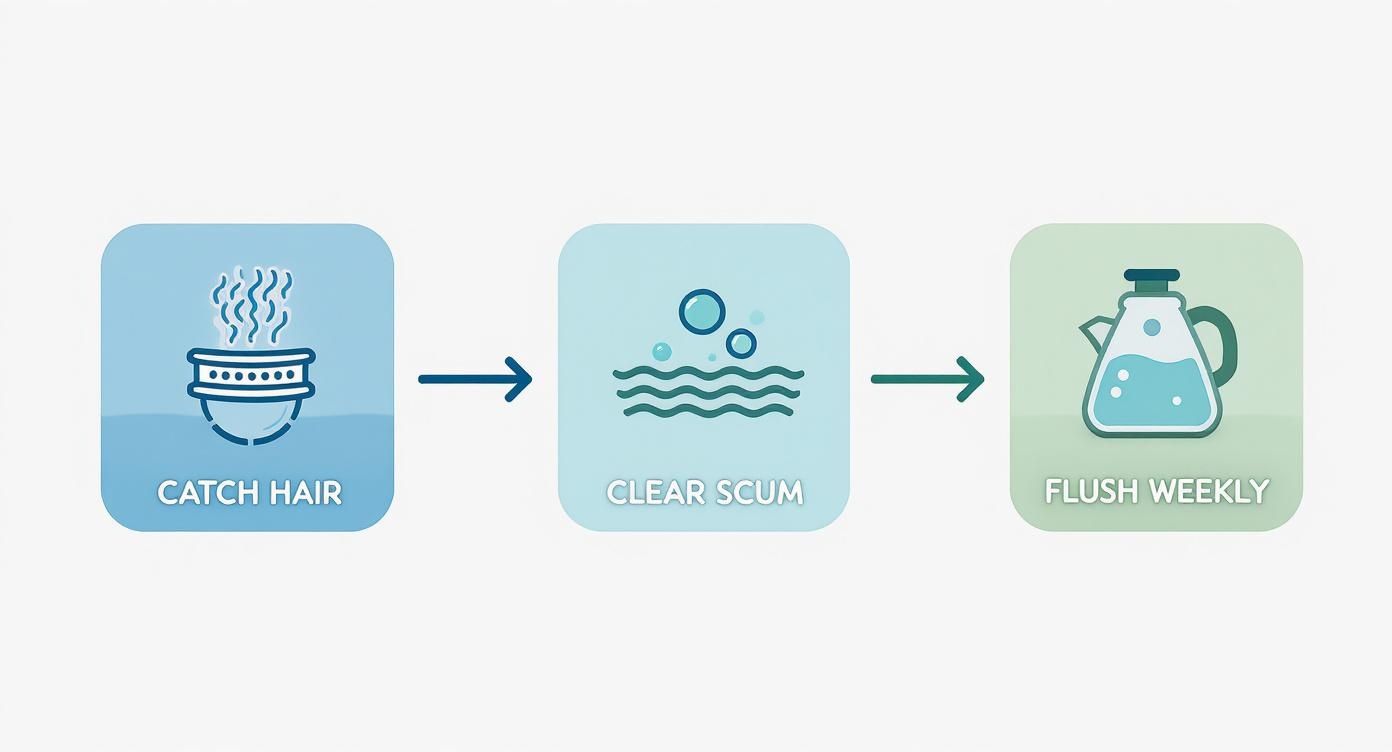
By sticking to a simple three-part process—catching hair, clearing scum, and flushing weekly—you can easily stay ahead of the most common bathroom clogs.
When to Call a Professional Plumber
Even with the best preventative habits, some plumbing problems are just too big or complex for a DIY fix. Honestly, knowing when to step back and call in a pro is just as important as your daily maintenance routine.
Trying to tackle a major issue on your own can often make things worse. I've seen it happen—a manageable problem quickly spirals into a costly, water-logged disaster.
The trick is learning to recognize the warning signs that point to a deeper issue in your plumbing system. Think of these symptoms as your pipes' way of telling you that a simple drain flush just isn't going to cut it this time.
Signs Your Clog Needs an Expert
If you notice any of the following, it’s time to put down the plunger and pick up the phone. These are clear indicators that the blockage is likely beyond the reach of home remedies and might even involve your main sewer line.
- Recurring Clogs: You clear a clog in the sink or shower, feeling pretty proud of yourself, only for it to come right back a few days later. This is a classic sign that the real blockage is further down, and you've only poked a temporary hole in it.
- Multiple Drains are Slow: This is a huge red flag. When the kitchen sink, a bathroom tub, and a toilet all start draining slowly at the same time, the problem isn't in one specific pipe. It points to a bottleneck in the main sewer line that connects your entire home to the municipal system.
- Strange Noises: Do you hear gurgling or bubbling sounds coming from your drains? This often happens when you flush a toilet or run the washing machine. It means trapped air is being forced back up through the water in your P-traps because of a significant blockage further down.
A foul, sewage-like odor that just won't go away, no matter how much you clean, is a serious warning sign. It often indicates a blockage in the main line is preventing waste and sewer gases from exiting your home's plumbing properly.
Why Calling a Plumber Saves You Money
Ignoring these signs or trying to force a fix yourself can lead to much bigger headaches. You could accidentally damage your pipes with the wrong tool or, even worse, cause a sewage backup right into your home.
When your own efforts aren't enough, professional drain cleaning services are the next logical step. The pros have specialized equipment, like motorized augers and hydro-jetting tools, that can safely and completely clear stubborn blockages without harming your pipes.
This is a crucial part of knowing how to prevent clogged drains from becoming catastrophic failures. By investing in a professional diagnosis, you ensure the problem gets fixed correctly the first time, protecting your home—and your wallet—from much bigger problems down the road.
Common Questions About Keeping Drains Clear
Even when you're doing your best to prevent clogs, questions pop up. It can feel like there's a lot of conflicting advice out there, but getting straight answers is the key to protecting your pipes with confidence. Let's tackle some of the most common questions we hear.
Can I Pour Grease Down the Drain if I Chase It With Hot Water?
This is easily one of the most persistent—and damaging—myths in all of home plumbing. Pouring hot water after grease does nothing but delay the inevitable clog.
Sure, the hot water might keep the grease liquid for a few extra feet down the pipe. But as soon as that water cools, the fat solidifies and sticks to the inside of your pipes like glue. This greasy residue then acts like a magnet, grabbing every little food particle and bit of debris that washes by. Before you know it, you’ve got a dense, stubborn blockage that’s a nightmare to remove.
The only truly safe way to deal with cooking oil is to keep it out of the sink entirely. A product like FryAway is the perfect way to do this. It’s a simple, plant-based powder that makes oil disposal foolproof in three quick steps:
- Sprinkle and Stir: Just add the powder to your hot, used cooking oil and give it a mix.
- Cool Down: Let the pan cool completely. You'll watch the oil transform into a solid, organic puck.
- Toss into Household Trash: Scoop the solidified oil right out of the pan and into your regular household garbage.
This method completely sidesteps the risk of creating a grease clog from your cooking oil.
Are "Flushable" Wipes Really Safe for My Plumbing?
The short answer here is a hard no. Despite what the packaging says, most “flushable” wipes don't break down in water nearly as fast as toilet paper does.
Instead, they travel through your plumbing system mostly intact. They can easily snag on older pipes or bunch up with other debris to form a massive clog. In fact, they're one of the leading causes of serious blockages in both home plumbing and city sewer systems.
To keep your toilet and main sewer line happy, just remember the golden rule: only human waste and toilet paper should ever go down the toilet.
How Often Should I Be Doing Preventative Maintenance?
When it comes to drain care, consistency is everything. You don't need to spend hours on it, but a few simple habits make a world of difference. Here’s a good schedule to start with:
- Daily: Scrape all food scraps into the trash before rinsing dishes in the kitchen. Make sure a good mesh strainer is always in place. If you've been frying, use FryAway to handle the oil.
- Weekly: In the bathroom, make it a habit to pull the hair out of your shower and sink drain protectors. This takes less than 60 seconds and stops the #1 cause of bathroom clogs in its tracks.
- Monthly: Do a quick, natural drain flush. Pour a kettle of boiling water down metal pipes, or use a baking soda and vinegar mixture to dissolve any fresh buildup from soap scum and grime.
Is It Safe to Use Chemical Drain Cleaners on a Regular Basis?
While a chemical drain cleaner might seem like a quick fix, relying on them regularly is a bad idea. These products are incredibly caustic and can be really harsh on your plumbing.
Over time, they can corrode older metal pipes and even damage modern PVC, leading to leaks and much bigger, more expensive repair jobs down the road. It's always safer to focus on prevention first. And if you're wondering how different types of oil affect your pipes, you can learn more by reading about whether it's okay to pour cold oil down the sink in our detailed guide.
Ready to make greasy cleanups a thing of the past and protect your pipes for good? Join the thousands of home cooks who have discovered the simple, mess-free solution for cooking oil disposal.
FryAway makes it easy to enjoy your favorite fried foods without the plumbing problems.